

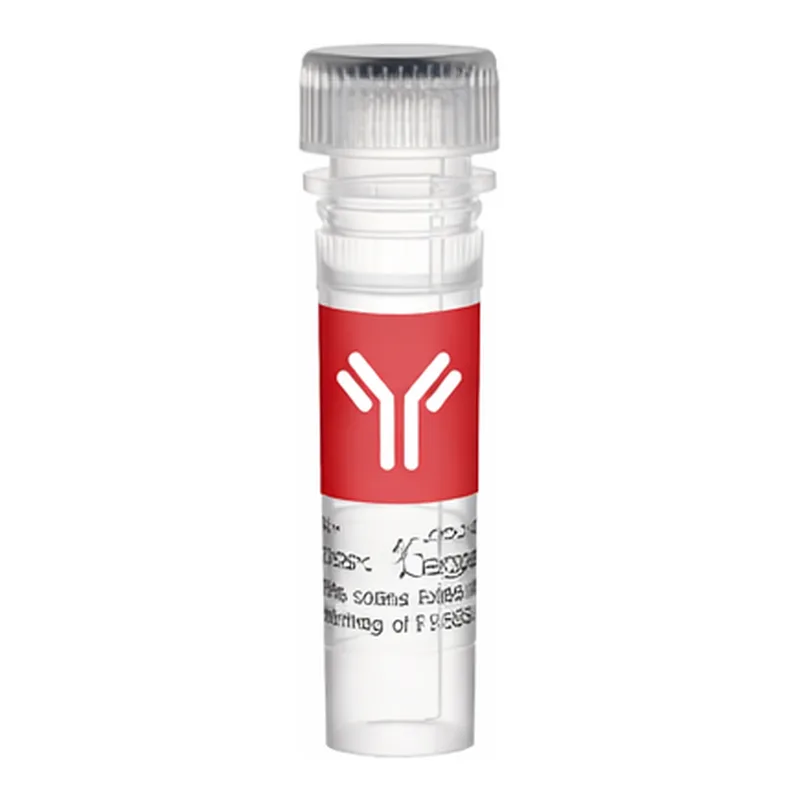
Thermo Fisher Scientific CCR1 Polyclonal Antibody
CCR1 단백질을 인식하는 Rabbit Polyclonal 항체로, Western blot, ELISA, Immunoprecipitation에 적합합니다. 인간 유래 CCR1(aa 1-50) 펩타이드를 면역원으로 사용하였으며, 액상 형태로 제공됩니다. -20°C에서 보관하며 연구용으로만 사용 가능합니다.
- 판매단위
- pk
카탈로그
1개 옵션 · 카탈로그 번호를 클릭하면 복사됩니다Thermo Fisher Scientific · Thermo Fisher Scientific CCR1 Polyclonal Antibody
Applications and Tested Dilutions
| Application | Tested Dilution |
|---|---|
| Western Blot (WB) | 1:500–1:1,000 |
| ELISA | 1:10,000 |
| Immunoprecipitation (IP) | 1:50–1:250 |
Product Specifications
| 항목 | 내용 |
|---|---|
| Species Reactivity | Human |
| Host / Isotype | Rabbit / IgG |
| Class | Polyclonal |
| Type | Antibody |
| Immunogen | Synthetic peptide taken within amino acid region 1–50 on human CCR1 protein |
| Conjugate | Unconjugated |
| Form | Liquid |
| Concentration | 0.5–1.5 mg/mL |
| Purification | Affinity chromatography |
| Storage Buffer | Proprietary buffer, pH 7.4–7.8, with 0.5% BSA, 30% glycerol |
| Contains | 0.02% sodium azide |
| Storage Conditions | –20°C |
| Shipping Conditions | Ambient (domestic); Wet ice (international) |
Target Information
Chemokines play important roles in inflammation and are critical for the recruitment of effector immune cells to sites of infection. Chemokines activate leukocytes by binding to G protein coupled receptors. The ever-growing chemokine receptor subtypes can be divided into two major groups, CXCR and CCR, based on the two major classes of chemokines. One of the CCR receptors, CCR1, is expressed on neutrophils, monocytes, lymphocytes, and eosinophils and binds the leukocyte chemoattractant and hemopoiesis regulator macrophage-inflammatory protein (MIP-1α), eotaxin, as well as several other related chemokines. Mice lacking the chemokine receptor CCR1 have defects in neutrophil trafficking and proliferation.
For Research Use Only.
Not for use in diagnostic procedures. Not for resale without express authorization.
Thermo Fisher Scientific 상품 둘러보기
전체보기
문의
0개 · 배송·재고 문의는 실시간 상담이 빠릅니다아직 등록된 문의가 없어요.