

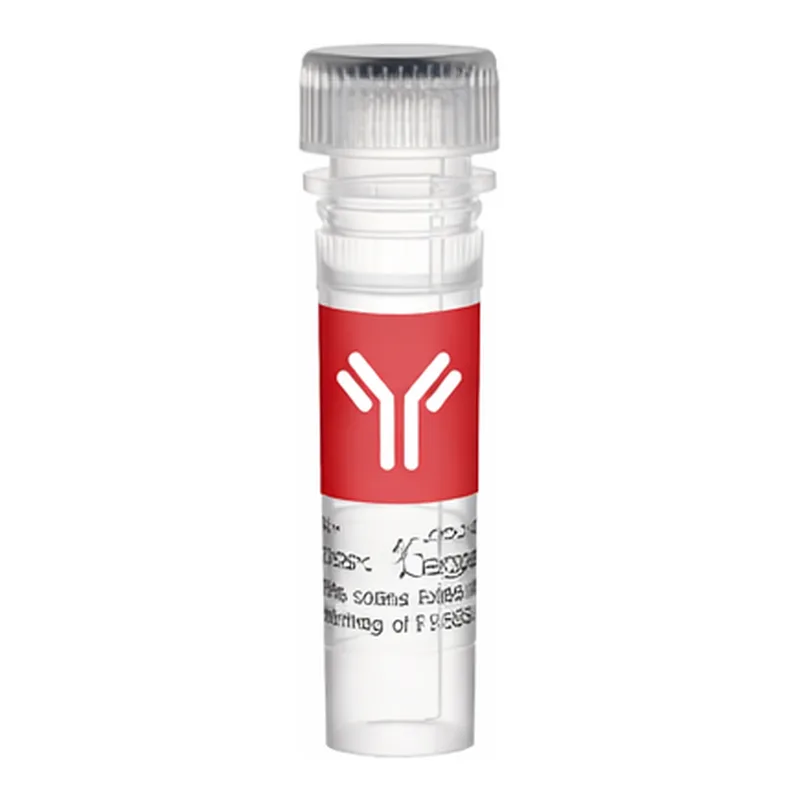
Thermo Fisher Scientific Human MAK10 Synthetic Peptide
Human MAK10 단백질의 N-말단 19개 아미노산 서열에 해당하는 합성 펩타이드. 폴리클로날 항체 PA5-20783의 블로킹 펩타이드로 사용 가능. 정제된 액상 형태로 PBS 버퍼에 보관하며 연구용으로만 사용.
- 판매단위
- pk
카탈로그
1개 옵션 · 카탈로그 번호를 클릭하면 복사됩니다Thermo Fisher Scientific · Thermo Fisher Scientific Human MAK10 Synthetic Peptide
Applications
Control (Ctrl)
- Assay-dependent
Blocking Assay (BLOCK)
- Assay-dependent
Product Specifications
| 항목 | 내용 |
|---|---|
| Species Reactivity | Human |
| Class | Synthetic |
| Type | Peptide |
| Conjugate | Unconjugated |
| Form | Liquid |
| Concentration | 200 µg/mL |
| Purification | Purified |
| Storage Buffer | PBS, pH 7.2, with 0.1% BSA |
| Contains | 0.02% sodium azide |
| Storage Conditions | -20°C |
Product Specific Information
This peptide corresponds to 19 amino acids near the amino terminus of human MAK10.
PEP-0897 can be used as a blocking peptide with polyclonal antibody PA5-20783.
Target Information
The MAK10 gene encodes a 733-amino acid protein with several regions of similarity to T cell receptor alpha-subunit V (variable) regions in yeast. The mammalian homologue of yeast MAK10, also known as EGAP, is one subunit of a novel N-terminal acetyltransferase (NAT) highly conserved among vertebrates. It is expressed in various tissues in the developing rat embryo but restricted in expression in adults, remaining detectable only in tissues undergoing continual cell renewal or responding to pathological injury.
The MAK10-NAT complex is an essential regulatory enzyme controlling the function of a subset of proteins required for embryonic growth control and vessel development. This complex co-assembles in mammalian cells to regulate cell proliferation and is essential for embryonic development, partly through regulation of TOR signaling events. At least two isoforms of MAK10 are known to exist.
For Research Use Only. Not for use in diagnostic procedures. Not for resale without express authorization.
Thermo Fisher Scientific 상품 둘러보기
전체보기
문의
0개 · 배송·재고 문의는 실시간 상담이 빠릅니다아직 등록된 문의가 없어요.