

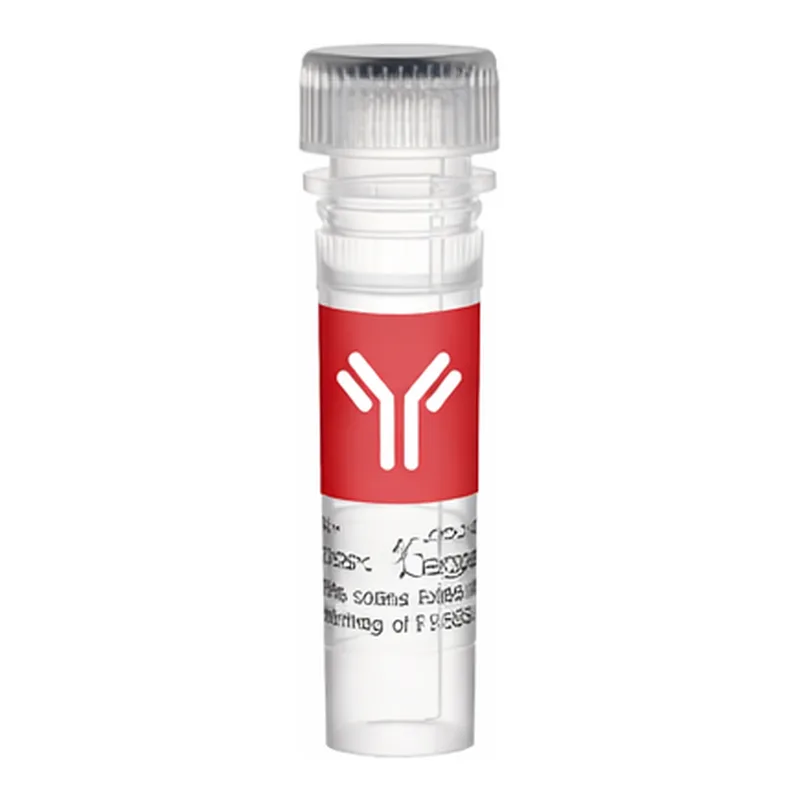
Thermo Fisher Scientific CD7 Monoclonal Antibody (eBio124-1D1 (124-1D1)), PE, eBioscience
인간 CD7 항원을 인식하는 마우스 단클론 항체로, PE 형광 표지되어 유세포 분석에 적합합니다. T세포, NK세포 및 림프구 관련 연구에 활용되며, 높은 특이성과 안정적인 형광 신호를 제공합니다. 4°C 보관, 동결 금지.
- 판매단위
- pk
카탈로그
1개 옵션 · 카탈로그 번호를 클릭하면 복사됩니다Thermo Fisher Scientific · Thermo Fisher Scientific CD7 Monoclonal Antibody (eBio124-1D1 (124-1D1)), PE, eBioscience
Thermo Fisher Scientific CD7 Monoclonal Antibody (eBio124-1D1 (124-1D1)), PE, eBioscience™
Applications
- Flow Cytometry (Flow)
Tested Dilution: 5 µL (0.125 µg)/test
Publications: View 1 publication
Product Specifications
| 항목 | 내용 |
|---|---|
| Species Reactivity | Human |
| Published Species | Not Applicable |
| Host / Isotype | Mouse / IgG1, kappa |
| Recommended Isotype Control | Mouse IgG1 kappa Isotype Control (P3.6.2.8.1), PE, eBioscience™ |
| Class | Monoclonal |
| Type | Antibody |
| Clone | eBio124-1D1 (124-1D1) |
| Conjugate | PE |
| Excitation / Emission Max | 565 / 576 nm |
| Form | Liquid |
| Concentration | 5 µL/Test |
| Purification | Affinity chromatography |
| Storage Buffer | PBS, pH 7.2, with 0.2% BSA |
| Contains | 0.09% sodium azide |
| Storage Conditions | 4°C, store in dark, DO NOT FREEZE |
| Shipping Conditions | Ambient (domestic); Wet ice (international) |
| RRID | AB_11041668 |
Available Formats:
- Unconjugated
- Alexa Fluor 532, 700
- APC, APC-eFluor 780
- Biotin
- Brilliant UV 737, Brilliant Violet 650
- eFluor 450
- FITC
- NovaFluor Blue, Red, Yellow series
- PE-Cyanine5.5, PE-Cyanine7
- Super Bright 436, 600, 702
- Custom conjugation available
Product Specific Information
The eBio124-1D1 monoclonal antibody reacts with human CD7, also known as gp40 and Leu9. CD7 is a 40 kDa receptor and a member of the immunoglobulin gene superfamily. The N-terminal amino acid sequence (aa1–107) is highly homologous to Ig kappa light chain sequence, while the carboxyl-terminal region is proline-rich and forms a stalk projecting the Ig domain.
CD7 is expressed on most immature and mature T lymphocytes, T cell leukemias, natural killer cells, a small subset of normal B cells, and malignant B cells. Cross-linking surface CD7 modulates T cell and NK cell activity, affecting calcium flux, adhesion molecule expression, cytokine secretion, and proliferation. CD7 associates with phosphoinositol 3′-kinase, inducing D-3 phosphoinositide production and tyrosine phosphorylation.
A clonogenic subpopulation of human CD34(+) CD38(-) cord blood cells expressing CD7 shows lymphopoietic potential, generating B, NK, and dendritic cells but not myeloid or erythroid lineages. CD7(+) phenotype distinguishes primitive lymphoid progenitors from pluripotent stem cells.
CD7 may cooperate with CD28 during Treg function. Mice deficient in both CD28 and CD7 show reduced Treg numbers and suppressive activity.
Applications Reported: Flow cytometric analysis
Applications Tested: Pre-titrated and validated for normal human peripheral blood cells at 5 µL (0.125 µg)/test.
Excitation: 488–561 nm; Emission: 578 nm; Laser: Blue, Green, Yellow-Green
Filtration: 0.2 µm post-manufacturing filtered
Target Information
CD7 (gp40, Leu9) is a 40 kDa member of the immunoglobulin gene superfamily. It is expressed on immature and mature T lymphocytes, T cell leukemia, natural killer cells, and subsets of B cells. CD7 cross-linking modulates immune cell activity via calcium flux and cytokine signaling. Expression of CD7 serves as an important marker in leukemia diagnostics.
For Research Use Only. Not for use in diagnostic procedures. Not for resale without express authorization.
제품 이미지

Thermo Fisher Scientific 상품 둘러보기
전체보기

문의
0개 · 배송·재고 문의는 실시간 상담이 빠릅니다아직 등록된 문의가 없어요.