

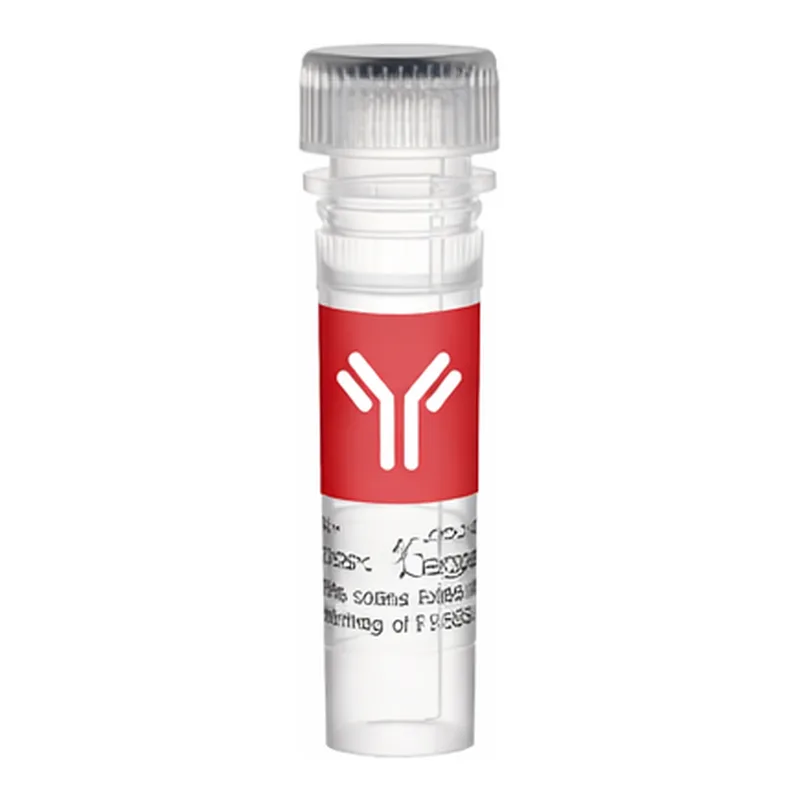
Thermo Fisher Scientific COL11A2 Monoclonal Antibody (GT6410)
COL11A2 단백질을 인식하는 Mouse monoclonal antibody (GT6410). Western blot에 적합하며 Human, Mouse, Rat에 반응. Protein G로 정제된 액상 형태로 제공되며, 4°C 단기 보관 및 -20°C 장기 보관 권장. 연구용으로만 사용 가능.
- 판매단위
- pk
카탈로그
1개 옵션 · 카탈로그 번호를 클릭하면 복사됩니다Thermo Fisher Scientific · Thermo Fisher Scientific COL11A2 Monoclonal Antibody (GT6410)
Applications
Western Blot (WB)
- Tested Dilution: 1:500–1:3,000
Product Specifications
| 항목 | 내용 |
|---|---|
| Species Reactivity | Human, Mouse, Rat |
| Host / Isotype | Mouse / IgG1 |
| Class | Monoclonal |
| Type | Antibody |
| Clone | GT6410 |
| Immunogen | Recombinant protein encompassing a sequence within the N-terminus region of human COL11A2 |
| Conjugate | Unconjugated |
| Form | Liquid |
| Concentration | 1 mg/mL |
| Purification | Protein G |
| Storage Buffer | PBS |
| Contains | No preservative |
| Storage Conditions | Store at 4°C short term; for long term, store at -20°C avoiding freeze/thaw cycles |
| Shipping Conditions | Ambient (domestic); Wet ice (international) |
| RRID | AB_2787115 |
Product Specific Information
- Keep as concentrated solution.
- Predicted reactivity: Mouse (85%), Rat (85%), Bovine (93%).
- Positive Control: human COL11A2-transfected 293T (N-terminal fragment of COL11A2 isoform 1).
- Store product as a concentrated solution. Centrifuge briefly prior to opening the vial.
Target Information
This gene encodes one of the two alpha chains of type XI collagen, a minor fibrillar collagen. It is located on chromosome 6 very close to but separate from the gene for retinoid X receptor beta. Type XI collagen is a heterotrimer, but the third alpha chain is a post-translationally modified alpha 1 type II chain. Proteolytic processing of this type XI chain produces PARP, a proline/arginine-rich protein that is an amino terminal domain.
Mutations in this gene are associated with:
- Type III Stickler syndrome
- Otospondylomegaepiphyseal dysplasia (OSMED syndrome)
- Weissenbacher-Zweymuller syndrome
- Autosomal dominant non-syndromic sensorineural type 13 deafness (DFNA13)
- Autosomal recessive non-syndromic sensorineural type 53 deafness (DFNB53)
Alternative splicing results in multiple transcript variants. A related pseudogene is located nearby on chromosome 6.
For Research Use Only. Not for use in diagnostic procedures. Not for resale without express authorization.
Thermo Fisher Scientific 상품 둘러보기
전체보기
문의
0개 · 배송·재고 문의는 실시간 상담이 빠릅니다아직 등록된 문의가 없어요.