

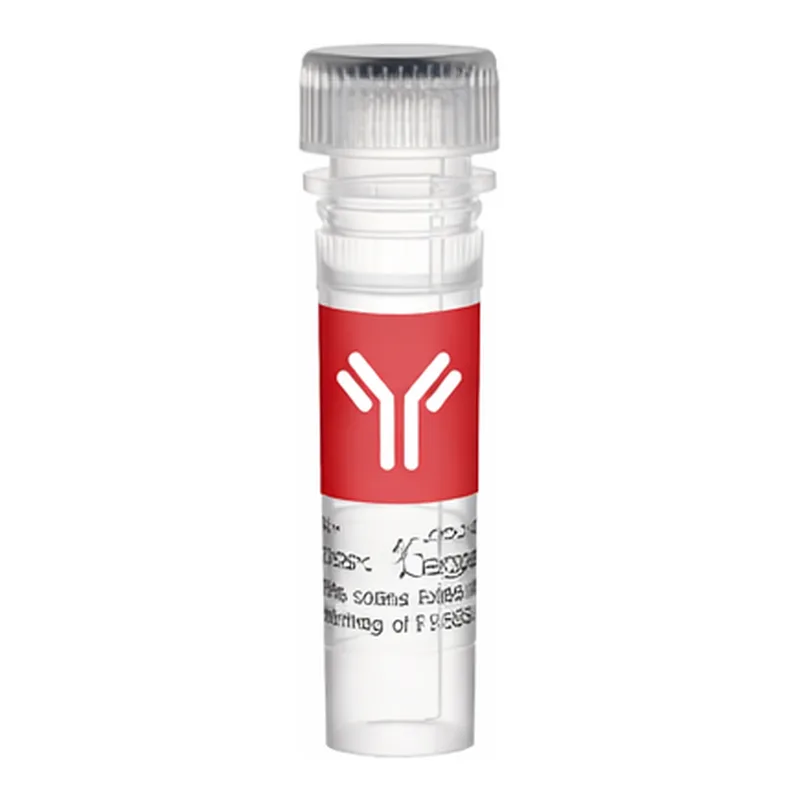
Thermo Fisher Scientific S6 Polyclonal Antibody
Rabbit polyclonal antibody against human S6 protein. Validated for WB, IHC (P), and Flow Cytometry. Recognizes multiple species based on sequence homology. Supplied as liquid, 0.5 mg/mL, purified by Protein A and antigen affinity chromatography. For re...
- 판매단위
- pk
카탈로그
1개 옵션 · 카탈로그 번호를 클릭하면 복사됩니다Thermo Fisher Scientific · Thermo Fisher Scientific S6 Polyclonal Antibody
Applications and Tested Dilution
| Application | Tested Dilution |
|---|---|
| Western Blot (WB) | 1:1,000 |
| Immunohistochemistry (Paraffin) (IHC (P)) | 1:50–1:100 |
| Flow Cytometry (Flow) | 1:10–1:50 |
Product Specifications
| Property | Description |
|---|---|
| Species Reactivity | Human |
| Host / Isotype | Rabbit / IgG |
| Class | Polyclonal |
| Type | Antibody |
| Immunogen | KLH-conjugated synthetic peptide corresponding to amino acids 220–249 of human RPS6 |
| Conjugate | Unconjugated |
| Form | Liquid |
| Concentration | 0.5 mg/mL |
| Purification | Protein A, Antigen affinity chromatography |
| Storage Buffer | PBS, pH 7.4 |
| Contains | 0.09% sodium azide |
| Storage Conditions | Store at 4°C short term. For long term storage, store at -20°C, avoiding freeze/thaw cycles. |
| Shipping Conditions | Ambient (domestic); Wet ice (international) |
| RRID | AB_2543541 |
Product Specific Information
This antibody is predicted to react with bovine, chicken, non-human primate, rat, and Xenopus based on sequence homology.
Target Information
Ribosomes, the organelles that catalyze protein synthesis, consist of a small 40S subunit and a large 60S subunit. These subunits are composed of 4 RNA species and approximately 80 structurally distinct proteins. The S6 protein, encoded by the RPS6 gene, is a component of the 40S subunit and belongs to the S6E family of ribosomal proteins. It is the major substrate of protein kinases in the ribosome, with subsets of five C-terminal serine residues phosphorylated by different kinases. Phosphorylation is induced by growth factors, tumor-promoting agents, and mitogens, and dephosphorylation occurs at growth arrest. The protein may contribute to cell growth and proliferation control through selective translation of specific mRNA classes. Multiple processed pseudogenes of this gene are dispersed throughout the genome.
For Research Use Only. Not for use in diagnostic procedures. Not for resale without express authorization.
Thermo Fisher Scientific 상품 둘러보기
전체보기
문의
0개 · 배송·재고 문의는 실시간 상담이 빠릅니다아직 등록된 문의가 없어요.