

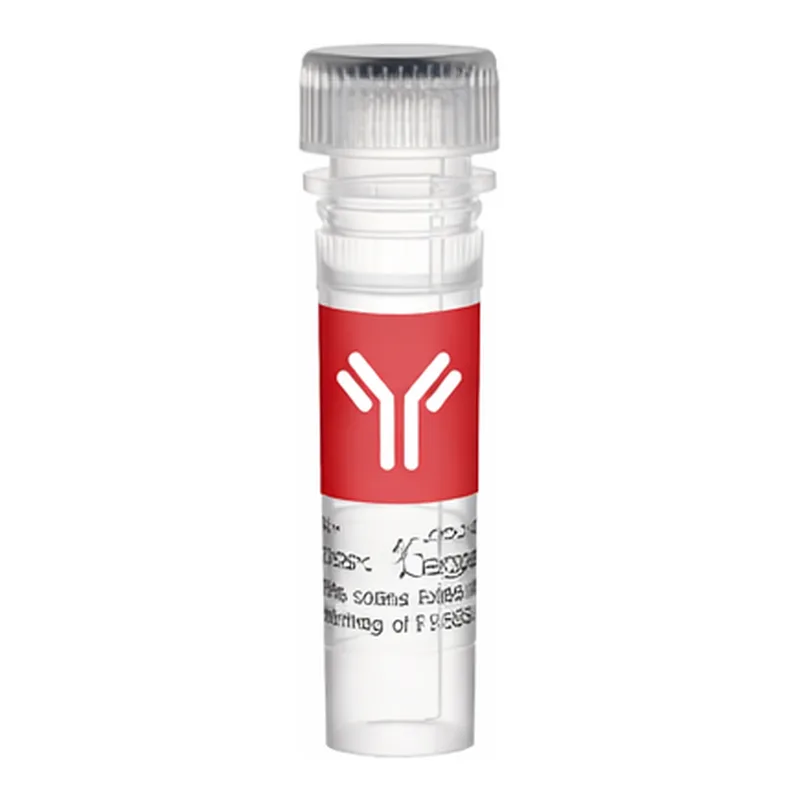
Thermo Fisher Scientific CEP104 Polyclonal Antibody
Human CEP104 단백질을 인식하는 Rabbit Polyclonal Antibody로, IHC(P)에서 1:20~1:50 희석 비율로 사용 가능. 항원 친화 크로마토그래피로 정제되었으며, PBS/glycerol 버퍼에 보관. 연구용으로 인간 CEP104 관련 단백질 분석에 적합.
- 판매단위
- pk
카탈로그
1개 옵션 · 카탈로그 번호를 클릭하면 복사됩니다Thermo Fisher Scientific · Thermo Fisher Scientific CEP104 Polyclonal Antibody
Applications
Immunohistochemistry (Paraffin) [IHC (P)]
- Tested Dilution: 1:20–1:50
Product Specifications
| 항목 | 내용 |
|---|---|
| Species Reactivity | Human |
| Host / Isotype | Rabbit / IgG |
| Class | Polyclonal |
| Type | Antibody |
| Immunogen | Recombinant Protein corresponding to Human CEP104. Recombinant protein control fragment (Product #RP-88839). |
| Conjugate | Unconjugated |
| Form | Liquid |
| Purification | Antigen affinity chromatography |
| Storage Buffer | PBS, pH 7.2, with 40% glycerol |
| Contains | 0.02% sodium azide |
| Storage Conditions | Store at 4°C short term. For long term storage, store at -20°C, avoiding freeze/thaw cycles. |
| Shipping Conditions | Wet ice |
| RRID | AB_2856171 |
Product Specific Information
Immunogen sequence:
EIVLQMVERC RIRKLQLLAH QYMISSKIEF YISESLPEYF APYQAERFRR LGYVSLCDNE KTGCKARELK SVYVDAVGQF LKLIFHQNHV NKYNIYNQVA LVAINIIGDP ADFSDESNTA SREKLIDHYL
Target Information
Chromosome 1 is the largest human chromosome, spanning about 260 million base pairs and comprising approximately 8% of the human genome. It contains around 3,000 genes, many of which are associated with various diseases such as Hutchinson-Gilford progeria (LMNA gene), familial adenomatous polyposis (MUTYH gene), Stickler syndrome, Parkinson’s disease, Gaucher disease, and Usher syndrome.
Aberrations in chromosome 1 are linked to cancers including head and neck cancer, malignant melanoma, and multiple myeloma. A breakpoint in 1q affecting the DISC1 gene is associated with schizophrenia.
For Research Use Only.
Not for use in diagnostic procedures. Not for resale without express authorization.
Thermo Fisher Scientific 상품 둘러보기
전체보기
문의
0개 · 배송·재고 문의는 실시간 상담이 빠릅니다아직 등록된 문의가 없어요.