

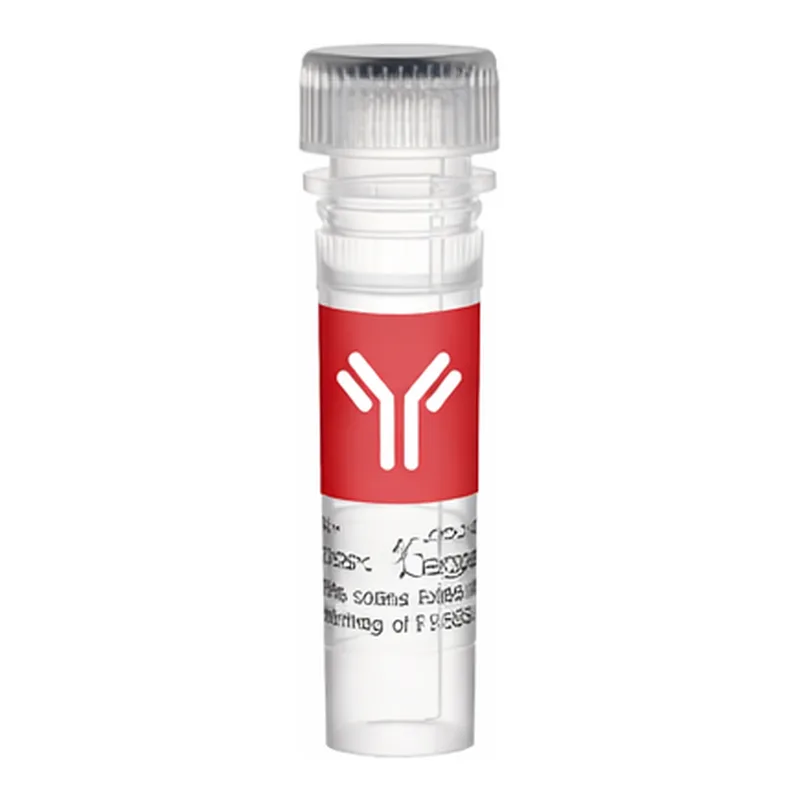
Thermo Fisher Scientific FGF10 Recombinant Rabbit Monoclonal Antibody (014)
Human FGF10 단백질을 인식하는 recombinant rabbit monoclonal 항체. 높은 특이성과 재현성을 제공하며, ELISA에 최적화됨. 보존제가 없는 액상 형태로 제공되며, 단기 4°C, 장기 -20°C 보관 권장.
- 판매단위
- pk
카탈로그
1개 옵션 · 카탈로그 번호를 클릭하면 복사됩니다Thermo Fisher Scientific · Thermo Fisher Scientific FGF10 Recombinant Rabbit Monoclonal Antibody (014)
Applications
- ELISA (ELISA): 1:5,000–1:10,000
Product Specifications
| 항목 | 내용 |
|---|---|
| Species Reactivity | Human |
| Host / Isotype | Rabbit / IgG |
| Expression System | HEK293 cells |
| Class | Recombinant Monoclonal |
| Type | Antibody |
| Clone | 014 |
| Immunogen | Recombinant Human FGF10/KGF2 Protein (Gln38–Ser208) |
| Conjugate | Unconjugated |
| Form | Liquid |
| Concentration | 1 mg/mL |
| Purification | Protein A |
| Storage Buffer | PBS |
| Contains | No preservative |
| Storage Conditions | Store at 4°C short term. For long term storage, store at -20°C, avoiding freeze/thaw cycles. |
| Shipping Conditions | Ambient (domestic); Wet ice (international) |
| RRID | AB_2786156 |
Product Specific Information
This product is preservative-free. It is recommended to add sodium azide to avoid contamination (final concentration 0.05%–0.1%).
Recombinant rabbit monoclonal antibodies are produced using in vitro expression systems. The expression systems are developed by cloning specific antibody DNA sequences from immunoreactive rabbits. Individual clones are screened to select the best candidates for production.
Advantages:
- Better specificity and sensitivity
- Lot-to-lot consistency
- Animal origin-free formulation
- Broader immunoreactivity due to rabbit immune repertoire
This antibody has specificity for Human FGF10/KGF2.
Target Information
FGF10 is a member of the fibroblast growth factor (FGF) family. FGF family members possess broad mitogenic and cell survival activities and are involved in various biological processes including embryonic development, cell growth, morphogenesis, tissue repair, tumor growth, and invasion.
This protein exhibits mitogenic activity for keratinizing epidermal cells but minimal activity for fibroblasts, similar to FGF7. Studies of the mouse homolog suggest that this gene is required for embryonic epidermal morphogenesis, including brain development, lung morphogenesis, and limb bud formation. It is also implicated as a primary factor in wound healing.
For Research Use Only. Not for use in diagnostic procedures. Not for resale without express authorization.
Thermo Fisher Scientific 상품 둘러보기
전체보기
문의
0개 · 배송·재고 문의는 실시간 상담이 빠릅니다아직 등록된 문의가 없어요.