

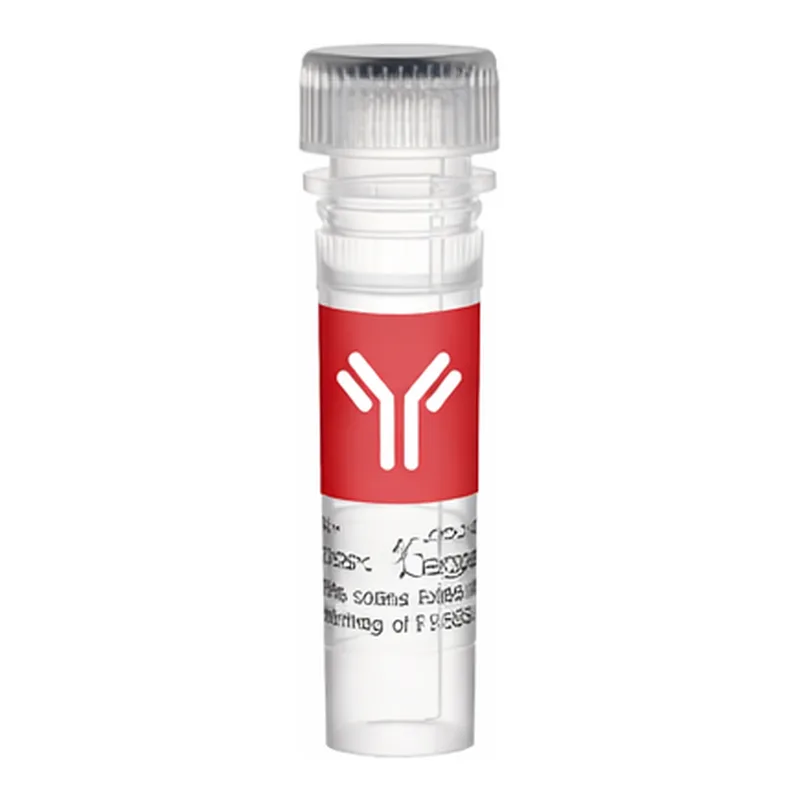
Thermo Fisher Scientific HUNK Polyclonal Antibody
Rabbit polyclonal antibody recognizing HUNK kinase, validated for IHC (Paraffin). Suitable for multiple species including human, mouse, and rat. Supplied as a liquid at 1 mg/mL in PBS with 0.1% sodium azide. For research use only.
- 카탈로그번호
- PA533857
- 판매단위
- pk
카탈로그
1개 옵션 · 카탈로그 번호를 클릭하면 복사됩니다Thermo Fisher Scientific · Thermo Fisher Scientific HUNK Polyclonal Antibody
Applications
- Immunohistochemistry (Paraffin) (IHC (P)): Tested at 8 µg/mL
Product Specifications
| 항목 | 내용 |
|---|---|
| Species Reactivity | Bovine, Dog, Chicken, Horse, Hamster, Human, Mouse, Non-human primate, Rabbit, Rat |
| Host / Isotype | Rabbit / IgG |
| Class | Polyclonal |
| Type | Antibody |
| Immunogen | Synthetic 18 amino acid peptide from Protein kinase domain of human HUNK |
| Conjugate | Unconjugated |
| Form | Liquid |
| Concentration | 1 mg/mL |
| Purification | Antigen affinity chromatography |
| Storage buffer | PBS |
| Contains | 0.1% sodium azide |
| Storage conditions | Store at 4°C short term; for long term, store at -20°C, avoiding freeze/thaw cycles |
| Shipping conditions | Ambient (domestic); Wet ice (international) |
| RRID | AB_2551226 |
Target Information
HUNK (Hormonally Up-regulated Neu-associated Kinase) is a serine/threonine kinase and a member of the mitogen-activated protein kinase family, essential for mammary tumor metastasis. Studies in mice show that HUNK deletion does not affect viability, fertility, or tumor development, and it is dispensable for murine development. HUNK participates in vesicular transport and regulates endocytosis via interaction with rabaptin-5 protein, influencing mammary gland changes during pregnancy. Expression has been observed in mouse brain, breast, embryo, and fetus, with ESTs identified in several human tissue libraries including normal ear.
For Research Use Only. Not for use in diagnostic procedures. Not for resale without express authorization.
Thermo Fisher Scientific 상품 둘러보기
전체보기
문의
0개 · 배송·재고 문의는 실시간 상담이 빠릅니다아직 등록된 문의가 없어요.