

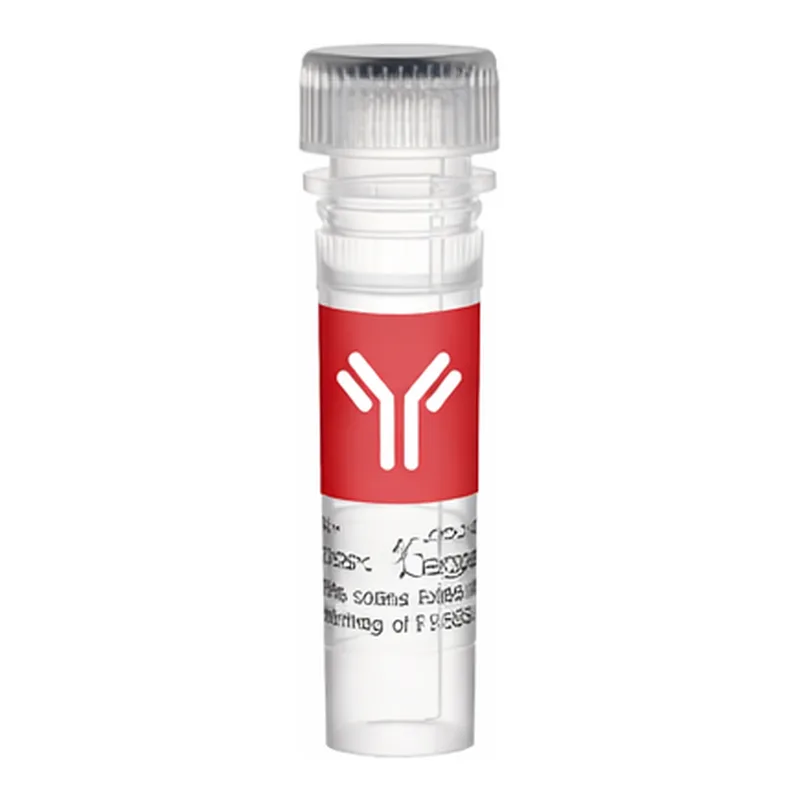
Thermo Fisher Scientific BRWD2 Polyclonal Antibody
인간 BRWD2 단백질을 인식하는 Thermo Fisher Scientific의 토끼 폴리클로날 항체. Western blot에 적합하며, 항원 친화 크로마토그래피로 정제됨. 액상 형태로 제공되며 4°C 단기, -20°C 장기 보관 권장. 연구용으로만 사용 가능.
- 판매단위
- pk
카탈로그
1개 옵션 · 카탈로그 번호를 클릭하면 복사됩니다Thermo Fisher Scientific · Thermo Fisher Scientific BRWD2 Polyclonal Antibody
Applications
Western Blot (WB)
- Tested Dilution: 1:1,000–1:2,000
Product Specifications
| 항목 | 내용 |
|---|---|
| Species Reactivity | Human |
| Host / Isotype | Rabbit / IgG |
| Class | Polyclonal |
| Type | Antibody |
| Immunogen | Recombinant fusion protein of human WDR11 |
| Conjugate | Unconjugated |
| Form | Liquid |
| Concentration | 1 mg/mL |
| Purification | Antigen affinity chromatography |
| Storage Buffer | PBS, pH 7.2, with 50% glycerol |
| Contains | 0.02% sodium azide |
| Storage Conditions | Store at 4°C short term. For long term storage, store at -20°C, avoiding freeze/thaw cycles. |
| Shipping Conditions | Wet ice |
| RRID | AB_2720294 |
Product Specific Information
The antibody was affinity-purified from rabbit antiserum by affinity chromatography using an epitope-specific immunogen. The purity is >95% (by SDS-PAGE).
Target Information
WDR11 is a member of the WD repeat protein family. WD repeats are conserved regions of approximately 40 amino acids, typically bracketed by gly-his and trp-asp (GH-WD), which may facilitate formation of multiprotein complexes. Members of this family are involved in various cellular processes such as cell cycle progression, signal transduction, apoptosis, and gene regulation. The WDR11 gene is located in the chromosome 10q25–26 region, which is frequently deleted in gliomas and other tumors, and is disrupted by the t(10;19) translocation rearrangement in glioblastoma cells. This gene location suggests that it may be a candidate gene for the tumor suppressor locus.
For Research Use Only. Not for use in diagnostic procedures. Not for resale without express authorization.
Thermo Fisher Scientific 상품 둘러보기
전체보기
문의
0개 · 배송·재고 문의는 실시간 상담이 빠릅니다아직 등록된 문의가 없어요.