

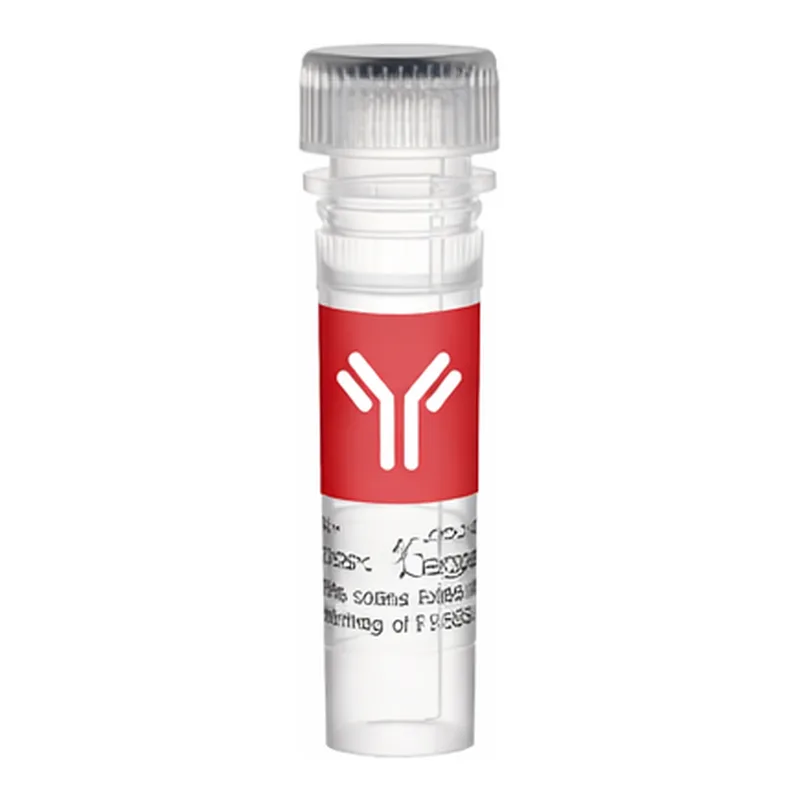
Thermo Fisher Scientific beta Amyloid Monoclonal Antibody (AMY-33)
Human 및 Mouse 반응성의 베타 아밀로이드 단일클론 항체로, AMY-33 클론을 사용한 고순도 제품. 알코올 고정 조직의 면역조직화학 염색에 적합하며, trypsin 전처리가 필요. Alzheimer 연구 및 베타-아밀로이드 관련 단백질 분석에 활용 가능.
- 판매단위
- pk
카탈로그
1개 옵션 · 카탈로그 번호를 클릭하면 복사됩니다Thermo Fisher Scientific · Thermo Fisher Scientific beta Amyloid Monoclonal Antibody (AMY-33)
Applications and Tested Dilution
| Application | Tested Dilution | Publications |
|---|---|---|
| Western Blot (WB) | 2 µg/mL | View 1 publication |
| Immunohistochemistry (IHC) | Assay-dependent | View 1 publication |
| ELISA | Assay-dependent | View 2 publications |
| Functional Assay | - | View 1 publication |
| In vitro Assay (IV) | - | View 1 publication |
| Miscellaneous PubMed | - | View 1 publication |
Product Specifications
| 항목 | 내용 |
|---|---|
| Species Reactivity | Human |
| Published Species | Human, Mouse |
| Host / Isotype | Mouse / IgG1, kappa |
| Class | Monoclonal |
| Type | Antibody |
| Clone | AMY-33 |
| Immunogen | A 28 amino acid synthetic peptide derived from the beta-amyloid peptide |
| Conjugate | Unconjugated |
| Form | Liquid |
| Concentration | 0.5 mg/mL |
| Purification | Purified |
| Storage Buffer | PBS, pH 7.4 |
| Contains | 0.1% sodium azide |
| Storage Conditions | -20°C |
| Shipping Conditions | Ambient (domestic); Wet ice (international) |
| RRID | AB_2532992 |
Product Specific Information
This beta Amyloid Monoclonal Antibody (AMY-33) is suitable for immunohistochemical staining of alcohol-fixed paraffin-embedded or frozen tissue sections. It is necessary to pretreat the tissue with trypsin digestion.
Target Information
Amyloid beta peptide (Abeta/Beta-amyloid) is the major constituent of amyloid plaques in the brains of individuals afflicted with Alzheimer’s disease. The Abeta peptide, 40–43 amino acids long, is generated from the beta-amyloid precursor protein (beta APP) in a two-step process:
- Beta-secretase (BACE) cleaves the extracellular amino-terminal domain of beta APP, producing a membrane-bound remnant.
- Gamma-secretase then cleaves within the transmembrane region, generating the amyloid beta peptide.
Gamma-secretase is a multi-subunit complex containing presenilin-1 and presenilin-2 as central components, and nicastrin, a transmembrane glycoprotein, which binds the carboxyl-terminus of beta APP to modulate amyloid beta production.
Amyloid beta is an extracellular filamentous protein found in amyloid cores, neuritic plaques, and neurofibrillary tangles. Alzheimer’s disease, the most common cause of senile dementia, is characterized by abnormal filamentous protein deposits in the brain. Beta amyloid deposits are also detected in:
- Lewy body dementia
- Down’s syndrome
- Amyloidosis (Dutch type)
- Cerebroarterial amyloidosis (cerebral amyloid angiopathy)
- Guam Parkinson-Dementia complex
For Research Use Only.
Not for use in diagnostic procedures.
Not for resale without express authorization.
Thermo Fisher Scientific 상품 둘러보기
전체보기

문의
0개 · 배송·재고 문의는 실시간 상담이 빠릅니다아직 등록된 문의가 없어요.