

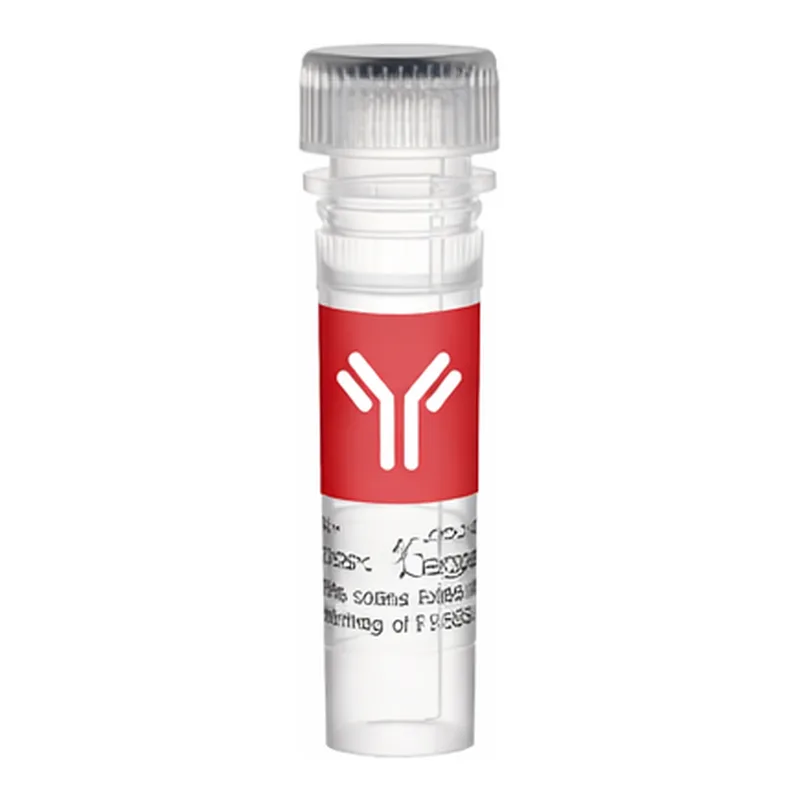
Thermo Fisher Scientific Bax Polyclonal Antibody
Thermo Fisher Scientific의 Bax Polyclonal Antibody는 인간 Bax 단백질을 인식하는 rabbit IgG 항체로, Western blot과 IHC(P) 실험에 적합합니다. 항원 친화 크로마토그래피로 정제되었으며, PBS buffer와 glycerol로 안정화되어 있습니다. 연구용으로만 사용 가능합니다.
- 카탈로그번호
- PA5110949
- 판매단위
- pk
카탈로그
1개 옵션 · 카탈로그 번호를 클릭하면 복사됩니다Thermo Fisher Scientific · Thermo Fisher Scientific Bax Polyclonal Antibody
Applications and Tested Dilutions
| Application | Tested Dilution |
|---|---|
| Western Blot (WB) | 0.04–0.4 µg/mL |
| Immunohistochemistry (Paraffin) (IHC (P)) | 1:50–1:200 |
Product Specifications
| 항목 | 내용 |
|---|---|
| Species Reactivity | Human |
| Host / Isotype | Rabbit / IgG |
| Class | Polyclonal |
| Type | Antibody |
| Immunogen | Recombinant protein corresponding to Human Bax. Recombinant protein control fragment (Product #RP-95261) |
| Conjugate | Unconjugated |
| Form | Liquid |
| Concentration | 0.1 mg/mL |
| Purification | Antigen affinity chromatography |
| Storage Buffer | PBS, pH 7.2, with 40% glycerol |
| Contains | 0.02% sodium azide |
| Storage Conditions | Store at 4°C short term. For long term storage, store at -20°C, avoiding freeze/thaw cycles. |
| Shipping Conditions | Wet ice |
| RRID | AB_2856360 |
Product Specific Information
Immunogen sequence:
GPTSSEQIMK TGALLLQGFI QDRAGRMGGE APELALDPVP QDASTKKLSE CLKRIGDELD SNMELQRMIA AVDTDSPREV FFRVAADMFS DGNFNW
Target Information
BAX는 Bcl-2 패밀리에 속하며 세포자멸사(apoptosis)의 조절에 중요한 역할을 하는 단백질입니다. Bcl-2가 항-apoptotic 단백질로 알려져 있는 반면, BAX는 pro-apoptotic 기능을 가집니다.
BAX는 homo- 및 heterodimer 형태로 존재할 수 있으며, Bcl-2 관련 단백질들과 상호작용합니다. Bax 유전자는 Bax alpha (21 kDa)와 Bax beta (24 kDa) 등의 isoform을 암호화하며, 두 isoform 모두 BH1, BH2, BH3 도메인을 포함합니다. Bax beta는 고유한 C-말단을 가지며, 소수성 막 관통 도메인이 없습니다.
Bcl-2 역시 여러 isoform으로 존재하며, Bcl-2 beta는 alpha와 달리 짧은 C-말단을 가집니다. BAX의 과발현은 세포사멸을 촉진하며, BCL-2 관련 단백질들과의 heterodimer 형성 능력을 가집니다.
For Research Use Only. Not for use in diagnostic procedures. Not for resale without express authorization.
Thermo Fisher Scientific 상품 둘러보기
전체보기
문의
0개 · 배송·재고 문의는 실시간 상담이 빠릅니다아직 등록된 문의가 없어요.