

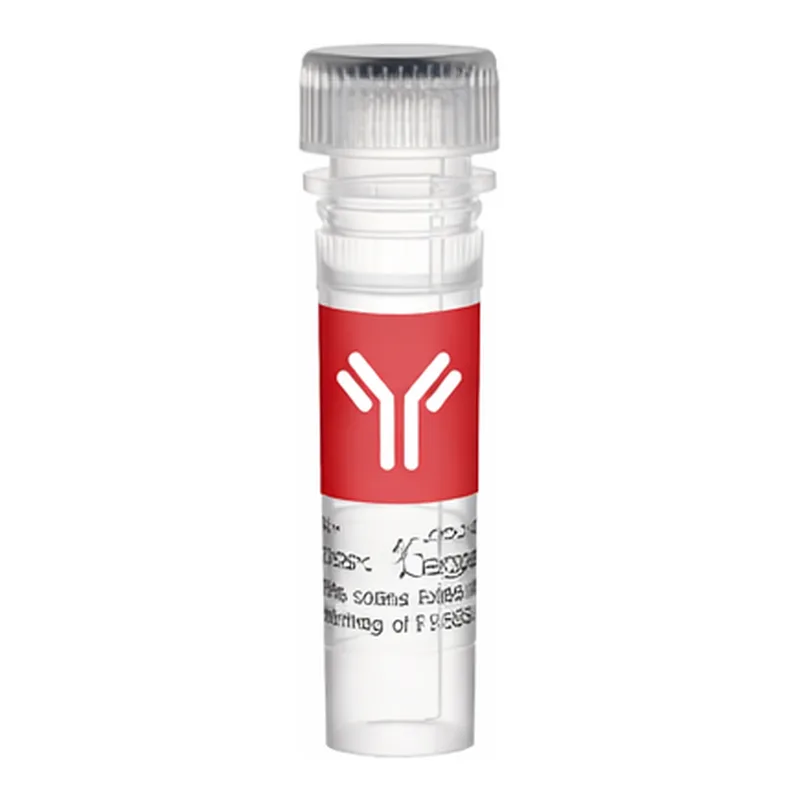
Thermo Fisher Scientific USP3 Polyclonal Antibody, MaxPab
USP3 단백질을 인식하는 토끼 유래 폴리클로날 항체로, Western blot에 적합. 인간 단백질과 반응하며 비결합형 액상 형태. 친화 크로마토그래피로 정제되어 PBS(pH 7.4)에 보관. 연구용으로만 사용 가능.
- 판매단위
- pk
카탈로그
1개 옵션 · 카탈로그 번호를 클릭하면 복사됩니다Thermo Fisher Scientific · Thermo Fisher Scientific USP3 Polyclonal Antibody, MaxPab
Thermo Fisher Scientific USP3 Polyclonal Antibody, MaxPab
Applications
- Western Blot (WB)
Tested Dilution: 1–5 µg/mL
Publications: (참고 문헌 링크 없음)
Product Specifications
| 항목 | 내용 |
|---|---|
| Species Reactivity | Human |
| Host / Isotype | Rabbit / IgG |
| Class | Polyclonal |
| Type | Antibody |
| Immunogen | USP3 (NP_006528.2, 1–520 a.a) full-length human protein |
| Conjugate | Unconjugated |
| Form | Liquid |
| Concentration | See Label |
| Purification | Affinity chromatography |
| Storage buffer | PBS, pH 7.4 |
| Contains | No preservative |
| Storage conditions | -20°C, Avoid Freeze/Thaw Cycles |
| Shipping conditions | Ambient (domestic); Wet ice (international) |
Product Specific Information
Sequence of this protein is as follows:
MECPHLSSSV CIAPDSAKFP NGSPSSWCCS VCRSNKSPWV CLTCSSVHCG RYVNGHAKKH YEDAQVPLTN HKKSEKQDKV QHTVCMDCSS YSTYCYRCDD FVVNDTKLGL VQKVREHLQN LENSAFTADR HKKRKLLENS TLNSKLLKVN GSTTAICATG LRNLGNTCFM NAILQSLSNI EQFCCYFKEL PAVELRNGKT AGRRTYHTRS QGDNNVSLVE EFRKTLCALW QGSQTAFSPE SLFYVVWKIM PNFRGYQQQD AHEFMRYLLD HLHLELQGGF NGVSRSAILQ ENSTLSASNK CCINGASTVV TAIFGGILQN EVNCLICGTE SRKFDPFLDL SLDIPSQFRS KRSKNQENGP VCSLRDCLRS FTDLEELDET ELYMCHKCKK KQKSTKKFWI QKLPKVLCLH LKRFHWTAYL RNKVDTYVEF PLRGLDMKCY LLEPENSGPE SCLYDLAAVV VHHGSGVGSG HYTAYATHEG RWFHFNDSTV TLTDEETVVK AKAYILFYVE HQAKAGSDKL
Target Information
Modification of target proteins by ubiquitin participates in a wide array of biological functions. Proteins destined for degradation or processing via the 26 S proteasome are coupled to multiple copies of ubiquitin. Attachment of ubiquitin or ubiquitin-related molecules may also result in changes in subcellular distribution or modification of protein activity.
Deubiquitination is catalyzed by proteases called deubiquitinating enzymes, which fall into four distinct families:
- Ubiquitin C-terminal hydrolases
- Ubiquitin-specific processing proteases (USPs)
- OTU-domain ubiquitin-aldehyde-binding proteins
- Jab1/Pad1/MPN-domain-containing metallo-enzymes
Among these, USPs are the most widespread and conserved across evolution, releasing ubiquitin from conjugated proteins. They have similar catalytic domains (Cys and His boxes) but variable terminal extensions for substrate recognition and localization.
For Research Use Only. Not for use in diagnostic procedures. Not for resale without express authorization.
제품 이미지
(이미지 없음 또는 제거됨)
Thermo Fisher Scientific 상품 둘러보기
전체보기
문의
0개 · 배송·재고 문의는 실시간 상담이 빠릅니다아직 등록된 문의가 없어요.