

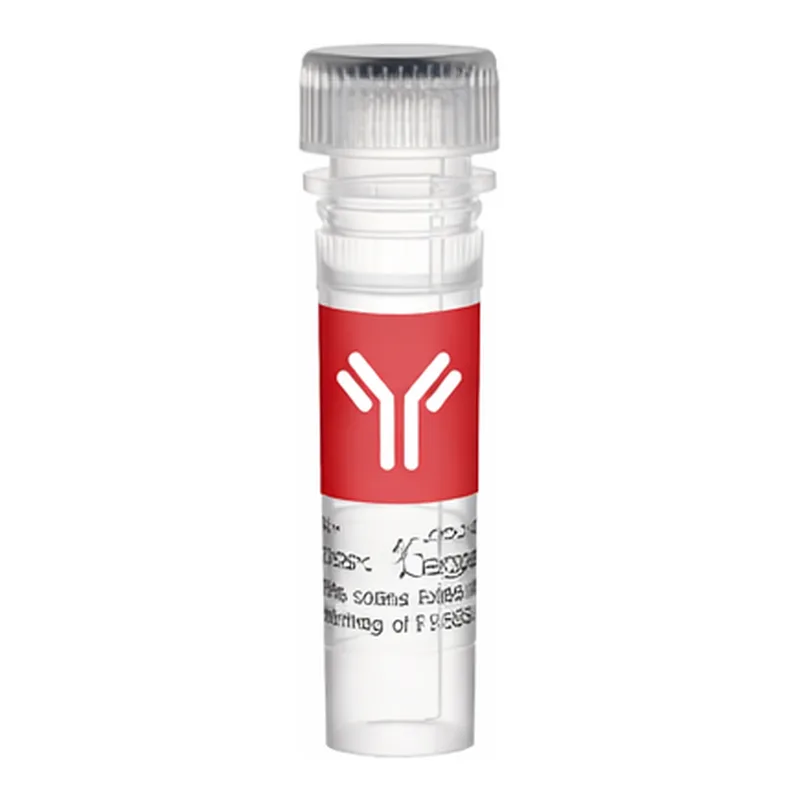
Thermo Fisher Scientific PD-1 (CD279) Recombinant Rat Monoclonal Antibody (RMP1-14)
마우스 PD-1 단백질에 특이적으로 결합하는 재조합 랫트 단클론 항체입니다. IHC(F), Flow Cytometry, Inhibition Assay에 사용 가능합니다. HEK293 세포에서 발현되었으며, Protein A로 정제된 액상 형태로 제공됩니다. 연구용으로만 사용 가능합니다.
- 판매단위
- pk
카탈로그
1개 옵션 · 카탈로그 번호를 클릭하면 복사됩니다Thermo Fisher Scientific · Thermo Fisher Scientific PD-1 (CD279) Recombinant Rat Monoclonal Antibody (RMP1-14)
Applications
Immunohistochemistry (Frozen) (IHC (F))
- Tested Dilution: Assay-dependent
Flow Cytometry (Flow)
- Tested Dilution: Assay-dependent
Inhibition Assays (IA)
- Tested Dilution: Assay-dependent
Product Specifications
| 항목 | 내용 |
|---|---|
| Species Reactivity | Mouse |
| Host / Isotype | Rat / IgG2a, kappa |
| Expression System | HEK293 cells |
| Class | Recombinant Monoclonal |
| Type | Antibody |
| Clone | RMP1-14 |
| Immunogen | The original rat hybridoma was generated by immunizing Sprague Dawley rats with mouse PD-1-transfected BHK cells. A P3U1 myeloma was used as the fusion partner. |
| Conjugate | Unconjugated |
| Form | Liquid |
| Concentration | 1 mg/mL |
| Purification | Protein A |
| Storage Buffer | PBS |
| Contains | 0.02% ProClin 300 |
| Storage Conditions | Store at 4°C short term. For long term storage, store at -20°C, avoiding freeze/thaw cycles. |
| Shipping Conditions | Wet ice |
| RRID | AB_3074527 |
Product Specific Information
Specificity: This antibody binds to murine PD-1.
Target Information
Cell-mediated immune responses are initiated by T lymphocytes that are themselves stimulated by cognate peptides bound to MHC molecules on antigen-presenting cells (APC).
T-cell activation is generally self-limited as activated T cells express receptors such as PD-1 (also known as PDCD-1) that mediate inhibitory signals from the APC.
PD-1 can bind two different but related ligands, PDL-1 and PDL-2. Upon binding to either of these ligands, signals generated by PD-1 inhibit the activation of the immune response in the absence of “danger signals” such as LPS or other molecules associated with bacteria or other pathogens.
Evidence for this is seen in PD-1 knockout mice, which exhibit hyperactivated immune systems and autoimmune diseases. Despite its predicted molecular weight, PD-1 often migrates at higher molecular weight in SDS-PAGE.
For Research Use Only. Not for use in diagnostic procedures. Not for resale without express authorization.
Thermo Fisher Scientific 상품 둘러보기
전체보기
문의
0개 · 배송·재고 문의는 실시간 상담이 빠릅니다아직 등록된 문의가 없어요.