

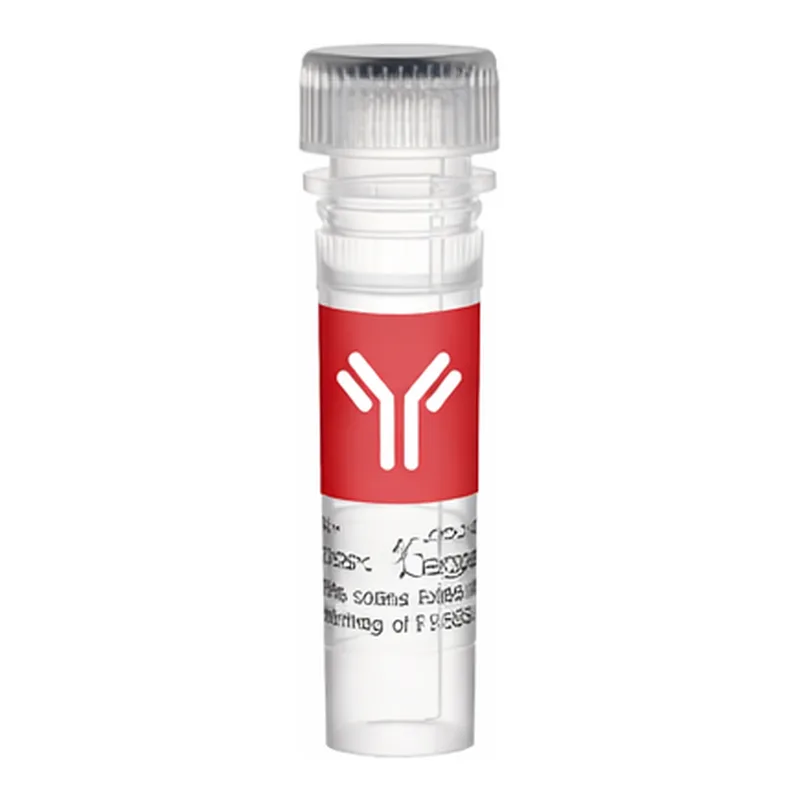
Thermo Fisher Scientific p53 Tumor Suppressor Protein Monoclonal Antibody (BP53-12)
p53 종양억제 단백질을 인식하는 BP53-12 단클론 항체로, 인간 및 다양한 종에 반응. Western blot 및 IHC 등 다양한 응용에 적합하며, 단백질 A/G로 정제된 액상 형태. 연구용으로만 사용 가능.
- 판매단위
- pk
카탈로그
1개 옵션 · 카탈로그 번호를 클릭하면 복사됩니다Thermo Fisher Scientific · Thermo Fisher Scientific p53 Tumor Suppressor Protein Monoclonal Antibody (BP53-12)
Applications
| Application | Tested Dilution |
|---|---|
| Western Blot (WB) | 1–2 µg/mL |
| Immunohistochemistry (Paraffin) (IHC (P)) | Assay-dependent |
| Immunohistochemistry (PFA fixed) (IHC (PFA)) | 1–2 µg/mL |
Product Specifications
| Specification | Description |
|---|---|
| Species Reactivity | Dog, Chicken, Hamster, Human, Non-human primate |
| Host / Isotype | Mouse / IgG2a, kappa |
| Class | Monoclonal |
| Type | Antibody |
| Clone | BP53-12 |
| Immunogen | Recombinant human wild-type p53 protein |
| Conjugate | Unconjugated |
| Form | Liquid |
| Concentration | 1 mg/mL |
| Purification | Protein A/G |
| Storage Buffer | PBS, pH 7.4 |
| Contains | No preservative |
| Storage Conditions | -20°C, Avoid Freeze/Thaw Cycles |
| Shipping Conditions | Ambient (domestic); Wet ice (international) |
Product Specific Information
Does not react with Mouse or Rat.
Target Information
The tumor suppressor protein p53 is a sequence-specific transcription factor activated by cellular stress. It mediates cell cycle arrest or apoptosis in response to DNA damage or nucleotide starvation. p53 activation leads to transcription of genes such as p21waf1, which regulate G1 or G2/M arrest.
Structurally, p53 includes:
- N-terminal transactivation domain
- Central DNA-binding domain
- Oligomerisation domain
- C-terminal regulatory domain
Phosphorylation at Ser15 is critical for activation and stabilization, while Ser392 phosphorylation is associated with tumor formation. p53 functions to prevent proliferation of damaged cells and acts as an anticancer agent. It is also linked to aging, oxidative stress, and learning/memory processes through its role in LTP (Long Term Potentiation).
In normal cells, p53 levels are low, but in transformed cell lines, expression is high, contributing to malignancy. Mutations in TP53 disrupt DNA binding and tumor suppressor activity, occurring both as somatic and germline mutations (e.g., Li-Fraumeni syndrome).
For Research Use Only.
Not for use in diagnostic procedures.
Not for resale without express authorization.
Thermo Fisher Scientific 상품 둘러보기
전체보기
문의
0개 · 배송·재고 문의는 실시간 상담이 빠릅니다아직 등록된 문의가 없어요.