

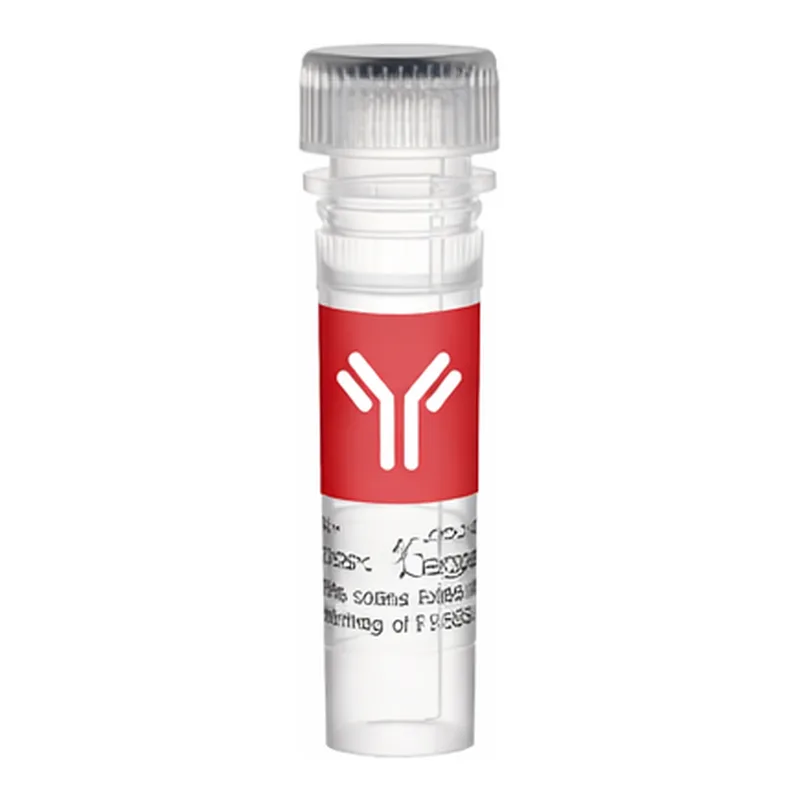
Thermo Fisher Scientific Glutamine Synthetase Monoclonal Antibody (A3G2)
Glutamine Synthetase 단백질을 인식하는 Mouse Monoclonal Antibody (Clone A3G2). WB, IHC, Flow Cytometry에 적합. 인간 및 마우스 반응성. Protein G 정제, 2 mg/mL 농도, 안정적 액상 형태로 제공.
- 카탈로그번호
- MA542408
- 판매단위
- pk
카탈로그
1개 옵션 · 카탈로그 번호를 클릭하면 복사됩니다Thermo Fisher Scientific · Thermo Fisher Scientific Glutamine Synthetase Monoclonal Antibody (A3G2)
Thermo Fisher Scientific Glutamine Synthetase Monoclonal Antibody (A3G2)
Applications and Tested Dilutions
| Application | Tested Dilution |
|---|---|
| Western Blot (WB) | 1:500–1:2,000 |
| Immunohistochemistry (Paraffin) (IHC (P)) | 1:500–1:2,000 |
| Flow Cytometry (Flow) | 1:50–1:100 |
Product Specifications
| Specification | Description |
|---|---|
| Species Reactivity | Human, Mouse |
| Host / Isotype | Mouse / IgG2a |
| Class | Monoclonal |
| Type | Antibody |
| Clone | A3G2 |
| Immunogen | Recombinant protein within human Glutamine synthetase aa 190–373 |
| Conjugate | Unconjugated |
| Form | Liquid |
| Concentration | 2 mg/mL |
| Purification | Protein G |
| Storage Buffer | TBS, pH 7.4, with 50% glycerol, 0.2% BSA |
| Contains | 0.05% sodium azide |
| Storage Conditions | Store at 4°C short term. For long term storage, store at -20°C, avoiding freeze/thaw cycles. |
| Shipping Conditions | Wet ice |
| RRID | AB_2911549 |
Product Specific Information
- Positive Control: SK-Br-3 cell lysate, 293 cell lysate, human liver tissue, mouse liver tissue, THP-1
- Subcellular Location: Microsome, Cytosol, Mitochondrion, Cell membrane
Target Information
Glutamine synthase is part of the glutamine synthetase family. Ammonia incorporation in animals occurs through the actions of glutamate dehydrogenase and glutamine synthase. Glutamate plays a central role in mammalian nitrogen flow, serving as both a nitrogen donor and acceptor. It also regulates neurotransmitter glutamate metabolism. Because of the multiple functions and importance of GS in cellular metabolism, both catalytic activities and synthesis are highly regulated. GS activity is controlled by adenylylation and is decreased in the cerebral cortex of brains affected by Alzheimer’s disease, particularly near senile plaques, and under glucose deprivation conditions.
For Research Use Only. Not for use in diagnostic procedures. Not for resale without express authorization.
제품 이미지
(이미지 정보는 본문 내 텍스트로 통합됨)
Thermo Fisher Scientific 상품 둘러보기
전체보기
문의
0개 · 배송·재고 문의는 실시간 상담이 빠릅니다아직 등록된 문의가 없어요.