

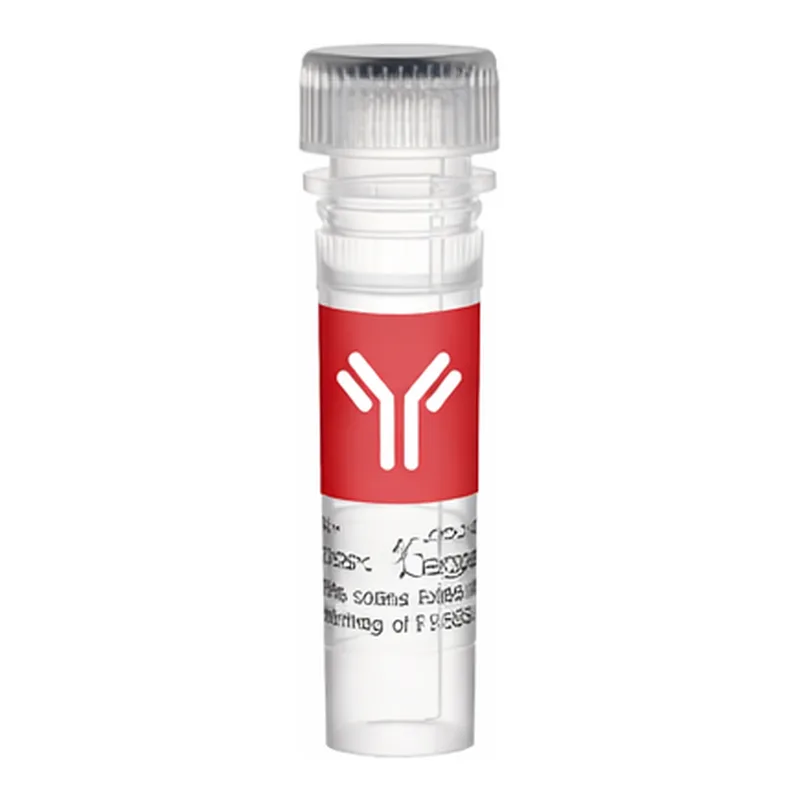
Thermo Fisher Scientific KCNQ1 Polyclonal Antibody
KCNQ1 단백질을 인식하는 Rabbit Polyclonal 항체로, Western blot과 IHC(P)에서 사용 가능. Human, Mouse, Rat 반응성. 동결건조 형태로 제공되며, 장기 보관 시 -20°C 권장. 연구용으로 전압 개폐성 K+ 채널 연구에 적합.
- 판매단위
- pk
카탈로그
1개 옵션 · 카탈로그 번호를 클릭하면 복사됩니다Thermo Fisher Scientific · Thermo Fisher Scientific KCNQ1 Polyclonal Antibody
Applications and Tested Dilution
| Application | Tested Dilution |
|---|---|
| Western Blot (WB) | 1:200–1:2,000 |
| Immunohistochemistry (Paraffin) (IHC (P)) | 1:1,000 |
| Miscellaneous PubMed (Misc) | – |
Product Specifications
| 항목 | 내용 |
|---|---|
| Species Reactivity | Human, Mouse, Rat |
| Published Species | Not Applicable |
| Host / Isotype | Rabbit / Ig |
| Class | Polyclonal |
| Type | Antibody |
| Immunogen | A synthetic peptide from the C-terminal region of mouse KCNQ1 conjugated to blue carrier protein was used as the antigen. |
| Conjugate | Unconjugated |
| Form | Lyophilized |
| Concentration | Not Determined |
| Storage Buffer | Whole serum |
| Contains | No preservative |
| Storage Conditions | Store at 4°C short term. For long term storage, store at -20°C, avoiding freeze/thaw cycles. Glycerol (1:1) may be added for added stability. |
| Shipping Conditions | Ambient (domestic); Wet ice (international) |
Product Specific Information
- Reconstitute in 100 µL of sterile water. Centrifuge to remove any insoluble material.
- The peptide is homologous in human and rat.
- Specificity: KCNQ1.
Target Information
Voltage-gated K⁺ channels in the plasma membrane control repolarization and the frequency of action potentials in neurons, muscles, and other excitable cells.
A specific K⁺ channel, comprised of an alpha subunit KCNQ1 and a beta subunit KCNE1, is predominantly expressed in the heart and cochlea and regulates the slow, depolarization-activated potassium current.
Mutations in KCNQ1 and KCNE1 genes lead to cardiac disease due to impaired electrical signaling, while mutations in KCNQ4 are associated with deafness.
KCNQ proteins, including KCNQ1 and KCNQ4, contain six transmembrane domains and function as tetramers. KCNQ4 forms heteromeric channels with KCNQ3 and is expressed in several tissues, including cochlear outer hair cells.
For Research Use Only. Not for use in diagnostic procedures. Not for resale without express authorization.
Thermo Fisher Scientific 상품 둘러보기
전체보기
문의
0개 · 배송·재고 문의는 실시간 상담이 빠릅니다아직 등록된 문의가 없어요.