

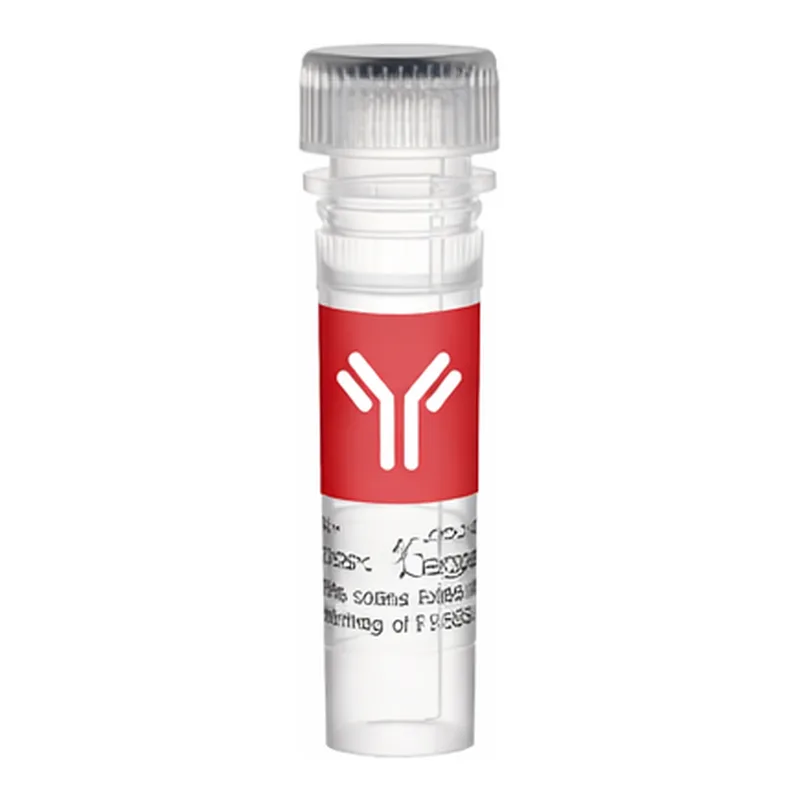
Thermo Fisher Scientific Yellow fever virus envelope glycoprotein E Polyclonal Antibody
Yellow fever virus envelope glycoprotein E를 인식하는 Rabbit Polyclonal Antibody로, ELISA에 적합합니다. 비결합형 액상 포맷이며, 1 mg/mL 농도로 제공됩니다. 연구용으로만 사용 가능하며, -20°C에서 보관합니다.
- 판매단위
- pk
카탈로그
1개 옵션 · 카탈로그 번호를 클릭하면 복사됩니다Thermo Fisher Scientific · Thermo Fisher Scientific Yellow fever virus envelope glycoprotein E Polyclonal Antibody
Applications
- ELISA (ELISA)
Tested Dilution: 1:500–1:1,000
Product Specifications
| 항목 | 내용 |
|---|---|
| Host / Isotype | Rabbit / IgG |
| Class | Polyclonal |
| Type | Antibody |
| Immunogen | KLH conjugated synthetic peptide derived from Yellow fever virus envelope glycoprotein E (IIVGRGDSRLTY) |
| Conjugate | Unconjugated |
| Form | Liquid |
| Concentration | 1 mg/mL |
| Storage Conditions | -20°C |
| Shipping Conditions | Ambient (domestic); Wet ice (international) |
Target Information
Capsid protein C self-assembles to form an icosahedral capsid about 30 nm in diameter, encapsulating the genomic RNA. The prM protein acts as a chaperone for envelope protein E during intracellular virion assembly by masking and inactivating the fusion peptide of envelope protein E.
In the final step of virion assembly, prM is matured to prevent premature activation of the viral fusion peptide in the acidic pH of the trans-Golgi network. After cleavage by host furin, the pr peptide is released extracellularly, allowing dissociation of small envelope protein M and envelope protein E homodimers.
Envelope protein E mediates host cell receptor binding and subsequent clathrin-mediated endocytosis, followed by membrane fusion with host late endosomes. Synthesized as a homodimer with prM, envelope protein E later dissociates and homodimerizes after prM cleavage.
Non-structural proteins (NS1–NS5) are involved in viral replication, immune regulation, and polyprotein processing. NS3, in complex with NS2B, exhibits serine protease, NTPase, and RNA helicase activities, essential for polyprotein cleavage and RNA unwinding. NS4A induces endoplasmic reticulum membrane rearrangements to form replication complexes.
For Research Use Only. Not for use in diagnostic procedures. Not for resale without express authorization.
Thermo Fisher Scientific 상품 둘러보기
전체보기
문의
0개 · 배송·재고 문의는 실시간 상담이 빠릅니다아직 등록된 문의가 없어요.