

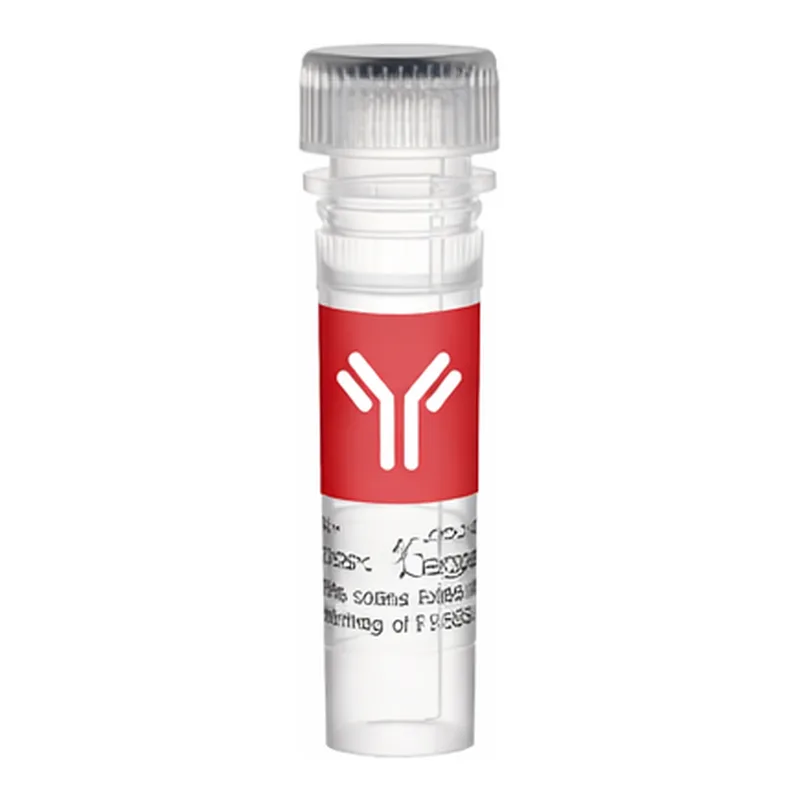
Thermo Fisher Scientific Lysine Acetylated Polyclonal Antibody
Lysine 아세틸화 단백질을 검출하는 Rabbit Polyclonal 항체로, Western blot에 적합합니다. 고순도 친화성 정제 제품이며, -20°C 보관 시 안정적입니다. 비보존제 액상 형태로 연구용에만 사용 가능합니다.
- 판매단위
- pk
카탈로그
1개 옵션 · 카탈로그 번호를 클릭하면 복사됩니다Thermo Fisher Scientific · Thermo Fisher Scientific Lysine Acetylated Polyclonal Antibody
Applications
- Western Blot (WB): 1:500–1:1,000
Product Specifications
| 항목 | 내용 |
|---|---|
| Species Reactivity | Chemical |
| Host / Isotype | Rabbit / IgG |
| Class | Polyclonal |
| Type | Antibody |
| Immunogen | Anti-Lysine Acetylated Antibody was prepared from whole rabbit serum produced by repeated immunizations with acetylated lysine conjugated KLH. |
| Conjugate | Unconjugated |
| Form | Liquid |
| Concentration | 1 mg/mL |
| Purification | Affinity chromatography |
| Storage Buffer | 0.02 M potassium phosphate, pH 7.2, with 50% glycerol, 0.15 M NaCl |
| Contains | No preservative |
| Storage Conditions | -20°C, Avoid Freeze/Thaw Cycles |
| Shipping Conditions | Ambient (domestic); Wet ice (international) |
Product Specific Information
- Store at -20°C prior to opening.
- Aliquot contents and freeze at -20°C or below for extended storage.
- Centrifuge product if not completely clear after standing at room temperature.
- This product is stable for several weeks at 4°C as an undiluted liquid (dilute only prior to immediate use).
Target Information
In the nucleus, DNA is tightly packed into nucleosomes generating an environment that is highly repressive toward DNA processes such as transcription.
Acetylation of lysine residues within proteins has emerged as an important mechanism used by cells to overcome this repression.
The acetylation of non-histone proteins such as transcription factors, as well as histones, appears to be involved in this process.
Acetylation may result in structural transitions as well as specific signaling within discrete chromatin domains.
The role of acetylation in intracellular signaling has been inferred from the binding of acetylated peptides by the conserved bromodomain.
Furthermore, recent findings suggest that bromodomain/acetylated-lysine recognition can serve as a regulatory mechanism in protein-protein interactions in numerous cellular processes such as chromatin remodeling and transcriptional activation.
For Research Use Only.
Not for use in diagnostic procedures.
Not for resale without express authorization.
Thermo Fisher Scientific 상품 둘러보기
전체보기
문의
0개 · 배송·재고 문의는 실시간 상담이 빠릅니다아직 등록된 문의가 없어요.