

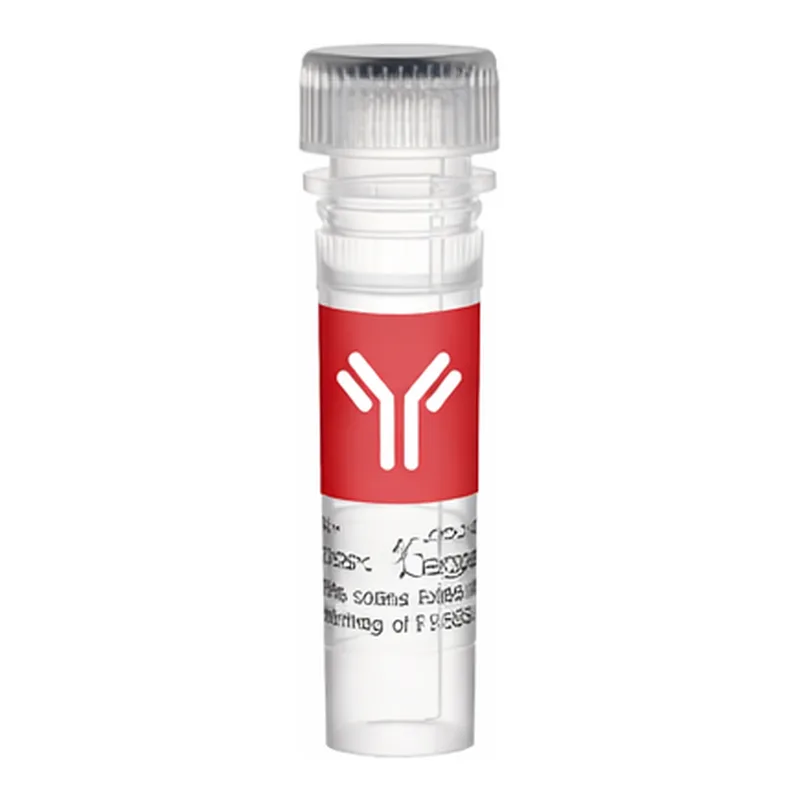
Thermo Fisher Scientific Tau Recombinant Rabbit Monoclonal Antibody (SD205-09)
Tau 단백질을 인식하는 재조합 토끼 단일클론 항체로, 인간·마우스·랫트 시료에 반응합니다. WB, IHC, ICC/IF, Flow Cytometry 등 다양한 응용에 적합하며, 고순도 Protein A 정제 및 안정적인 액상 형태로 제공됩니다. 신경퇴행성 질환 연구용으로 이상적입니다.
- 카탈로그번호
- MA542451
- 판매단위
- pk
카탈로그
1개 옵션 · 카탈로그 번호를 클릭하면 복사됩니다Thermo Fisher Scientific · Thermo Fisher Scientific Tau Recombinant Rabbit Monoclonal Antibody (SD205-09)
Applications and Tested Dilution
| Application | Tested Dilution |
|---|---|
| Western Blot (WB) | 1:1,000 |
| Immunohistochemistry (Paraffin) (IHC (P)) | 1:1,000 |
| Immunocytochemistry (ICC/IF) | 1:100–1:500 |
| Flow Cytometry (Flow) | 1:50–1:100 |
Product Specifications
| Specification | Description |
|---|---|
| Species Reactivity | Human, Mouse, Rat |
| Host / Isotype | Rabbit / IgG |
| Expression System | HEK293 cells |
| Class | Recombinant Monoclonal |
| Type | Antibody |
| Clone | SD205-09 |
| Immunogen | Synthetic peptide within human Tau aa 600–640 |
| Conjugate | Unconjugated |
| Form | Liquid |
| Concentration | 1 mg/mL |
| Purification | Protein A |
| Storage Buffer | TBS, pH 7.4, with 40% glycerol, 0.05% BSA |
| Contains | 0.05% sodium azide |
| Storage Conditions | Store at 4°C short term. For long term storage, store at -20°C, avoiding freeze/thaw cycles. |
| Shipping Conditions | Wet ice |
| RRID | AB_2911592 |
Product Specific Information
- Positive Control: SH-SY5Y, HeLa, SHG-44
- Subcellular Location: Cytoplasm, Cell membrane, Cell projection
Target Information
Tau is a neuronal microtubule-associated protein found predominantly on axons. Its primary function is to promote tubulin polymerization and stabilize microtubules. The C-terminus binds axonal microtubules, while the N-terminus interacts with neural plasma membrane components, suggesting Tau acts as a linker between these structures.
Axonal polarity is determined by Tau/MAPT localization within the neuronal cell body domain defined by the centrosome. Short isoforms contribute to cytoskeletal plasticity, while longer isoforms provide structural stability.
In its hyper-phosphorylated form, Tau forms paired helical filaments (PHF), the building blocks of neurofibrillary lesions characteristic of Alzheimer’s disease (AD). Hyper-phosphorylation disrupts Tau’s microtubule-binding function, leading to destabilization and neuronal degeneration. Multiple kinases, including GSK-3β, PKA, cdk5, and casein kinase II, are known to phosphorylate Tau. Hyper-phosphorylated Tau is also found in neurofibrillary lesions associated with other CNS disorders such as Pick’s disease, frontotemporal dementia, corticobasal degeneration, and progressive supranuclear palsy.
For Research Use Only. Not for use in diagnostic procedures. Not for resale without express authorization.
제품 이미지
Thermo Fisher Scientific 상품 둘러보기
전체보기
문의
0개 · 배송·재고 문의는 실시간 상담이 빠릅니다아직 등록된 문의가 없어요.