

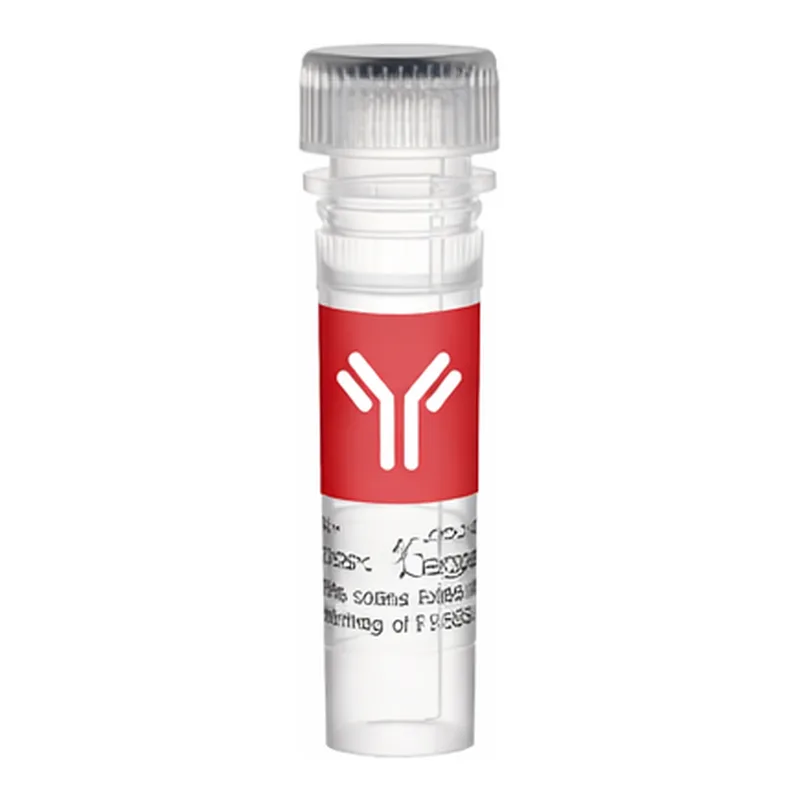
Thermo Fisher Scientific DC-SIGN Monoclonal Antibody (MR-1)
인간 DC-SIGN 단백질을 인식하는 마우스 단클론 항체입니다. ICC/IF, Flow Cytometry, 기능 분석에 사용됩니다. 단백질 A로 정제된 저엔도톡신, 무보존제 포뮬레이션이며, PBS 용액 상태로 제공됩니다. 연구용으로만 사용 가능합니다.
- 판매단위
- pk
카탈로그
1개 옵션 · 카탈로그 번호를 클릭하면 복사됩니다Thermo Fisher Scientific · Thermo Fisher Scientific DC-SIGN Monoclonal Antibody (MR-1)
Applications and Tested Dilutions
| Application | Tested Dilution |
|---|---|
| Immunocytochemistry (ICC/IF) | 1:100 |
| Flow Cytometry (Flow) | Assay-dependent |
| Functional Assay (Functional) | Assay-dependent |
Product Specifications
| 항목 | 내용 |
|---|---|
| Species Reactivity | Human |
| Host / Isotype | Mouse / IgG1 |
| Class | Monoclonal |
| Type | Antibody |
| Clone | MR-1 |
| Immunogen | Immature myeloid monocyte-derived dendritic cells (MDDCs) expressing DC-SIGN (CD209, UniProt ID: Q9NNX6-1, antigen range: 1–404) |
| Conjugate | Unconjugated |
| Form | Liquid |
| Concentration | 1 mg/mL |
| Purification | Protein A |
| Storage Buffer | PBS |
| Contains | No preservative |
| Storage Conditions | -20°C, Avoid Freeze/Thaw Cycles |
| Shipping Conditions | Ambient (domestic); Wet ice (international) |
| RRID | AB_2538344 |
Additional Formats
Product Specific Information
This product is a low-endotoxin, preservative-free formulation.
For FACS analysis, use 10 µL of the suggested working dilution to label 1×10⁶ cells in 100 µL.
Target Information
The DC-SIGN (CD209) gene encodes a transmembrane receptor expressed on the surface of dendritic cells and macrophages. It plays a key role in the innate immune system by recognizing a wide range of pathogens, including parasites and viruses.
The protein contains three main domains:
- N-terminal transmembrane domain
- Tandem-repeat neck domain
- C-type lectin carbohydrate recognition domain
The extracellular region functions as both a pathogen recognition receptor and a cell adhesion receptor by binding carbohydrate ligands on microbial and endogenous cell surfaces.
The neck region mediates homo-oligomerization, enabling high-avidity binding to multivalent ligands.
Rare variations in the 23 amino acid repeats within the neck domain can significantly affect ligand-binding ability.
DC-SIGN is closely related to L-SIGN (GeneID 10332), with differences in ligand-binding properties and tissue distribution.
Alternative splicing results in multiple variants.
For Research Use Only. Not for use in diagnostic procedures. Not for resale without express authorization.
Thermo Fisher Scientific 상품 둘러보기
전체보기
문의
0개 · 배송·재고 문의는 실시간 상담이 빠릅니다아직 등록된 문의가 없어요.