

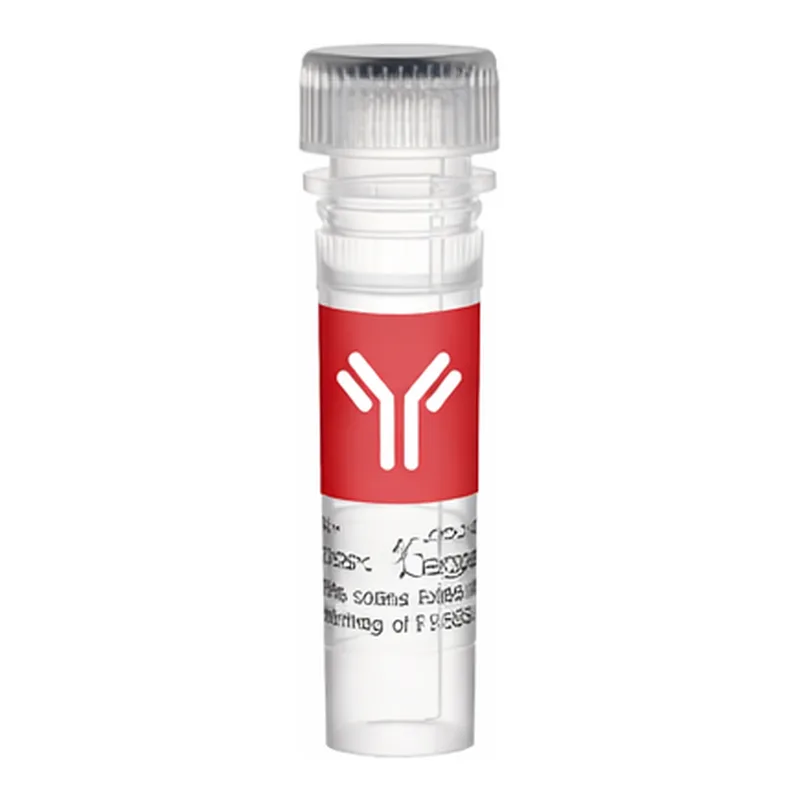
Thermo Fisher Scientific DNAI1 Recombinant Rabbit Monoclonal Antibody (JM11-38)
Recombinant rabbit monoclonal antibody targeting DNAI1. Validated for WB and IHC applications. Offers high specificity, lot-to-lot consistency, and animal origin-free formulation. Suitable for human, mouse, and rat samples. For research use only.
- 카탈로그번호
- MA532861
- 판매단위
- pk
카탈로그
1개 옵션 · 카탈로그 번호를 클릭하면 복사됩니다Thermo Fisher Scientific · Thermo Fisher Scientific DNAI1 Recombinant Rabbit Monoclonal Antibody (JM11-38)
Applications and Tested Dilution
| Application | Tested Dilution |
|---|---|
| Western Blot (WB) | 1:500–1:1,000 |
| Immunohistochemistry (Paraffin) (IHC (P)) | 1:50–1:200 |
Product Specifications
| Item | Description |
|---|---|
| Species Reactivity | Human, Mouse, Rat |
| Host / Isotype | Rabbit / IgG |
| Expression System | HEK293 cells |
| Class | Recombinant Monoclonal |
| Type | Antibody |
| Clone | JM11-38 |
| Immunogen | Recombinant protein within Human Dynein intermediate chain 1 (aa 1–240) |
| Conjugate | Unconjugated |
| Form | Liquid |
| Concentration | 1 mg/mL |
| Purification | Protein A |
| Storage Buffer | TBS, pH 7.4, with 40% Glycerol, 0.05% BSA |
| Contains | 0.05% sodium azide |
| Storage Conditions | Store at 4°C short term. For long term storage, store at -20°C, avoiding freeze/thaw cycles. |
| Shipping Conditions | Wet ice |
| RRID | AB_2810122 |
Product Specific Information
Recombinant rabbit monoclonal antibodies are produced using in vitro expression systems developed by cloning specific antibody DNA sequences from immunoreactive rabbits. Individual clones are screened to select the best candidates for production.
Advantages include:
- Better specificity and sensitivity
- Lot-to-lot consistency
- Animal origin-free formulations
- Broader immunoreactivity due to larger rabbit immune repertoire
Target Information
Eukaryotic cells rely on actin and microtubule-based protein motors to generate intracellular movements. These motors hydrolyze ATP to produce force and movement along cytoskeletal polymers—actin (myosin family) or microtubules (kinesin and dynein families).
Dynein participates in cytoplasmic motile functions such as chromosomal movement, retrograde organelle and axonal transport, endocytic pathway regulation, and Golgi apparatus organization.
It is composed of two or three distinct heavy chains (~450 kDa), three intermediate chains (70–125 kDa), and at least four light chains (15–25 kDa).
For Research Use Only. Not for use in diagnostic procedures. Not for resale without express authorization.
Thermo Fisher Scientific 상품 둘러보기
전체보기
문의
0개 · 배송·재고 문의는 실시간 상담이 빠릅니다아직 등록된 문의가 없어요.