

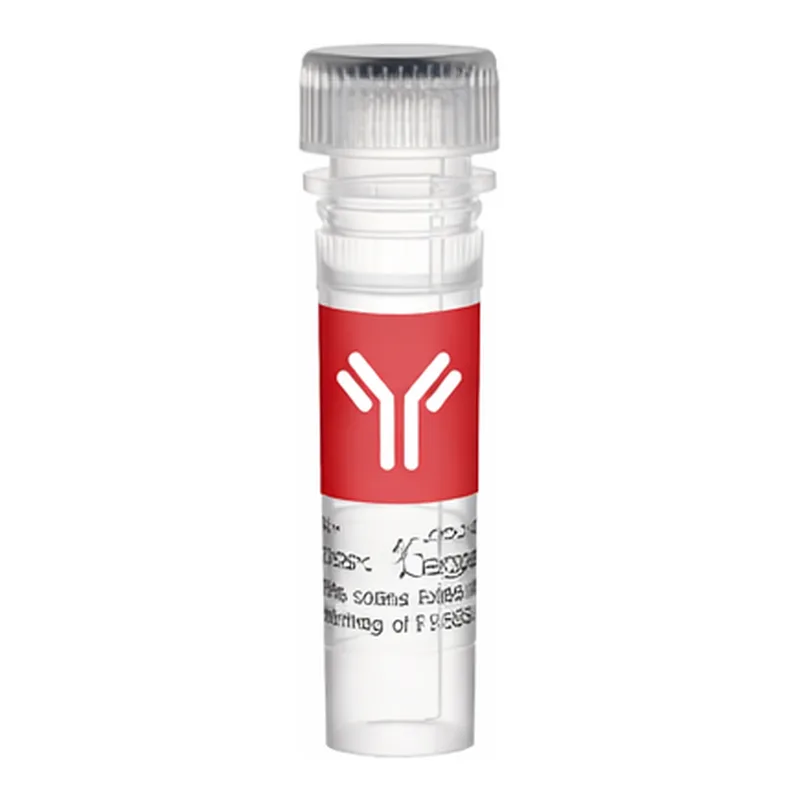
Thermo Fisher Scientific beta 1-Adrenergic Receptor (extracellular) Polyclonal Antibody, Atto 488
Rabbit polyclonal antibody recognizing extracellular domain of beta 1-adrenergic receptor, conjugated with Atto 488. Suitable for IHC in mouse and rat samples. Lyophilized form for stable storage and easy reconstitution. Excitation/emission 501/523 nm.
- 판매단위
- pk
카탈로그
1개 옵션 · 카탈로그 번호를 클릭하면 복사됩니다Thermo Fisher Scientific · Thermo Fisher Scientific beta 1-Adrenergic Receptor (extracellular) Polyclonal Antibody, Atto 488
Applications
Immunohistochemistry (IHC)
- Tested Dilution: 1:60
Product Specifications
| 항목 | 내용 |
|---|---|
| Species Reactivity | Mouse, Rat |
| Host / Isotype | Rabbit / IgG |
| Class | Polyclonal |
| Type | Antibody |
| Immunogen | (C)RAESDEARR(S)YNDP, corresponding to amino acid residues 200–214 of rat ADRB1, 2nd extracellular loop |
| Conjugate | Atto™ 488 |
| Excitation / Emission Max | 501 / 523 nm |
| Form | Lyophilized |
| Concentration | 1 mg/mL |
| Purification | Antigen affinity chromatography |
| Storage Buffer | PBS, pH 7.4, with 1% BSA |
| Contains | 0.05% sodium azide |
| Storage Conditions | −20°C, Avoid Freeze/Thaw Cycles |
| Shipping Conditions | Ambient (domestic); Wet ice (international) |
Product Specific Information
- Reconstitution: Add 50 µL double distilled water (DDW), depending on sample size.
- The antibody ships as a lyophilized powder at room temperature.
- Upon arrival, store at −20°C.
- Reconstituted solution can be stored at 4°C for up to 1 week.
- For longer storage, aliquot and store at −20°C.
- Avoid multiple freeze/thaw cycles.
- Centrifuge all antibody preparations before use (10,000 × g, 5 min).
Target Information
Adrenergic receptors (ARs) are members of the 7-transmembrane domain G-protein-coupled receptor superfamily that bind endogenous catecholamines epinephrine and norepinephrine. Pharmacological, structural, and molecular data reveal significant heterogeneity within this receptor family.
Nine receptor subtypes have been identified:
- Alpha-1 AR: 1A/D, 1B, 1C
- Alpha-2 AR: 2A, 2B, 2C
- Beta AR: 1, 2, 3
ARs are involved in disease states such as hypertension, cardiac dysfunction (heart failure, ischemia, arrhythmias), diabetes, glaucoma, depression, and impotence.
Beta-1 adrenergic receptors (B1ARs) contribute to cardiac function, development, and metabolism.
Knockout studies show that most mice lacking the B1AR gene die prenatally, and survivors exhibit abnormal cardiac function.
Cardiac B1AR density is regulated by thyroid hormones at the transcriptional level and modulated by the catecholamine-sensitive adenylyl cyclase system.
Evidence also indicates that cAMP affects B1AR regulation through CREM family transcription factors in transformed cell lines.
For Research Use Only. Not for use in diagnostic procedures. Not for resale without express authorization.
Thermo Fisher Scientific 상품 둘러보기
전체보기
문의
0개 · 배송·재고 문의는 실시간 상담이 빠릅니다아직 등록된 문의가 없어요.