

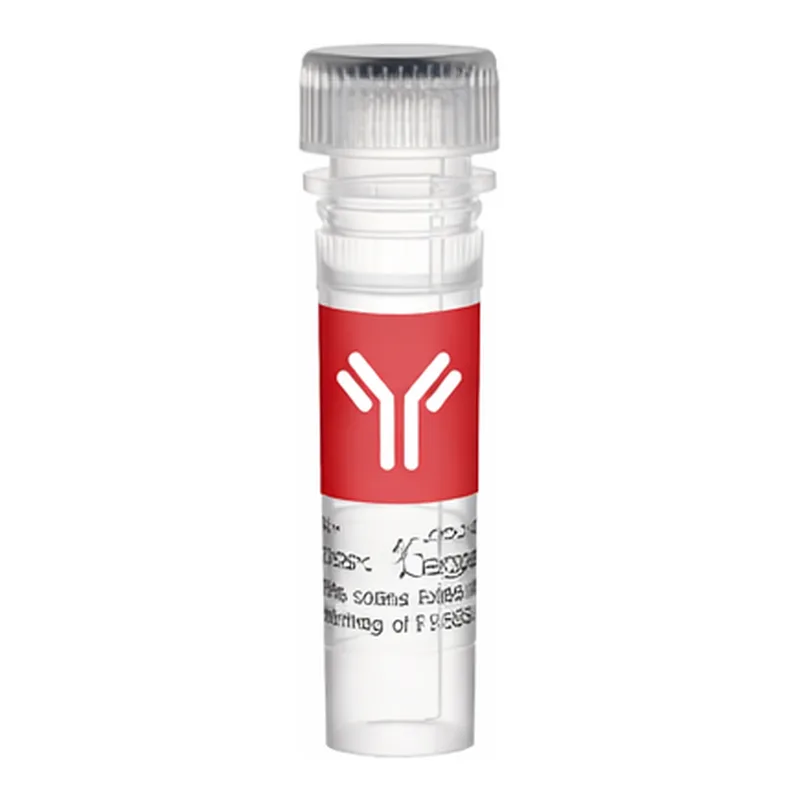
Thermo Fisher Scientific CXCR3 Polyclonal Antibody, Biotin
CXCR3 단백질을 인식하는 Biotin 결합 폴리클로날 항체로, Western blot, IHC, ICC, ELISA 등 다양한 응용에 사용 가능. 토끼 유래 IgG이며, 친화 크로마토그래피로 정제됨. 마우스 및 랫트 반응성. 연구용으로만 사용.
- 판매단위
- pk
카탈로그
1개 옵션 · 카탈로그 번호를 클릭하면 복사됩니다Thermo Fisher Scientific · Thermo Fisher Scientific CXCR3 Polyclonal Antibody, Biotin
Applications and Tested Dilutions
| Application | Tested Dilution |
|---|---|
| Western Blot (WB) | 1:500–1:1,000 |
| Immunohistochemistry (IHC) | 1:50–1:250 |
| Immunocytochemistry (ICC/IF) | 1:50–1:250 |
| ELISA | 1:10,000 |
| Immunoprecipitation (IP) | 1:50–1:250 |
| Immunomicroscopy (IM) | 1:50–1:200 |
Product Specifications
| Specification | Detail |
|---|---|
| Species Reactivity | Mouse, Rat |
| Host / Isotype | Rabbit / IgG |
| Class | Polyclonal |
| Type | Antibody |
| Immunogen | Synthetic peptide within amino acid region 20–70 on rat CXCR3 protein |
| Conjugate | Biotin |
| Form | Liquid |
| Concentration | 0.5–1.5 mg/mL |
| Purification | Affinity chromatography |
| Storage Buffer | Proprietary buffer, pH 7.4–7.8, with 0.5% BSA, 30% glycerol |
| Contains | 0.02% sodium azide |
| Storage Conditions | –20°C |
| Shipping Conditions | Ambient (domestic); Wet ice (international) |
Target Information
This gene encodes a G protein-coupled receptor selective for three chemokines: IP10 (interferon-γ-inducible 10 kDa protein), Mig (monokine induced by interferon-γ), and I-TAC (interferon-inducible T cell α-chemoattractant). These chemokines belong to the CXC subfamily, characterized by a single amino acid separating the first two conserved cysteine residues.
Binding of chemokines to this receptor triggers cellular responses involved in leukocyte trafficking, including integrin activation, cytoskeletal rearrangement, and chemotactic migration. The receptor couples with Gi-type heterotrimeric G proteins, and its signaling may involve enzymes common to other chemokine receptor pathways.
Chemokine-induced receptor internalization leads to transient responses, with receptor recycling restoring responsiveness. CXCR3 is highly expressed in effector/memory T cells and T cells in inflamed tissues. IP10, Mig, and I-TAC are produced locally in inflammatory lesions, implicating CXCR3 in inflammatory cell recruitment. This receptor is a potential target for small-molecule antagonists for inflammatory disease treatment. Multiple transcript variants encoding different isoforms have been identified.
For Research Use Only. Not for use in diagnostic procedures. Not for resale without express authorization.
Thermo Fisher Scientific 상품 둘러보기
전체보기
문의
0개 · 배송·재고 문의는 실시간 상담이 빠릅니다아직 등록된 문의가 없어요.