

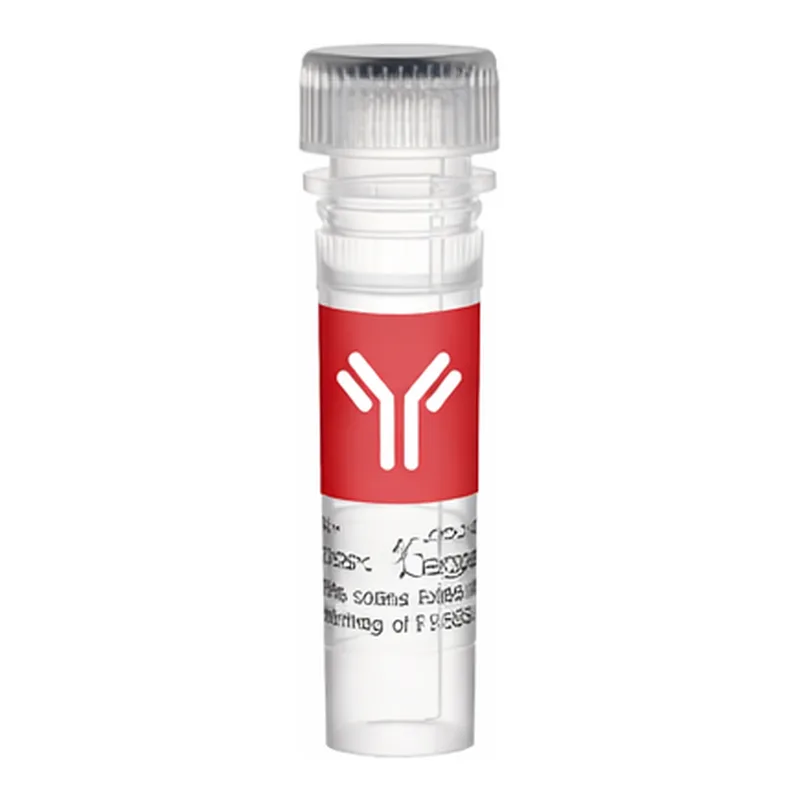
Thermo Fisher Scientific Phospho-Progesterone Receptor (Ser400) Polyclonal Antibody
Rabbit polyclonal antibody recognizing phospho-Progesterone Receptor (Ser400). Validated for Western blot with recommended dilution 1:500–1:1,000. Supplied unconjugated in liquid form (1 mg/mL). Suitable for research on progesterone signaling and recep...
- 판매단위
- pk
카탈로그
1개 옵션 · 카탈로그 번호를 클릭하면 복사됩니다Thermo Fisher Scientific · Thermo Fisher Scientific Phospho-Progesterone Receptor (Ser400) Polyclonal Antibody
Applications
- Western Blot (WB): 1:500–1:1,000
- Suggested positive control: 293 cells
Product Specifications
| 항목 | 내용 |
|---|---|
| Host / Isotype | Rabbit / IgG |
| Class | Polyclonal |
| Type | Antibody |
| Immunogen | Peptide sequence around phosphorylation site of serine 400 (A-R-S(p)-P-R) derived from Human Progesterone Receptor |
| Conjugate | Unconjugated |
| Form | Liquid |
| Concentration | 1 mg/mL |
| Storage Conditions | -20°C |
| Shipping Conditions | Wet ice |
| RRID | AB_2554082 |
Target Information
The progesterone receptor (PR) is a member of the steroid family of nuclear receptors. It mediates the physiological effects of progesterone, which plays a central role in reproductive events associated with pregnancy.
PR exists as a 94 kDa (Form A) or 120 kDa (Form B) protein due to alternative translation initiation sites.
- PR-B is transcriptionally active and responsible for gene activation related to endometrium maintenance and ovulation inhibition.
- PR-A lacks 165 amino acids at the N-terminus, exposing an inhibitory domain that represses steroid hormone transcriptional activity.
Upon progesterone binding, PR undergoes conformational change, dimerizes, and binds to progesterone response elements (PRE), activating transcription.
A null mutation in the PGR gene can lead to reproductive abnormalities.
For Research Use Only. Not for use in diagnostic procedures or resale without authorization.
제품 이미지
(이미지 없음)
Thermo Fisher Scientific 상품 둘러보기
전체보기
문의
0개 · 배송·재고 문의는 실시간 상담이 빠릅니다아직 등록된 문의가 없어요.