

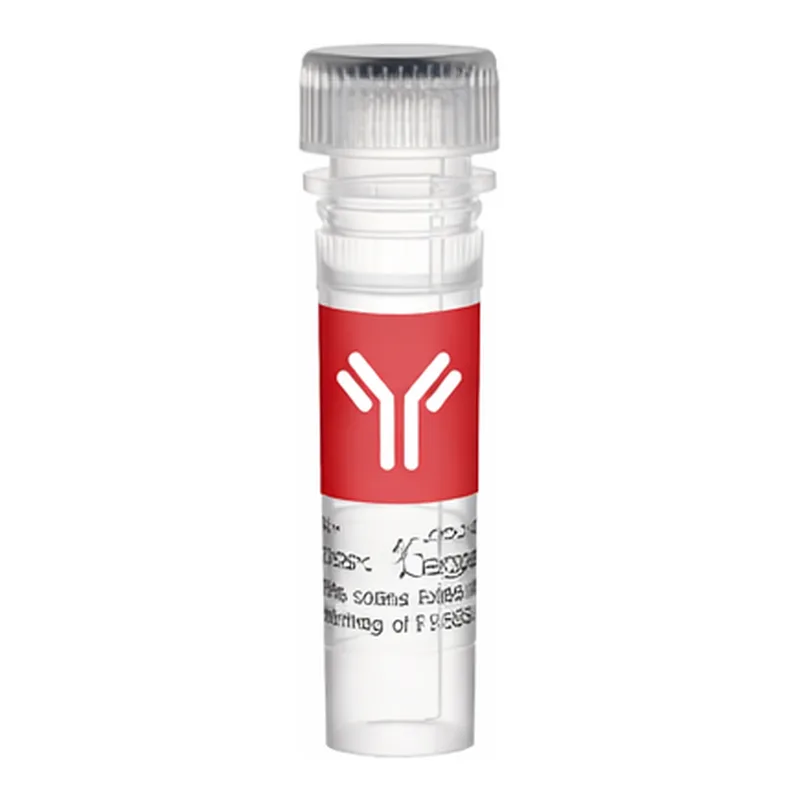
Thermo Fisher Scientific RPS18 Polyclonal Antibody
RPS18 단백질을 인식하는 Thermo Fisher Scientific의 토끼 폴리클로날 항체로, WB, IHC, ICC/IF 등 다양한 응용에 적합합니다. 인간, 생쥐, 원숭이, 랫트 반응성. 액상 형태, 1 mg/mL 농도, 친화 크로마토그래피 정제. 연구용으로만 사용.
- 카탈로그번호
- PA5106575
- 판매단위
- pk
카탈로그
1개 옵션 · 카탈로그 번호를 클릭하면 복사됩니다Thermo Fisher Scientific · Thermo Fisher Scientific RPS18 Polyclonal Antibody
Applications
Western Blot (WB)
- Tested Dilution: 1:500–1:1,000
Immunohistochemistry (Paraffin) (IHC (P))
- Tested Dilution: 1:50–1:200
Immunocytochemistry (ICC/IF)
- Tested Dilution: 1:100–1:500
Product Specifications
| 항목 | 내용 |
|---|---|
| Species Reactivity | Human, Mouse, Non-human primate, Rat |
| Host / Isotype | Rabbit / IgG |
| Class | Polyclonal |
| Type | Antibody |
| Immunogen | A synthesized peptide derived from human RPS18, corresponding to a region within C-terminal amino acids |
| Conjugate | Unconjugated |
| Form | Liquid |
| Concentration | 1 mg/mL |
| Purification | Affinity chromatography |
| Storage Buffer | PBS, pH 7.4, with 50% glycerol |
| Contains | 0.02% sodium azide |
| Storage Conditions | -20°C |
| Shipping Conditions | Wet ice |
| RRID | AB_2854243 |
Product Specific Information
Antibody detects endogenous levels of total RPS18.
Target Information
Ribosomes, the organelles that catalyze protein synthesis, consist of a small 40S subunit and a large 60S subunit. Together these subunits are composed of 4 RNA species and approximately 80 structurally distinct proteins.
This gene encodes a ribosomal protein that is a component of the 40S subunit and belongs to the S13P family of ribosomal proteins. It is located in the cytoplasm.
The E. coli ortholog (ribosomal protein S13) participates in fMet-tRNA binding and translation initiation. This gene is an ortholog of mouse Ke3. Multiple processed pseudogenes of this gene are dispersed throughout the genome.
For Research Use Only. Not for use in diagnostic procedures. Not for resale without express authorization.
제품 이미지


Thermo Fisher Scientific 상품 둘러보기
전체보기
문의
0개 · 배송·재고 문의는 실시간 상담이 빠릅니다아직 등록된 문의가 없어요.