

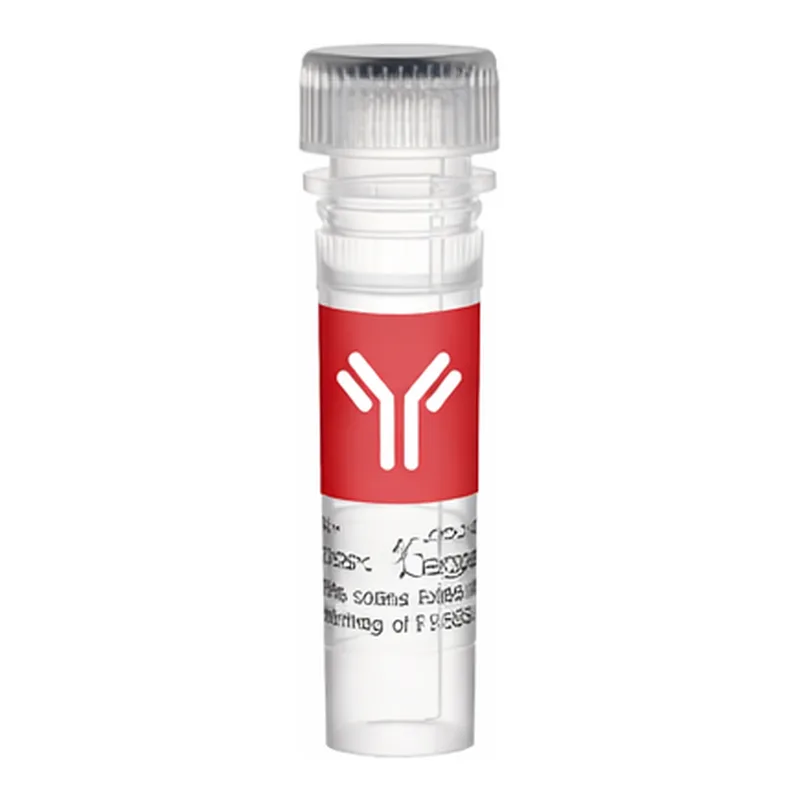
Thermo Fisher Scientific LPHN1 Polyclonal Antibody
Rabbit polyclonal antibody against human LPHN1, validated for IHC (paraffin). Recognizes multiple species including human, mouse, and rat. Purified by antigen affinity chromatography and supplied in liquid form with PBS buffer. Suitable for research us...
- 판매단위
- pk
카탈로그
1개 옵션 · 카탈로그 번호를 클릭하면 복사됩니다Thermo Fisher Scientific · Thermo Fisher Scientific LPHN1 Polyclonal Antibody
Applications
Immunohistochemistry (Paraffin) (IHC (P))
- Tested dilution: 8 µg/mL
Product Specifications
| 항목 | 내용 |
|---|---|
| Species Reactivity | Bat, Bovine, Dog, Hamster, Human, Mouse, Non-human primate, Pig, Rabbit, Rat |
| Host / Isotype | Rabbit / IgG |
| Class | Polyclonal |
| Type | Antibody |
| Immunogen | Synthetic 16 amino acid peptide from N-terminal extracellular domain of human LPHN1 |
| Conjugate | Unconjugated |
| Form | Liquid |
| Concentration | 0.74 mg/mL |
| Purification | Antigen affinity chromatography |
| Storage Buffer | PBS |
| Contains | 0.1% sodium azide |
| Storage Conditions | Store at 4°C short term. For long term storage, store at -20°C, avoiding freeze/thaw cycles. |
| Shipping Conditions | Ambient (domestic); Wet ice (international) |
| RRID | AB_2551271 |
Target Information
Adgrl1 (Latrophilin-1) is a calcium-independent receptor with high affinity for alpha-latrotoxin, an excitatory neurotoxin from black widow spider venom that triggers massive exocytosis in neurons and neuroendocrine cells.
It acts as a receptor for TENM2, mediating heterophilic synaptic cell-cell contact and postsynaptic specialization, and may play a role in regulating exocytosis.
The Adgrl1 gene encodes a member of the latrophilin subfamily of G-protein coupled receptors (GPCR), which function in both cell adhesion and signal transduction.
Endogenous proteolytic cleavage within the GPS (G-protein-coupled-receptor proteolysis site) domain produces two non-covalently bound subunits at the cell membrane.
Adgrl1 recruits alpha-latrotoxin to the synapse plasma membrane. Alternative splicing results in multiple isoforms.
Diseases associated with ADGRL1 include Dermatophytosis and Late-Onset Autosomal Dominant Retinal Degeneration.
For Research Use Only. Not for use in diagnostic procedures. Not for resale without express authorization.
Thermo Fisher Scientific 상품 둘러보기
전체보기
문의
0개 · 배송·재고 문의는 실시간 상담이 빠릅니다아직 등록된 문의가 없어요.