

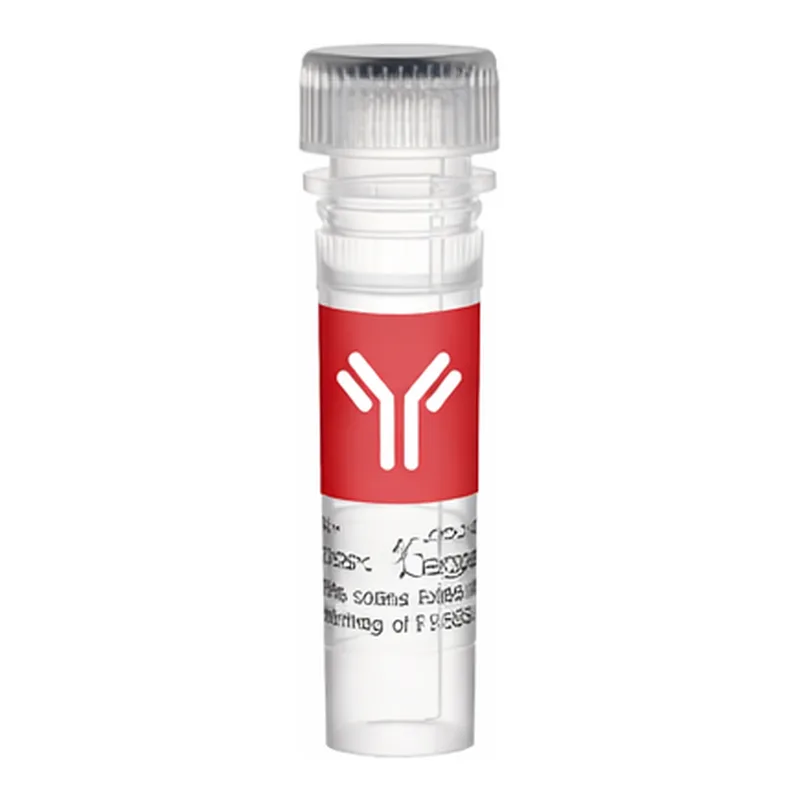
Thermo Fisher Scientific beta-Amyloid Polyclonal Antibody
Thermo Fisher Scientific의 beta-Amyloid Polyclonal Antibody는 알츠하이머 연구용으로 개발된 토끼 IgG 항체로, WB, ICC/IF, ELISA에 적합합니다. β-amyloid 관련 단백질 검출에 유용하며, 동결건조 형태로 제공되어 안정적인 보관이 가능합니다.
- 판매단위
- pk
카탈로그
1개 옵션 · 카탈로그 번호를 클릭하면 복사됩니다Thermo Fisher Scientific · Thermo Fisher Scientific beta-Amyloid Polyclonal Antibody
Applications
| Application | Tested Dilution |
|---|---|
| Western Blot (WB) | 0.1–1.0 µg/mL |
| Immunocytochemistry (ICC/IF) | 5–20 µg/mL |
| ELISA | 0.1–1 µg/mL |
Product Specifications
| Property | Description |
|---|---|
| Host / Isotype | Rabbit / IgG |
| Class | Polyclonal |
| Type | Antibody |
| Immunogen | Synthetic peptide corresponding to amino acids 1–17 of beta-amyloid conjugated to KLH |
| Conjugate | Unconjugated |
| Form | Lyophilized |
| Storage Conditions | -20°C or -80°C if preferred |
| Shipping Conditions | Wet ice |
Product Specific Information
Reconstitute the lyophilized antibody with deionized water (or equivalent) to a final concentration of 0.5 mg/mL.
A number of mutations identified in the gene encoding the β-amyloid precursor protein (βAPP) have been linked to early-onset Familial Alzheimer’s Disease. βAPP is sequentially cleaved by β-secretase and γ-secretase to produce β-amyloid (Aβ) peptides, with Aβ1-42(43) and Aβ1-40 being the most prevalent forms. Secreted Aβ peptides can bind to scavenger receptors and the receptor for advanced glycation endproducts. Aβ peptides are degraded either via endosomal degradation or extracellular insulin-degrading enzyme. Extracellular accumulation of Aβ leads to aggregates and amyloid deposits called neuritic plaques, a hallmark of Alzheimer’s disease. β-amyloid antibodies and peptides are valuable tools for studying Alzheimer’s disease biology.
Target Information
Amyloid beta peptide (Abeta/Beta-amyloid) is the major constituent of amyloid plaques found in the brains of individuals with Alzheimer’s disease. Abeta peptide, 40–43 amino acids long, is generated from the beta-amyloid precursor protein (beta APP) through a two-step process involving β-secretase (BACE) and γ-secretase. β-secretase cleaves the extracellular domain of beta APP, producing a secreted segment and a membrane-bound remnant. The remnant is further cleaved by γ-secretase, a multi-subunit complex containing presenilin-1 and -2, generating the amyloid beta peptide. Nicastrin, a transmembrane glycoprotein associated with presenilins, modulates amyloid beta peptide production. Abeta forms extracellular filamentous deposits in amyloid cores and neuritic plaques, characteristic of Alzheimer’s disease. Beta amyloid deposits are also found in Lewy body dementia, Down’s syndrome, Dutch-type amyloidosis, cerebral amyloid angiopathy, and the Guam Parkinson-Dementia complex.
For Research Use Only. Not for use in diagnostic procedures. Not for resale without express authorization.
Thermo Fisher Scientific 상품 둘러보기
전체보기
문의
0개 · 배송·재고 문의는 실시간 상담이 빠릅니다아직 등록된 문의가 없어요.