

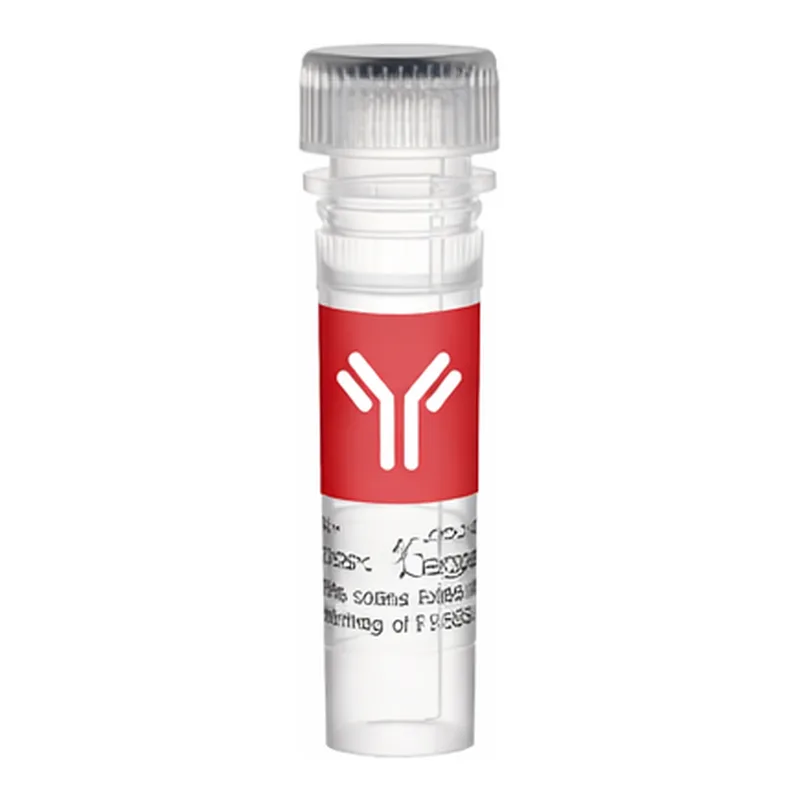
Thermo Fisher Scientific CCL4 Polyclonal Antibody
CCL4 단백질을 인식하는 Rabbit Polyclonal 항체로, WB, IHC, ICC 등 다양한 응용에 사용 가능. 인간, 생쥐, 랫트 시료에 반응하며, 1 mg/mL 농도의 액상 형태. PBS와 50% 글리세롤 버퍼에 보관되며, -20°C에서 저장.
- 판매단위
- pk
카탈로그
1개 옵션 · 카탈로그 번호를 클릭하면 복사됩니다Thermo Fisher Scientific · Thermo Fisher Scientific CCL4 Polyclonal Antibody
Applications and Tested Dilutions
| Application | Tested Dilution | Publications |
|---|---|---|
| Western Blot (WB) | 1:500–1:2,000 | - |
| Immunohistochemistry (IHC) | - | 1 publication |
| Immunohistochemistry (PFA fixed) (IHC (PFA)) | 1:50–1:200 | - |
| Immunocytochemistry (ICC/IF) | 1:100–1:500 | - |
Product Specifications
| 항목 | 내용 |
|---|---|
| Species Reactivity | Human, Mouse, Rat |
| Published Species | Human |
| Host / Isotype | Rabbit / IgG |
| Class | Polyclonal |
| Type | Antibody |
| Immunogen | A synthesized peptide derived from human CCL4 (Accession P13236), corresponding to amino acid residues P31–W81 |
| Conjugate | Unconjugated |
| Form | Liquid |
| Concentration | 1 mg/mL |
| Purification | Affinity chromatography |
| Storage Buffer | PBS with 50% glycerol |
| Contains | 0.02% sodium azide |
| Storage Conditions | -20°C |
| Shipping Conditions | Wet ice |
| RRID | AB_2899597 |
Product Specific Information
Antibody detects endogenous levels of total CCL4.
Target Information
CCL4 (macrophage inflammatory protein 1-beta, MIP1B) belongs to the intercrine beta (chemokine CC) family. Functionally, CCL4 is involved in chemotactic and proinflammatory effects, and homeostasis. It is produced by macrophages upon stimulation by bacterial endotoxins and recruits various inflammatory cells at inflammation sites. CCL4 is secreted by lymphocytes, macrophages, and dendritic cells.
Both CCL4 and CCL3 regulate the trafficking and activation of inflammatory cells in response to bacterial, viral, parasitic, and fungal infections. While both act similarly on monocytes, CCL4 selectively attracts CD4+ lymphocytes, whereas CCL3 attracts CD8+ lymphocytes. Both proteins are chemoattractants for B cells, eosinophils, and dendritic cells. The processed form of CCL4 can reduce CCR5 receptor expression, inhibiting CCR5-mediated HIV-1 entry into T cells. CCL4 binds with high affinity to CCR5 receptors.
For Research Use Only.
Not for use in diagnostic procedures. Not for resale without express authorization.
Thermo Fisher Scientific 상품 둘러보기
전체보기
문의
0개 · 배송·재고 문의는 실시간 상담이 빠릅니다아직 등록된 문의가 없어요.