

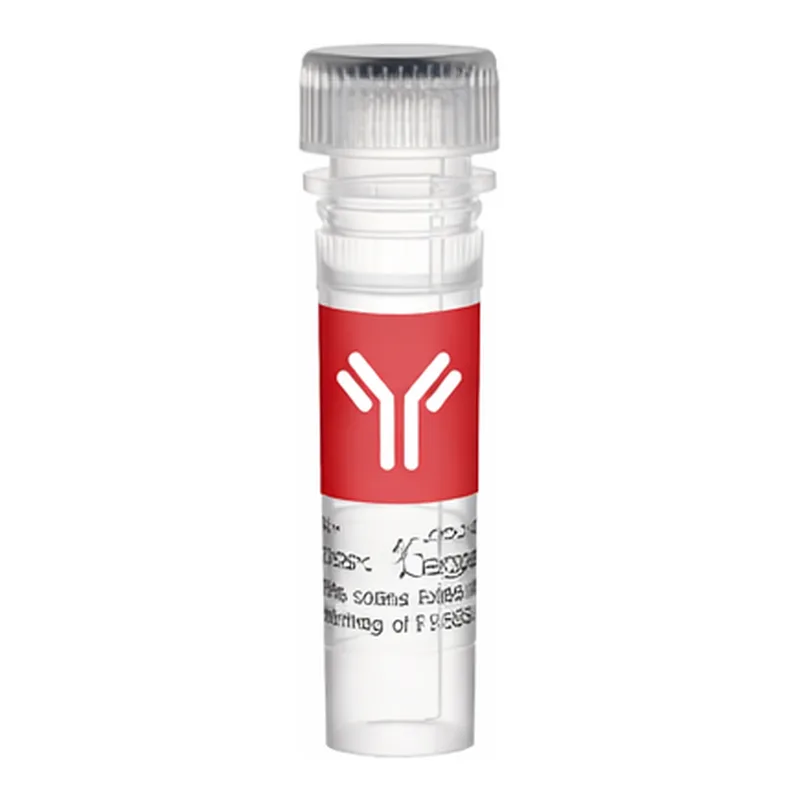
Thermo Fisher Scientific KCNQ1 Monoclonal Antibody (N37A/10)
KCNQ1 단백질을 검출하기 위한 Mouse monoclonal 항체로, WB, IHC, ICC, IP 등 다양한 응용에 적합. 인간, 생쥐, 햄스터, 랫트 반응성. 단백질 G 정제 및 PBS/glycerol buffer 보존. 연구용 전용 제품.
- 판매단위
- pk
카탈로그
1개 옵션 · 카탈로그 번호를 클릭하면 복사됩니다Thermo Fisher Scientific · Thermo Fisher Scientific KCNQ1 Monoclonal Antibody (N37A/10)
Applications and Tested Dilutions
| Application | Tested Dilution / Amount |
|---|---|
| Western Blot (WB) | 1:1,000 |
| Immunohistochemistry (Paraffin) (IHC (P)) | 1:1,000 |
| Immunocytochemistry (ICC/IF) | 1:100 |
| Immunoprecipitation (IP) | 25 µg |
| Antibody Microarray (AM) | Assay-dependent |
Product Specifications
| 항목 | 내용 |
|---|---|
| Species Reactivity | Hamster, Human, Mouse, Rat |
| Published Species | Mouse |
| Host / Isotype | Mouse / IgG1 |
| Class | Monoclonal |
| Type | Antibody |
| Clone | N37A/10 |
| Immunogen | Fusion protein amino acids 2–101 of human KCNQ1 |
| Conjugate | Unconjugated |
| Form | Liquid |
| Concentration | 1 mg/mL |
| Purification | Protein G |
| Storage Buffer | PBS, pH 7.4, with 50% glycerol |
| Contains | 0.09% sodium azide |
| Storage Conditions | -20°C |
| Shipping Conditions | Wet ice |
| RRID | AB_2735245 |
Additional Formats Available
- APC (Cat. MA5-45407)
- FITC (Cat. MA5-45408)
- PE (Cat. MA5-45410)
- PerCP (Cat. MA5-45409)
- Custom conjugation available upon request
Product Specific Information
1 µg/mL of MA5-27676 was sufficient for detection of KCNQ1 in 10 µg of COS-1 cell lysate transiently expressing KCNQ1 by colorimetric immunoblot analysis using Goat anti-mouse IgG:HRP as the secondary antibody. Detects approximately 75 kDa.
Target Information
Voltage-gated K⁺ channels in the plasma membrane control repolarization and the frequency of action potentials in neurons, muscles, and other excitable cells.
KCNQ1, together with KCNE1, forms a channel complex predominantly expressed in the heart and cochlea, regulating the slow, depolarization-activated potassium current.
Mutations in KCNQ1 and KCNE1 cause cardiac diseases due to impaired electrical signaling, while KCNQ4 mutations are linked to deafness.
KCNQ proteins, including KCNQ1 and KCNQ4, have six transmembrane domains and function as tetramers. KCNQ4 can form heteromeric channels with KCNQ3 and is expressed in several tissues, including the cochlea, where it is present in outer hair cells.
For Research Use Only. Not for use in diagnostic procedures. Not for resale without express authorization.
Thermo Fisher Scientific 상품 둘러보기
전체보기
문의
0개 · 배송·재고 문의는 실시간 상담이 빠릅니다아직 등록된 문의가 없어요.