

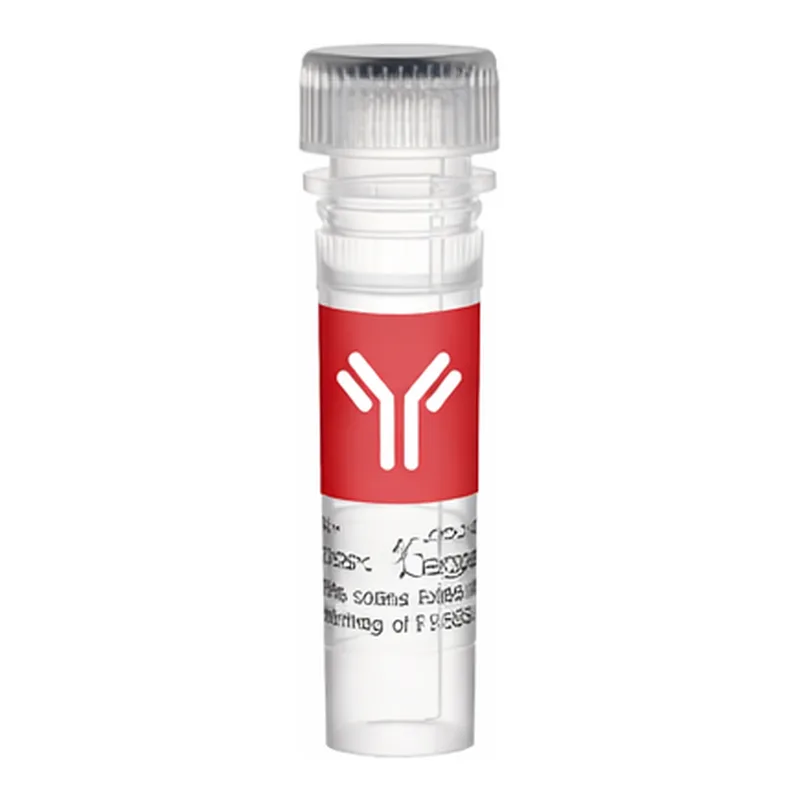
Thermo Fisher Scientific CTR1 Polyclonal Antibody
Human과 Mouse에서 반응하는 Rabbit Polyclonal CTR1 항체로, Western blot과 ELISA에 적합합니다. 구리 항상성 관련 단백질 연구에 활용되며, 액상 형태로 -20°C에서 보관합니다. 고순도 친화 크로마토그래피 정제 제품입니다.
- 판매단위
- pk
카탈로그
1개 옵션 · 카탈로그 번호를 클릭하면 복사됩니다Thermo Fisher Scientific · Thermo Fisher Scientific CTR1 Polyclonal Antibody
Applications and Tested Dilution
| Application | Tested Dilution |
|---|---|
| Western Blot (WB) | 1:500–1:2,000 |
| ELISA | 1 µg/mL |
Product Specifications
| 항목 | 내용 |
|---|---|
| Species Reactivity | Human, Mouse |
| Host / Isotype | Rabbit / IgG |
| Class | Polyclonal |
| Type | Antibody |
| Immunogen | Recombinant fusion protein containing a sequence corresponding to amino acids 1–60 of human SLC31A1 (NP_0018501) |
| Conjugate | Unconjugated |
| Form | Liquid |
| Concentration | 0.98 mg/mL |
| Purification | Affinity Chromatography |
| Storage Buffer | PBS, pH 7.3, with 50% glycerol |
| Contains | 0.02% sodium azide |
| Storage Conditions | -20°C, Avoid Freeze/Thaw Cycles |
| Shipping Conditions | Wet ice |
| RRID | AB_2804308 |
Product Specific Information
- Immunogen sequence: MDHSHHMGMS YMDSNSTMQP SHHHPTTSAS HSHGGGDSSM MMMPMTFYFG FKNVELLFSG
- Positive Samples: A-549, NCI-H460, Mouse liver, Mouse kidney
- Cellular Location: Cell membrane, Multi-pass membrane protein
Target Information
The trace metal copper (Cu) plays a crucial role in mammalian cells as a cofactor for many enzymes. Cu-related genetic diseases, such as Menkes disease and Wilson disease, arise from a lack of Cu homeostasis in mammalian cells. CTR1 is a high-affinity copper-uptake protein. The C-terminal domain is similar to the Raf family of protein kinases, but its first two-thirds encodes a novel protein domain. CTR1 provides the primary avenue for copper uptake in mammalian cells, thereby affecting Cu homeostasis and embryonic development.
For Research Use Only. Not for use in diagnostic procedures. Not for resale without express authorization.
Thermo Fisher Scientific 상품 둘러보기
전체보기
문의
0개 · 배송·재고 문의는 실시간 상담이 빠릅니다아직 등록된 문의가 없어요.