

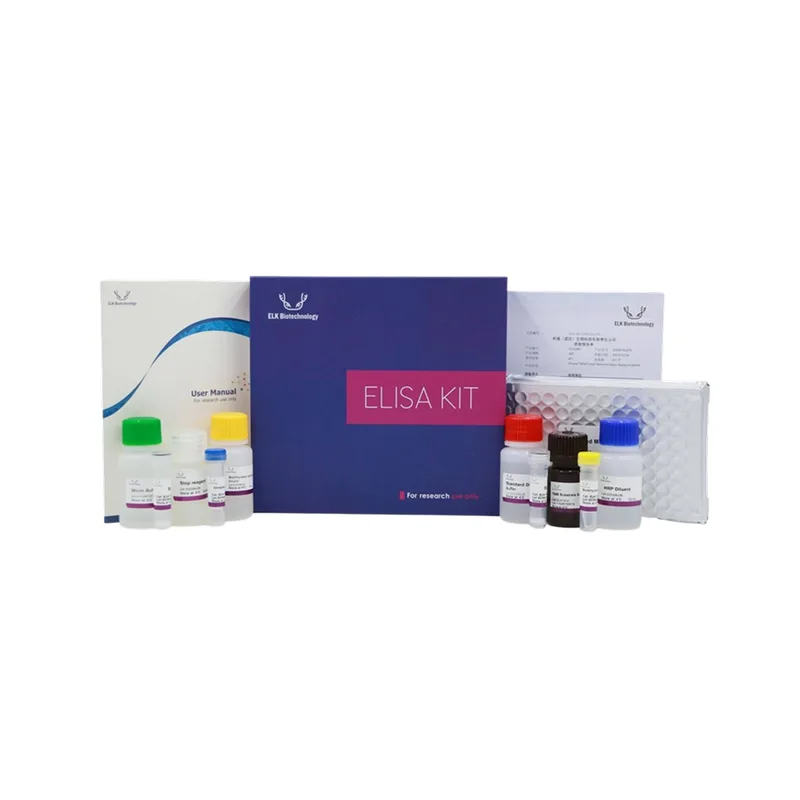
ELK Biotechnology EphA2/3/4 rabbit pAb
EphA2/3/4 단백질을 인식하는 토끼 폴리클로날 항체로, WB, IF, ELISA에 사용 가능. 인간 및 랫트 시료에 반응하며, 세포막 및 세포 접착부에서 발현 단백질 검출에 적합. -20°C에서 1년 보관 가능.
- 판매단위
- pk
카탈로그
2개 옵션 · 카탈로그 번호를 클릭하면 복사됩니다ELK Biotechnology · ELK Biotechnology EphA2/3/4 rabbit pAb
제품명
EphA2/3/4 rabbit pAb
대체 명칭
EPHA2; ECK; Ephrin type-A receptor 2; Epithelial cell kinase; Tyrosine-protein kinase receptor ECK; EPHA3; ETK; ETK1; HEK; TYRO4; Ephrin type-A receptor 3; EPH-like kinase 4; EK4; hEK4; HEK; Human embryo kinase; Tyrosine-protein kinase TYRO
적용 분야
- Western Blot (WB)
- Immunofluorescence (IF)
- ELISA
권장 희석 배수
- Western Blot: 1/500 - 1/2000
- Immunofluorescence: 1/200 - 1/1000
- ELISA: 1/40000
- Other applications: Not yet tested
면역원 (Immunogen)
The antiserum was produced against synthesized peptide derived from human EPHA2/3/4.
Amino acid range: 556–605
보관 조건
-20°C에서 보관 (유효기간 1년)
항체 정보
| 항목 | 내용 |
|---|---|
| Clonality | Polyclonal |
| Host | Rabbit |
| Isotype | IgG |
| Concentration | 1 mg/ml |
| Observed Band | 130 kD |
| Gene ID (Human) | 1969 / 2042 / 2043 |
| Human Swiss-Prot No | P29317 / P29320 / P54764 |
| Species Reactivity | Human; Rat |
세포 내 위치 (Cellular Localization)
- Cell membrane; Single-pass type I membrane protein
- Cell projection, ruffle membrane; Single-pass type I membrane protein
- Cell projection, lamellipodium membrane; Single-pass type I membrane protein
- Cell junction, focal adhesion
- Present at regions of cell-cell contacts and at the leading edge of migrating cells (PubMed:19573808, PubMed:20861311)
- Relocates from the plasma membrane to cytoplasmic and perinuclear regions in cancer cells (PubMed:18794797)
배경 (Background)
This gene belongs to the ephrin receptor subfamily of the protein-tyrosine kinase family. EPH and EPH-related receptors are involved in developmental processes, particularly in the nervous system. Members of this subfamily typically contain a single kinase domain and an extracellular region with a cysteine-rich domain and two fibronectin type III repeats. Ephrin receptors are divided into two groups based on extracellular domain sequence similarity and ligand affinity (ephrin-A or ephrin-B). This gene encodes a receptor binding ephrin-A ligands, and mutations are associated with certain genetically related cataract disorders. [RefSeq, May 2010]
ELK Biotechnology 상품 둘러보기
전체보기
문의
0개 · 배송·재고 문의는 실시간 상담이 빠릅니다아직 등록된 문의가 없어요.