

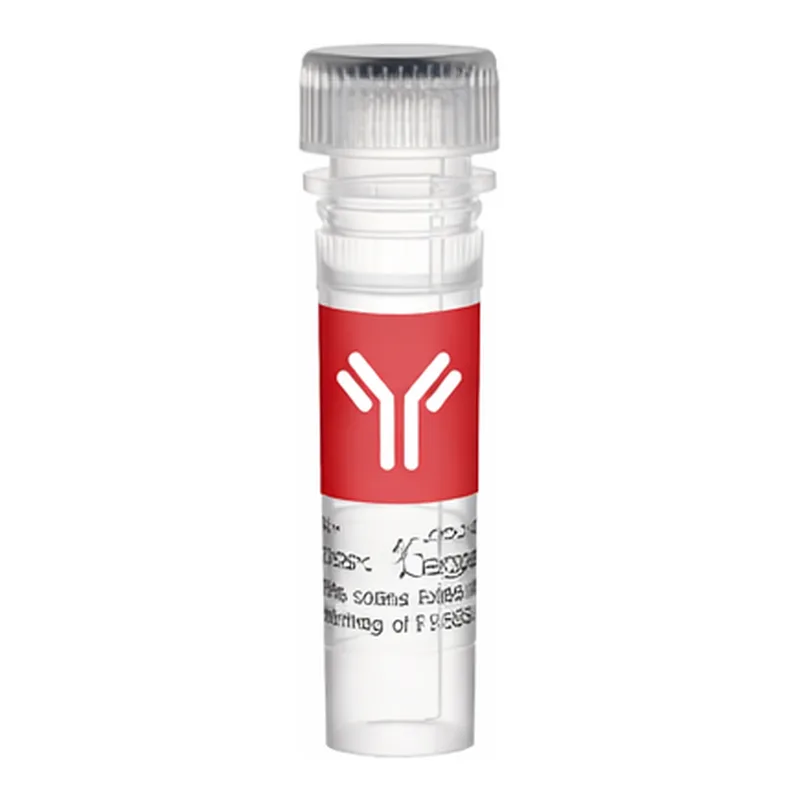
Thermo Fisher Scientific ATP5E Polyclonal Antibody
Rabbit polyclonal antibody recognizing human ATP5E. Validated for ELISA with 1:500–1:1,000 dilution. Supplied as liquid form at 1 mg/mL, purified by Protein A. Recommended storage at -20°C in PBS with glycerol and BSA. For research use only.
- 판매단위
- pk
카탈로그
1개 옵션 · 카탈로그 번호를 클릭하면 복사됩니다Thermo Fisher Scientific · Thermo Fisher Scientific ATP5E Polyclonal Antibody
Applications
- ELISA (ELISA)
Tested Dilution: 1:500–1:1,000
Product Specifications
| 항목 | 내용 |
|---|---|
| Species Reactivity | Human |
| Host / Isotype | Rabbit / IgG |
| Class | Polyclonal |
| Type | Antibody |
| Immunogen | KLH-conjugated synthetic peptide derived from human ATP5E, amino acids 2–51 |
| Conjugate | Unconjugated |
| Form | Liquid |
| Concentration | 1 mg/mL |
| Purification | Protein A |
| Storage Buffer | PBS with 50% glycerol, 1% BSA |
| Contains | 0.09% sodium azide |
| Storage Conditions | -20°C |
| Shipping Conditions | Ambient (domestic); Wet ice (international) |
Target Information
The Drosophila gene for the ATP synthase epsilon subunit (ATP5E) is known as stunted or sun (Kidd et al., 2005). Mitochondrial ATP synthase catalyzes ATP synthesis by utilizing an electrochemical proton gradient across the inner membrane during oxidative phosphorylation.
ATP synthase consists of two linked multi-subunit complexes:
- F1: Soluble catalytic core
- Fo: Membrane-spanning component forming the proton channel
The catalytic portion of mitochondrial ATP synthase includes five subunits (α, β, γ, δ, ε) assembled with a stoichiometry of 3α, 3β, and one each of the remaining subunits. The proton channel comprises three main subunits (a, b, c).
For Research Use Only. Not for use in diagnostic procedures. Not for resale without express authorization.
Thermo Fisher Scientific 상품 둘러보기
전체보기
문의
0개 · 배송·재고 문의는 실시간 상담이 빠릅니다아직 등록된 문의가 없어요.