

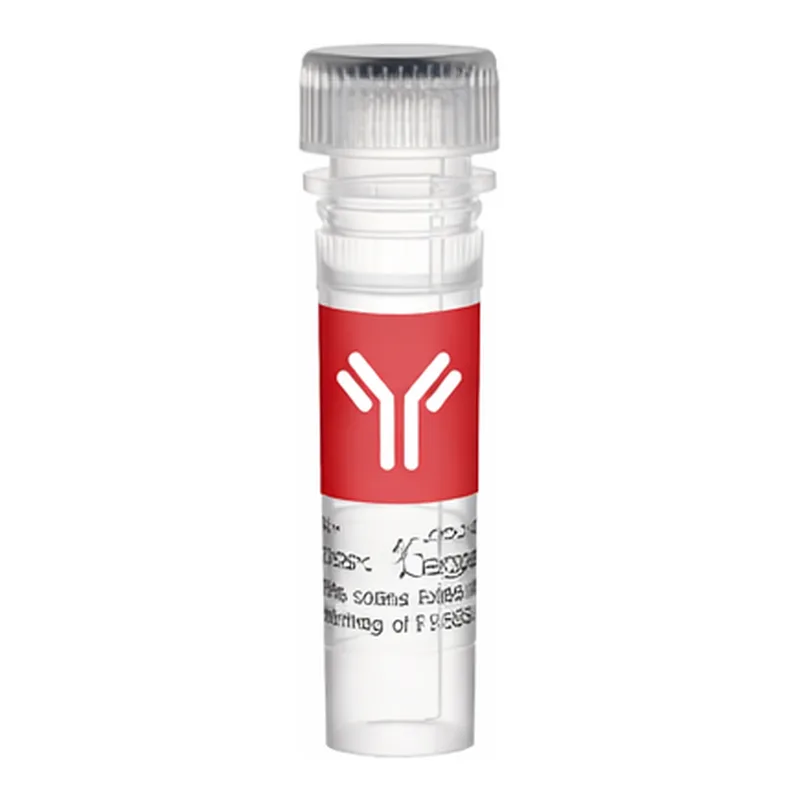
Thermo Fisher Scientific ROBO3 Polyclonal Antibody
ROBO3 단백질을 인식하는 Thermo Fisher Scientific의 Goat Polyclonal Antibody로, Western blot에 적합합니다. 인간에서 검증되었으며, 액상 형태로 제공됩니다. 신경 성장 및 축삭 유도 관련 연구에 활용 가능합니다.
- 판매단위
- pk
카탈로그
1개 옵션 · 카탈로그 번호를 클릭하면 복사됩니다Thermo Fisher Scientific · Thermo Fisher Scientific ROBO3 Polyclonal Antibody
Applications
Western Blot (WB)
- Tested Dilution: 0.5–1 µg/mL
- View 1 publication
Product Specifications
| 항목 | 내용 |
|---|---|
| Published Species | Human |
| Host / Isotype | Goat / IgG |
| Class | Polyclonal |
| Type | Antibody |
| Immunogen | Synthetic peptide sequence (RRKQRKELSHYT) corresponding to internal amino acids of ROBO3 |
| Conjugate | Unconjugated |
| Form | Liquid |
| Concentration | 0.5 mg/mL |
| Storage Conditions | -20°C, Avoid Freeze/Thaw Cycles |
| Shipping Conditions | Wet ice |
| RRID | AB_10977206 |
Product Specific Information
This antibody is predicted to react with bovine, canine, and porcine species based on sequence homology.
Target Information
ROBO3 is a member of the Roundabout (ROBO) gene family that controls neurite outgrowth, growth cone guidance, and axon fasciculation.
ROBO proteins belong to the immunoglobulin transmembrane receptor superfamily. SLIT proteins (1–3) serve as ligands for ROBO proteins, and SLIT/ROBO interactions regulate processes such as myogenesis, leukocyte migration, kidney morphogenesis, angiogenesis, vasculogenesis, and neurogenesis.
ROBO3 features:
- 5 immunoglobulin (Ig)-like loops
- 3 fibronectin (Fn) type III motifs
- Transmembrane segment
- Cytoplasmic tail with three conserved signaling motifs (CC0, CC2, CC3) — lacks CC1 motif found in other ROBO family members.
ROBO3 regulates axonal navigation at the ventral midline of the neural tube.
In mice, loss of Robo3 causes commissural axons to fail crossing the midline throughout the spinal cord and hindbrain.
Mutations in ROBO3 are associated with horizontal gaze palsy with progressive scoliosis (HGPPS), an autosomal recessive disorder characterized by congenital absence of horizontal gaze, progressive scoliosis, and failure of corticospinal and somatosensory axon tracts to cross the medulla midline.
For Research Use Only. Not for use in diagnostic procedures. Not for resale without express authorization.
Thermo Fisher Scientific 상품 둘러보기
전체보기
문의
0개 · 배송·재고 문의는 실시간 상담이 빠릅니다아직 등록된 문의가 없어요.