

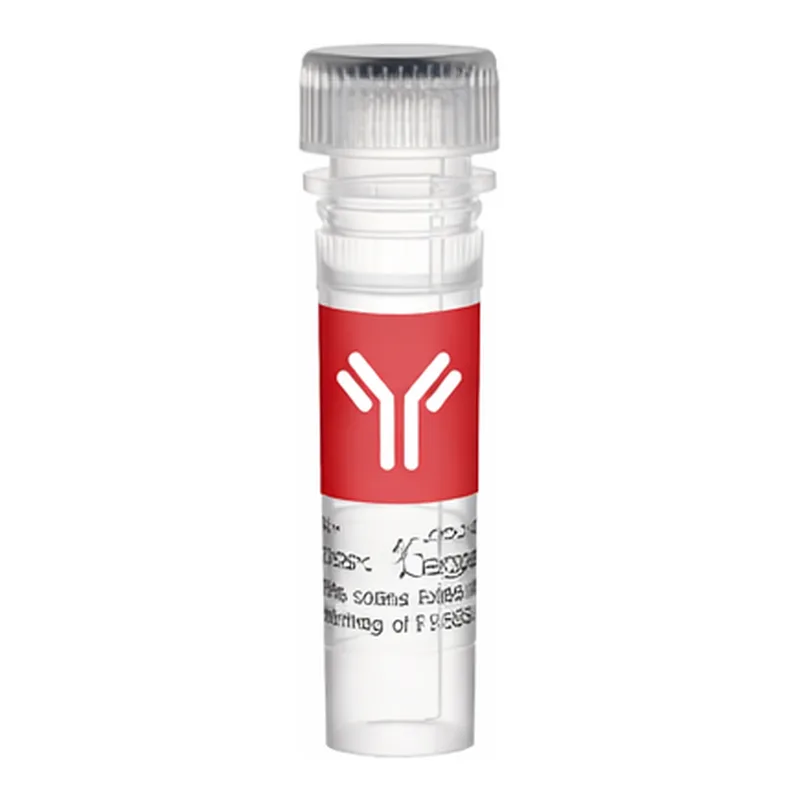
Thermo Fisher Scientific CD276 Monoclonal Antibody (3A9)
인간 CD276(B7-H3) 단백질을 인식하는 Mouse IgG1 단일클론 항체. ELISA에 적합하며 세포매개 면역반응 연구에 활용 가능. 액상형, 보존제 없음, -20°C 보관. 연구용으로만 사용.
- 판매단위
- pk
카탈로그
1개 옵션 · 카탈로그 번호를 클릭하면 복사됩니다Thermo Fisher Scientific · Thermo Fisher Scientific CD276 Monoclonal Antibody (3A9)
Applications
- ELISA (ELISA)
Tested Dilution: 10 µg/mL
Product Specifications
| 항목 | 내용 |
|---|---|
| Species Reactivity | Human |
| Host / Isotype | Mouse / IgG1, kappa |
| Class | Monoclonal |
| Type | Antibody |
| Clone | 3A9 |
| Immunogen | CD276 (AAH62581.1, 237 a.a. ~ 358 a.a.) partial recombinant protein |
| Conjugate | Unconjugated |
| Form | Liquid |
| Concentration | See Label |
| Purification | Affinity chromatography |
| Storage Buffer | PBS, pH 7.4 |
| Contains | No preservative |
| Storage Conditions | -20°C, Avoid Freeze/Thaw Cycles |
| Shipping Conditions | Ambient (domestic); Wet ice (international) |
Product Specific Information
Sequence of this protein is as follows:
ITPQRSPTGA VEVQVPEDPV VALVGTDATL RCSFSPEPGF SLAQLNLIWQ LTDTKQLVHS FTEGRDQGSA YANRTALFPD LLAQGNASLR LQRVRVADEG SFTCFVSIRD FGSAAVSLQV AA
Target Information
CD276 is a member of the B7 family of co-stimulatory molecules, also known as B7-H3.
It is a type I transmembrane protein that induces the proliferation of CD4+ and CD8+ T cells, enhances the generation of cytotoxic T cells, and selectively stimulates interferon gamma production.
Expression of CD276 can be induced on dendritic cells and monocytes by inflammatory cytokines and is widely expressed in peripheral tissues including the heart, kidney, testis, and colon.
In humans, CD276 exists as two isoforms resulting from gene duplication and differential splicing.
It has therapeutic potential for regulating cell-mediated immune responses to cancer, particularly in conjunction with anti-angiogenic therapy.
For Research Use Only. Not for use in diagnostic procedures. Not for resale without express authorization.
Thermo Fisher Scientific 상품 둘러보기
전체보기
문의
0개 · 배송·재고 문의는 실시간 상담이 빠릅니다아직 등록된 문의가 없어요.