

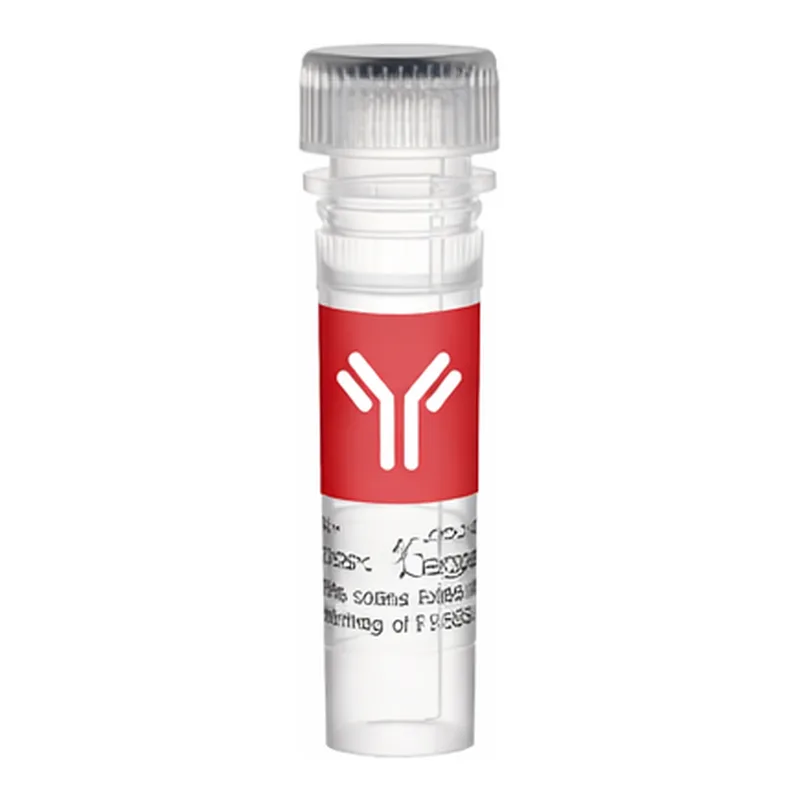
Thermo Fisher Scientific Ephrin A1 Receptor Polyclonal Antibody
Ephrin A1 Receptor를 인식하는 Rabbit Polyclonal Antibody로, IHC, ICC/IF, ELISA 등 다양한 응용에 사용 가능. Human, Mouse, Rat에 반응하며, Protein A로 정제된 고순도 항체. 1 mg/mL 농도의 액상 형태로 -20°C에서 보관.
- 판매단위
- pk
카탈로그
1개 옵션 · 카탈로그 번호를 클릭하면 복사됩니다Thermo Fisher Scientific · Thermo Fisher Scientific Ephrin A1 Receptor Polyclonal Antibody
Applications and Tested Dilution
| Application | Tested Dilution |
|---|---|
| Immunohistochemistry (Paraffin) (IHC (P)) | 1:200–1:400 |
| Immunohistochemistry (Frozen) (IHC (F)) | 1:100–1:500 |
| Immunocytochemistry (ICC/IF) | 1:100–1:500 |
| ELISA | 1:500–1:1,000 |
Product Specifications
| Specification | Description |
|---|---|
| Species Reactivity | Human, Mouse, Rat |
| Host / Isotype | Rabbit / IgG |
| Class | Polyclonal |
| Type | Antibody |
| Immunogen | KLH conjugated synthetic peptide derived from human Ephrin A1 Receptor, amino acids 51–150 |
| Conjugate | Unconjugated |
| Form | Liquid |
| Concentration | 1 mg/mL |
| Purification | Protein A |
| Storage Buffer | 0.01M TBS, pH 7.4, with 50% glycerol, 1% BSA |
| Contains | 0.02% ProClin 300 |
| Storage Conditions | -20°C |
| Shipping Conditions | Ambient (domestic); Wet ice (international) |
Target Information
EphA1 belongs to the ephrin receptor subfamily of the protein-tyrosine kinase family. EPH and EPH-related receptors are involved in developmental processes, particularly in the nervous system. Receptors in the EPH subfamily typically have a single kinase domain and an extracellular region containing a cysteine-rich domain and two fibronectin type III repeats. Ephrin receptors are divided into two groups based on extracellular domain sequence similarity and ligand-binding affinity for ephrin-A or ephrin-B. EphA1 is expressed in certain human cancer cell lines and has been implicated in carcinogenesis.
For Research Use Only. Not for use in diagnostic procedures. Not for resale without express authorization.
Thermo Fisher Scientific 상품 둘러보기
전체보기
문의
0개 · 배송·재고 문의는 실시간 상담이 빠릅니다아직 등록된 문의가 없어요.