

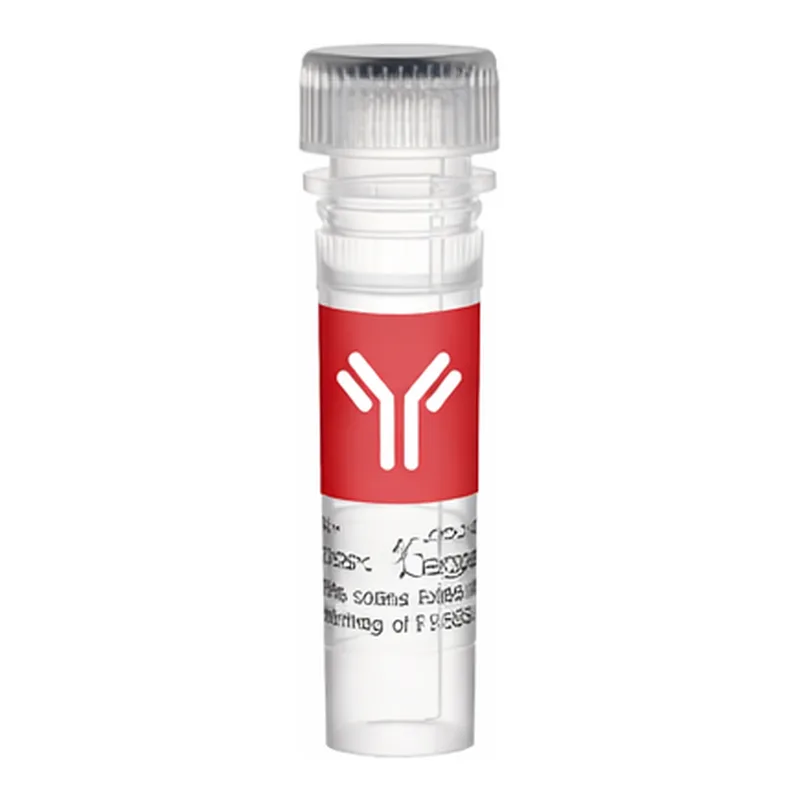
Thermo Fisher Scientific USP15 Polyclonal Antibody
Rabbit polyclonal antibody recognizing human USP15. Validated for WB and IP applications. Recommended dilution 1:2,000–1:10,000 for WB. Supplied as liquid, 1 mg/mL, stored at 4°C. For research use only.
- 판매단위
- pk
카탈로그
2개 옵션 · 카탈로그 번호를 클릭하면 복사됩니다Thermo Fisher Scientific · Thermo Fisher Scientific USP15 Polyclonal Antibody
Applications and Tested Dilutions
| Application | Tested Dilution |
|---|---|
| Western Blot (WB) | 1:2,000–1:10,000 |
| Immunoprecipitation (IP) | 2–10 µg/mg lysate |
Product Specifications
| Property | Description |
|---|---|
| Host / Isotype | Rabbit / IgG |
| Class | Polyclonal |
| Type | Antibody |
| Immunogen | Region between residue 960 and the C-terminus of Human Ubiquitin Specific Peptidase 15 |
| Conjugate | Unconjugated |
| Form | Liquid |
| Concentration | 1 mg/mL |
| Storage Conditions | 4°C |
| Shipping Conditions | Wet ice |
Product Specific Information
- Recommended shelf life: 1 year from date of receipt
- For IHC, epitope retrieval with Tris-EDTA pH 9.0 is recommended for FFPE tissue sections
- Based on 100% sequence identity, this antibody is predicted to react with X. tropicalis and Bovine
Target Information
Modification of target proteins by ubiquitin participates in a wide array of biological functions. Proteins destined for degradation or processing via the 26S proteasome are coupled to multiple copies of ubiquitin. Attachment of ubiquitin or ubiquitin-related molecules may also result in changes in subcellular distribution or modification of protein activity.
Deubiquitination is catalyzed by proteases called deubiquitinating enzymes (DUBs), which fall into four distinct families:
- Ubiquitin C-terminal hydrolases
- Ubiquitin-specific processing proteases (USPs)
- OTU-domain ubiquitin-aldehyde-binding proteins
- Jab1/Pad1/MPN-domain-containing metallo-enzymes
Among these, USPs are the most widespread across evolution. They release ubiquitin from conjugated proteins and share conserved catalytic domains with Cys and His boxes, while their N- and C-terminal extensions contribute to substrate recognition, subcellular localization, and protein-protein interactions.
For Research Use Only. Not for use in diagnostic procedures. Not for resale without express authorization.
Thermo Fisher Scientific 상품 둘러보기
전체보기
문의
0개 · 배송·재고 문의는 실시간 상담이 빠릅니다아직 등록된 문의가 없어요.