

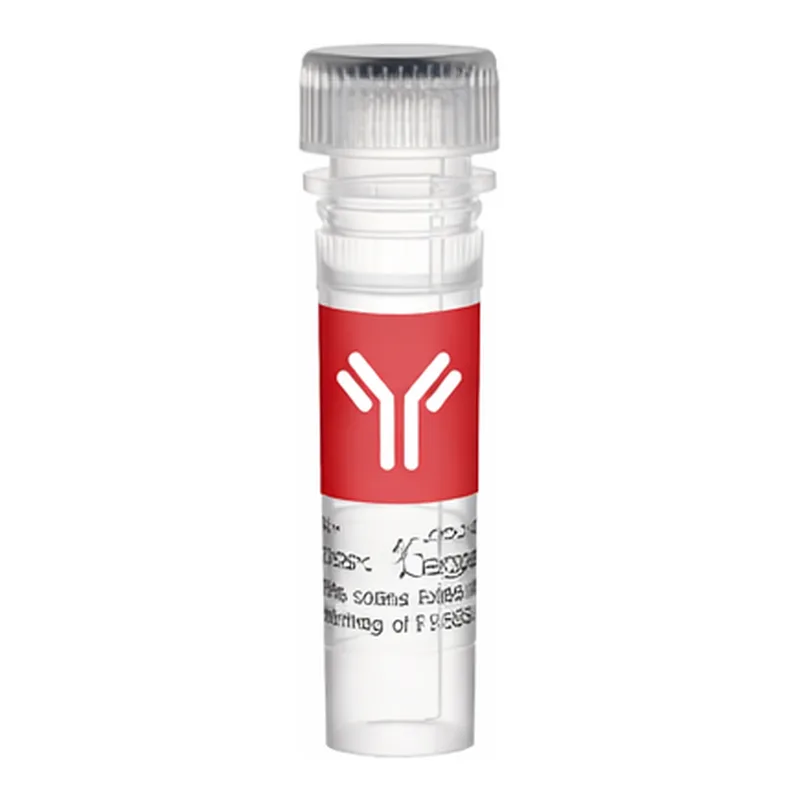
Thermo Fisher Scientific Human SLFN12 Synthetic Peptide
인간 SLFN12 단백질의 C-말단 12개 아미노산 서열 기반 합성 펩타이드. 항체 PA5-20867의 블로킹 펩타이드로 사용 가능. 세포 성장, 분화, T세포 발달 연구에 활용. 연구용 전용 제품으로 진단용 사용 불가.
- 판매단위
- pk
카탈로그
1개 옵션 · 카탈로그 번호를 클릭하면 복사됩니다Thermo Fisher Scientific · Thermo Fisher Scientific Human SLFN12 Synthetic Peptide
Applications
Control (Ctrl)
- Assay-dependent
Blocking Assay (BLOCK)
- Assay-dependent
Product Specifications
| 항목 | 내용 |
|---|---|
| Species Reactivity | Human |
| Class | Synthetic |
| Type | Peptide |
| Conjugate | Unconjugated |
| Form | Liquid |
| Concentration | 200 µg/mL |
| Purification | Purified |
| Storage Buffer | PBS, pH 7.2, with 0.1% BSA |
| Contains | 0.02% sodium azide |
| Storage Conditions | -20°C |
Product Specific Information
This peptide corresponds to 12 amino acids near the carboxy terminus of human SLFN12.
PEP-0981 can be used as a blocking peptide with polyclonal antibody PA5-20867.
Target Information
Despite being first described several years ago, the roles of the Schlafen (SLFN) family of proteins remain largely unknown. The SLFN genes are preferentially expressed in lymphoid tissues and differentially regulated during thymocyte maturation. It is thought that many play roles in cell growth, hemopoietic cell differentiation, and T cell development and maturation. Most members contain at least one divergent AAA domain (AAA_4) that may play a role in ATP binding. Although also known as SLFN3, a Schlafen family member that may be a marker of T cell activation, human SLFN12 has relatively low homology to SLFN3 in other species. Loss of the SLFN12 gene due to deletion is associated with Kabuki syndrome, a multiple congenital anomaly syndrome, suggesting SLFN may play a role in this genetic condition.
For Research Use Only. Not for use in diagnostic procedures. Not for resale without express authorization.
Thermo Fisher Scientific 상품 둘러보기
전체보기
문의
0개 · 배송·재고 문의는 실시간 상담이 빠릅니다아직 등록된 문의가 없어요.