

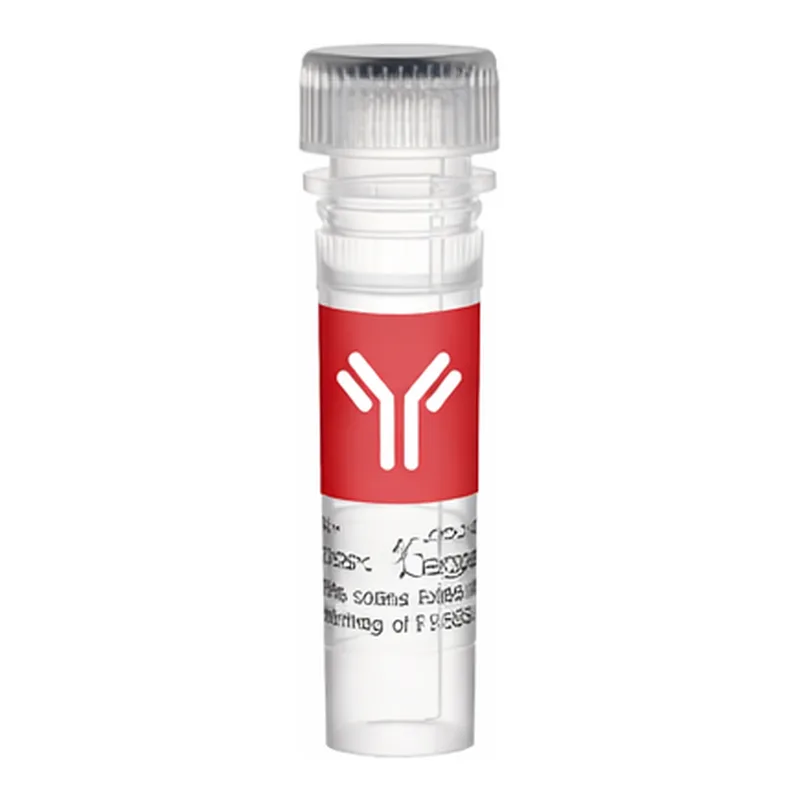
Thermo Fisher Scientific UFD1L Polyclonal Antibody
Thermo Fisher Scientific의 UFD1L Polyclonal Antibody는 인간 UFD1L 단백질을 인식하는 토끼 유래 다클론 항체입니다. Western blot, IHC, ICC/IF에 적합하며, 고순도의 항원 친화 크로마토그래피로 정제되었습니다. 단기 4°C, 장기 -20°C 보관 권장.
- 판매단위
- pk
카탈로그
1개 옵션 · 카탈로그 번호를 클릭하면 복사됩니다Thermo Fisher Scientific · Thermo Fisher Scientific UFD1L Polyclonal Antibody
Applications and Tested Dilution
| Application | Tested Dilution |
|---|---|
| Western Blot (WB) | 1:500–1:3,000 |
| Immunohistochemistry (Paraffin) (IHC (P)) | 1:100–1:1,000 |
| Immunocytochemistry (ICC/IF) | 1:100–1:1,000 |
Product Specifications
| 항목 | 내용 |
|---|---|
| Species Reactivity | Human |
| Host / Isotype | Rabbit / IgG |
| Class | Polyclonal |
| Type | Antibody |
| Immunogen | Recombinant fragment corresponding to a region within amino acids 45–307 of Human UFD1L |
| Conjugate | Unconjugated |
| Form | Liquid |
| Concentration | 0.66 mg/mL |
| Purification | Antigen affinity chromatography |
| Storage Buffer | 0.1M Tris glycine, pH 7, with 20% glycerol |
| Contains | 0.01% thimerosal |
| Storage Conditions | Store at 4°C short term. For long term storage, store at -20°C, avoiding freeze/thaw cycles. |
| Shipping Conditions | Wet ice |
| RRID | AB_2548588 |
Product Specific Information
- Recommended positive control: A431
- Predicted reactivity: Mouse (98%), Rat (97%), Zebrafish (84%), Xenopus laevis (88%), Chicken (92%), Rhesus Monkey (99%)
- Store product as a concentrated solution. Centrifuge briefly prior to opening the vial.
Target Information
Ubiquitin-mediated proteolysis requires the transfer of ubiquitin (Ub) to lysine groups on selected cellular proteins, which then potentiates the proteolytic degradation of these protein conjugates by the 26S proteasome.
Ub-fusions are cleaved by Ub-specific processing proteases (UBps) or alternatively by the Ub-fusion degradation (UFD) pathway.
The UBP pathway targets the C-terminal glycine residue on Ub that is involved in the formation of Ub-conjugates, while UFD proteins preferentially cleave Ub-conjugated proteins that contain an amino acid substitution at this glycine residue.
The UFD1 protein was originally characterized in the yeast S. cerevisiae and subsequently, the human homolog UFD1 or UFD1L was identified. In vitro, UFD1 attenuates the degradation of Ub-fusions, which have a proline or valine residue substituted at the Gly76 moiety, by the selective multiubiquitination of the Ub chain of the Ub-conjugate.
Mutations within the UFD1 gene are implicated in the development of CATCH22 syndrome, which is characterized by cardiac defects, cleft palate, and hypocalcemia, suggesting that this proteolytic pathway may be involved in the progression of these developmental defects.
⚠ WARNING: This product can expose you to chemicals including mercury, which is known to the State of California to cause birth defects or other reproductive harm.
For more information, visit www.P65Warnings.ca.gov.
For Research Use Only. Not for use in diagnostic procedures. Not for resale without express authorization.
Thermo Fisher Scientific 상품 둘러보기
전체보기
문의
0개 · 배송·재고 문의는 실시간 상담이 빠릅니다아직 등록된 문의가 없어요.