

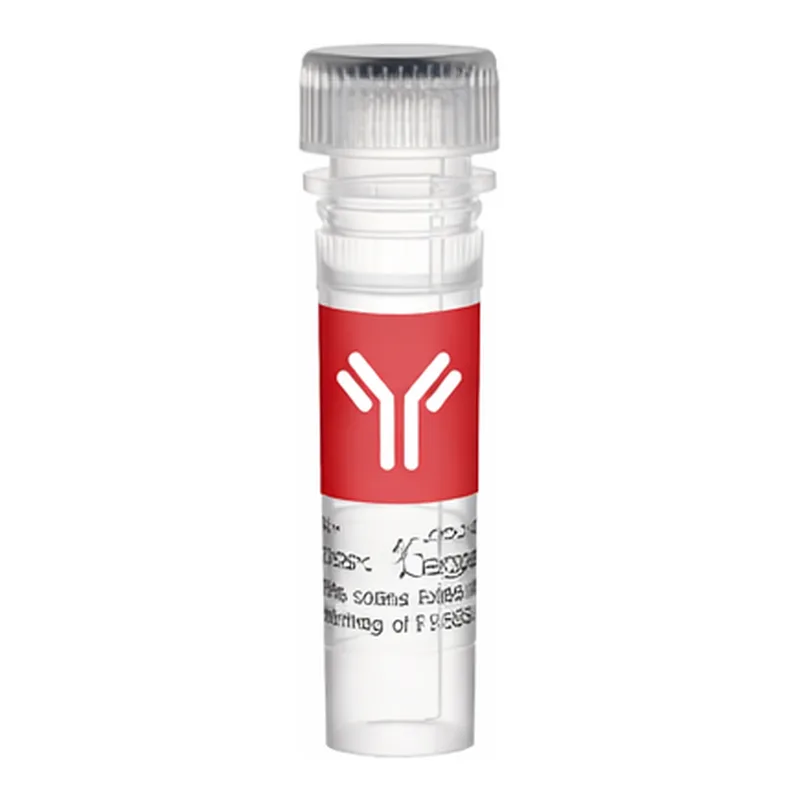
Thermo Fisher Scientific Phospho-EGFR (Tyr1068) Polyclonal Antibody
EGFR Tyr1068 인산화 부위를 인식하는 Rabbit Polyclonal 항체로, Western blot, IHC, ICC/IF에 사용 가능. Human, Mouse, Rat 반응성. 항원 친화 크로마토그래피로 정제, 액상 형태로 제공. 암 연구 및 EGFR 신호전달 분석에 적합.
- 카탈로그번호
- PA517848
- 판매단위
- pk
카탈로그
1개 옵션 · 카탈로그 번호를 클릭하면 복사됩니다Thermo Fisher Scientific · Thermo Fisher Scientific Phospho-EGFR (Tyr1068) Polyclonal Antibody
Applications and Tested Dilution
| Application | Tested Dilution | Publications |
|---|---|---|
| Western Blot (WB) | 1:1,000 | View 1 publication |
| Immunohistochemistry (Paraffin) (IHC (P)) | 1:100–1:400 | - |
| Immunocytochemistry (ICC/IF) | 1:100 | - |
Product Specifications
| Specification | Description |
|---|---|
| Species Reactivity | Human, Mouse, Rat |
| Published Species | Pig |
| Host / Isotype | Rabbit / IgG |
| Class | Polyclonal |
| Type | Antibody |
| Immunogen | Synthetic phosphopeptide corresponding to residues surrounding pTyr1068 of human EGF receptor |
| Conjugate | Unconjugated |
| Form | Liquid |
| Concentration | 5 µg/mL |
| Purification | Antigen affinity chromatography |
| Storage Buffer | 0.01M HEPES, pH 7.5, with 0.15M NaCl, 100 µg/mL BSA, 50% glycerol |
| Contains | No preservative |
| Storage Conditions | -20°C |
| Shipping Conditions | Ambient (domestic); Wet ice (international) |
| RRID | AB_10983605 |
Product Specific Information
It is not recommended to aliquot this antibody.
Target Information
EGFR (Epidermal Growth Factor Receptor) is a receptor tyrosine kinase that mediates signaling in response to various growth factors. Overexpression has been associated with numerous cancers and EGFR serves as a therapeutic target for both biological and small molecule drugs.
EGFR is encoded by the EGFR gene on human chromosome 7 and belongs to the HER/ERbB family, which includes ERbB2, ERbB3, and ERbB4.
Binding of ligands such as EGF and TGF-alpha to the extracellular domain induces receptor dimerization and autophosphorylation of tyrosine residues in the cytoplasmic domain.
Overexpression is observed in tumors of the head and neck, brain, bladder, stomach, breast, lung, endometrium, cervix, vulva, ovary, esophagus, and squamous cell carcinoma.
For Research Use Only. Not for use in diagnostic procedures. Not for resale without express authorization.
Thermo Fisher Scientific 상품 둘러보기
전체보기
문의
0개 · 배송·재고 문의는 실시간 상담이 빠릅니다아직 등록된 문의가 없어요.