

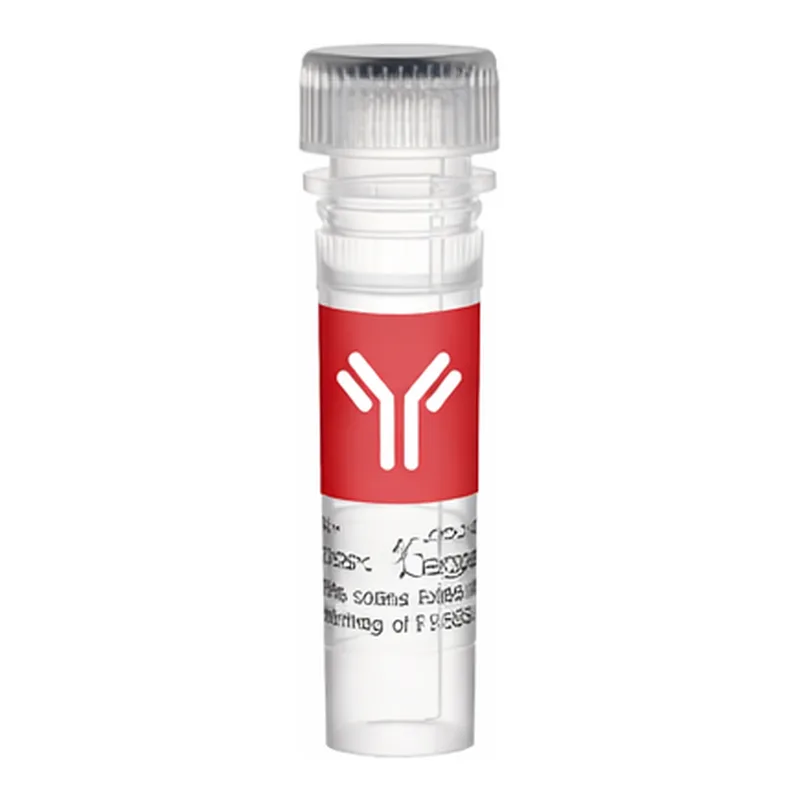
Thermo Fisher Scientific NUP160 Polyclonal Antibody
Rabbit 폴리클로날 항체로 인간 NUP160 단백질의 1050–1100번 잔기 구간을 타겟팅함. Western blot과 immunoprecipitation에 사용 가능. 액상 형태, 1 mg/mL 농도, 4°C 보관. 마우스와도 반응 예측됨.
- 판매단위
- pk
카탈로그
2개 옵션 · 카탈로그 번호를 클릭하면 복사됩니다Thermo Fisher Scientific · Thermo Fisher Scientific NUP160 Polyclonal Antibody
Applications
Western Blot (WB)
- Tested Dilution: 1:2,000–1:10,000
Immunoprecipitation (IP)
- Tested Dilution: 2–5 µg/mg lysate
Product Specifications
| 항목 | 내용 |
|---|---|
| Host / Isotype | Rabbit / IgG |
| Class | Polyclonal |
| Type | Antibody |
| Immunogen | Region between residue 1050 and 1100 of human nucleoporin 160 kDa |
| Conjugate | Unconjugated |
| Form | Liquid |
| Concentration | 1 mg/mL |
| Storage Conditions | 4°C |
| Shipping Conditions | Wet ice |
Product Specific Information
- Recommended shelf life: 1 year from date of receipt
- Based on 100% sequence identity, this antibody is predicted to react with Mouse
Target Information
The nuclear pore complex (NPC) is a protein assembly localized at the nuclear rim and mediates macromolecular transport between the nucleus and the cytoplasm.
The mammalian nucleoporin (NUP)-160 is part of the hetero-oligomeric complex that also contains NUP107, NUP133, NUP96, and mammalian homolog of yeast sec13p.
While the majority of the NUP107–160 nuclear pore sub-complex localizes to the nuclear pore, a small fraction is observed at kinetochores and pro-metaphase spindle poles in mitotic cells in association with proteins such as Mad1, Mad2, Bub3, and Cdc20.
Immunodepletion of the NUP107–160 complex resulted in defective spindle assembly, indicating multiple functions.
NUP160 has recently been identified as an HIV dependency factor (HDF), suggesting that NUP160 may be an important drug target in HIV treatment.
Multiple isoforms of NUP160 are known to exist.
For Research Use Only. Not for use in diagnostic procedures. Not for resale without express authorization.
제품 이미지
(이미지 없음)
Thermo Fisher Scientific 상품 둘러보기
전체보기
문의
0개 · 배송·재고 문의는 실시간 상담이 빠릅니다아직 등록된 문의가 없어요.