

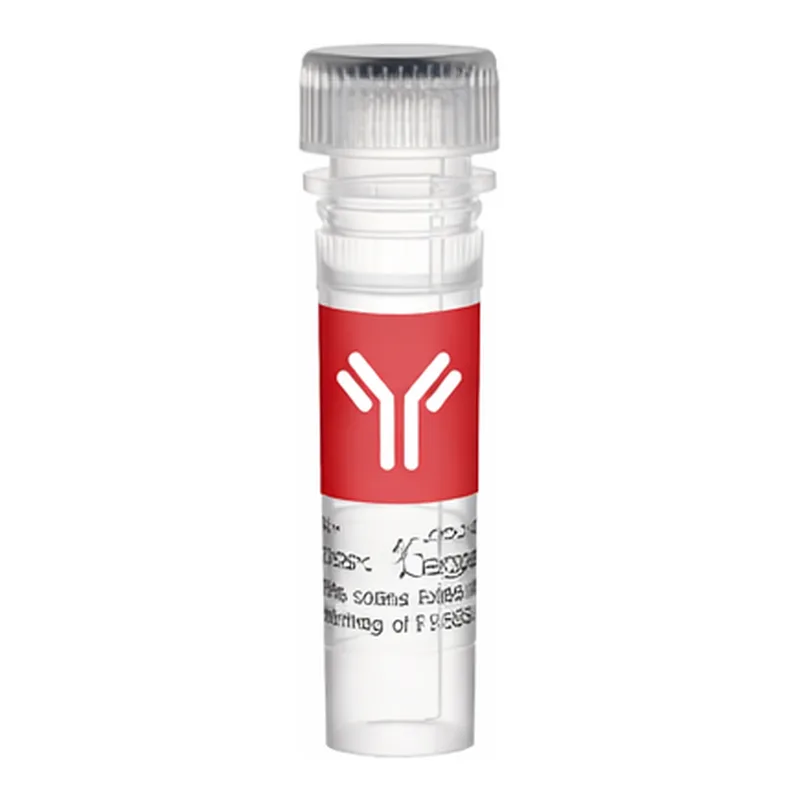
Thermo Fisher Scientific PLA2G4A Polyclonal Antibody
PLA2G4A 단백질을 인식하는 Thermo Fisher Scientific의 Rabbit Polyclonal 항체로, WB, IHC, ICC/IF에 사용 가능. Human과 Mouse에 반응하며 항원 친화 크로마토그래피로 정제됨. 1 mg/mL 농도의 액상 형태로, 단기 4°C, 장기 -20°C 보관 권장.
- 카탈로그번호
- PA530962
- 판매단위
- pk
카탈로그
1개 옵션 · 카탈로그 번호를 클릭하면 복사됩니다Thermo Fisher Scientific · Thermo Fisher Scientific PLA2G4A Polyclonal Antibody
Applications and Tested Dilutions
| Application | Tested Dilution |
|---|---|
| Western Blot (WB) | 1:500–1:3,000 |
| Immunohistochemistry (Paraffin) (IHC (P)) | 1:100–1:1,000 |
| Immunocytochemistry (ICC/IF) | 1:100–1:1,000 |
Product Specifications
| Specification | Details |
|---|---|
| Species Reactivity | Human, Mouse |
| Host / Isotype | Rabbit / IgG |
| Class | Polyclonal |
| Type | Antibody |
| Immunogen | Recombinant fragment corresponding to a region within amino acids 336–664 of Human PLA2G4A |
| Conjugate | Unconjugated |
| Form | Liquid |
| Concentration | 1 mg/mL |
| Purification | Antigen affinity chromatography |
| Storage Buffer | PBS, pH 7, with 1% BSA, 20% glycerol |
| Contains | 0.01% thimerosal |
| Storage Conditions | Store at 4°C short term. For long term storage, store at -20°C, avoiding freeze/thaw cycles. |
| Shipping Conditions | Wet ice |
| RRID | AB_2548436 |
Product Specific Information
- Recommended positive control: A549
- Predicted reactivity: Mouse (92%), Rat (93%), Xenopus laevis (81%), Rabbit (92%), Chicken (84%), Bovine (90%)
- Store product as a concentrated solution. Centrifuge briefly prior to opening the vial.
Target Information
This gene encodes a member of the cytosolic phospholipase A2 group IV family. The enzyme catalyzes the hydrolysis of membrane phospholipids to release arachidonic acid, which is subsequently metabolized into eicosanoids. Eicosanoids, including prostaglandins and leukotrienes, are lipid-based cellular hormones that regulate hemodynamics, inflammatory responses, and other intracellular pathways. The hydrolysis reaction also produces lysophospholipids that are converted into platelet-activating factor. The enzyme is activated by increased intracellular Ca²⁺ levels and phosphorylation, resulting in its translocation from the cytosol and nucleus to perinuclear membrane vesicles.
⚠ WARNING: This product can expose you to chemicals including mercury, which is known to the State of California to cause birth defects or other reproductive harm.
For more information, visit www.P65Warnings.ca.gov.
For Research Use Only. Not for use in diagnostic procedures. Not for resale without express authorization.
Thermo Fisher Scientific 상품 둘러보기
전체보기
문의
0개 · 배송·재고 문의는 실시간 상담이 빠릅니다아직 등록된 문의가 없어요.