

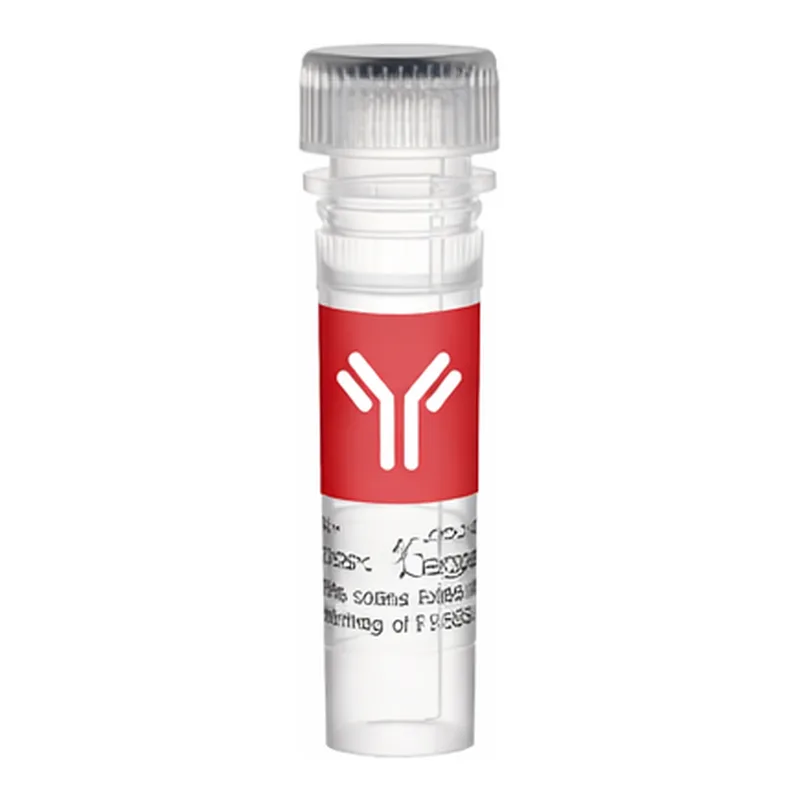
Thermo Fisher Scientific PUM1 Polyclonal Antibody
PUM1 단백질을 인식하는 Thermo Fisher Scientific의 Rabbit Polyclonal Antibody로, WB 및 IHC(P) 분석에 적합합니다. 인간과 생쥐 시료에서 반응하며, 고순도 친화 크로마토그래피 정제 및 안정적인 PBS/glycerol 버퍼로 제공됩니다.
- 판매단위
- pk
카탈로그
1개 옵션 · 카탈로그 번호를 클릭하면 복사됩니다Thermo Fisher Scientific · Thermo Fisher Scientific PUM1 Polyclonal Antibody
Applications
Western Blot (WB)
- Tested Dilution: 1:1,000–1:3,000
- Publications: References
Immunohistochemistry (Paraffin) (IHC (P))
- Tested Dilution: 1:50–1:200
- Publications: References
Product Specifications
| 항목 | 내용 |
|---|---|
| Species Reactivity | Human, Mouse |
| Host / Isotype | Rabbit / IgG |
| Class | Polyclonal |
| Type | Antibody |
| Immunogen | A synthesized peptide derived from human PUM1 (Accession Q14671), corresponding to amino acid residues E223–G273 |
| Conjugate | Unconjugated |
| Form | Liquid |
| Concentration | 1 mg/mL |
| Purification | Affinity chromatography |
| Storage Buffer | PBS, pH 7.4, with 50% glycerol |
| Contains | 0.02% sodium azide |
| Storage Conditions | −20°C |
| Shipping Conditions | Wet ice |
| RRID | AB_2852320 |
Product Specific Information
Antibody detects endogenous levels of total PUM1.
Target Information
PUM1 (pumilio homolog 1) is a sequence-specific RNA-binding protein that acts as a post-transcriptional repressor by binding the 3′-UTR of mRNA targets. It belongs to the PUF family, which consists of evolutionarily conserved RNA-binding proteins.
PUM1 binds to the RNA consensus sequence known as the Pumilio Response Element (PRE), 5′-UGUANAUA-3′, related to the Nanos Response Element (NRE).
It mediates post-transcriptional repression by recruiting the CCR4-POP2-NOT deadenylase complex, leading to translational inhibition and mRNA degradation.
Mutations in the PUM1 gene can result in spinocerebellar ataxia 47.
For Research Use Only. Not for use in diagnostic procedures. Not for resale without express authorization.
제품 이미지
(이미지 삽입 위치)
Thermo Fisher Scientific 상품 둘러보기
전체보기
문의
0개 · 배송·재고 문의는 실시간 상담이 빠릅니다아직 등록된 문의가 없어요.