

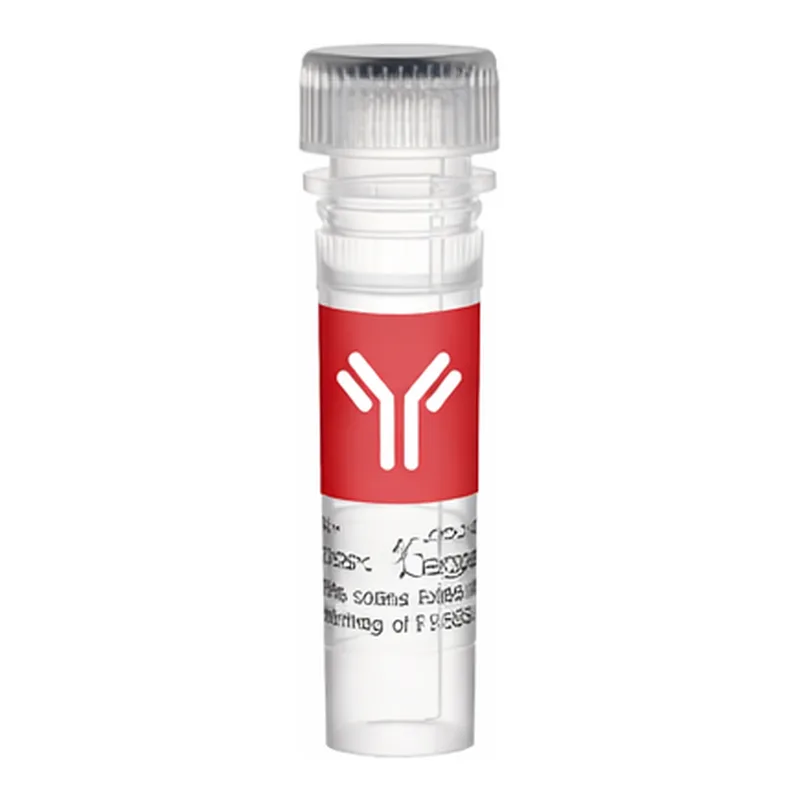
Thermo Fisher Scientific OR2AG1/OR2AG2 Polyclonal Antibody
OR2AG1/OR2AG2 단백질을 인식하는 Rabbit Polyclonal Antibody로, Western blot, IHC, ICC/IF에 사용 가능. Human 시료에 반응하며, Affinity chromatography로 정제됨. 1 mg/mL 농도의 액상 형태로 -20°C 보관.
- 카탈로그번호
- PA5104388
- 판매단위
- pk
카탈로그
1개 옵션 · 카탈로그 번호를 클릭하면 복사됩니다Thermo Fisher Scientific · Thermo Fisher Scientific OR2AG1/OR2AG2 Polyclonal Antibody
Applications and Tested Dilutions
| Application | Tested Dilution |
|---|---|
| Western Blot (WB) | 1:500–1:1,000 |
| Immunohistochemistry (Paraffin) (IHC (P)) | 1:50–1:200 |
| Immunocytochemistry (ICC/IF) | 1:100–1:500 |
Product Specifications
| 항목 | 내용 |
|---|---|
| Species Reactivity | Human |
| Host / Isotype | Rabbit / IgG |
| Class | Polyclonal |
| Type | Antibody |
| Immunogen | A synthesized peptide derived from human OR2AG1 (Accession Q9H205), corresponding to amino acid residues L62–D112 |
| Conjugate | Unconjugated |
| Form | Liquid |
| Concentration | 1 mg/mL |
| Purification | Affinity chromatography |
| Storage Buffer | PBS, pH 7.4, with 50% glycerol |
| Contains | 0.02% sodium azide |
| Storage Conditions | –20°C |
| Shipping Conditions | Wet ice |
| RRID | AB_2853696 |
Product Specific Information
Antibody detects endogenous levels of total OR2AG1/2.
Target Information
Olfactory receptors interact with odorant molecules in the nose to initiate neuronal responses that trigger the perception of smell. These receptor proteins are members of the G-protein-coupled receptor (GPCR) family, arising from single coding-exon genes. They share a 7-transmembrane domain structure with many neurotransmitter and hormone receptors and are responsible for the recognition and G protein-mediated transduction of odorant signals. The olfactory receptor gene family is the largest in the genome. The nomenclature assigned to these genes and proteins is organism-specific.
For Research Use Only. Not for use in diagnostic procedures. Not for resale without express authorization.
Thermo Fisher Scientific 상품 둘러보기
전체보기
문의
0개 · 배송·재고 문의는 실시간 상담이 빠릅니다아직 등록된 문의가 없어요.