

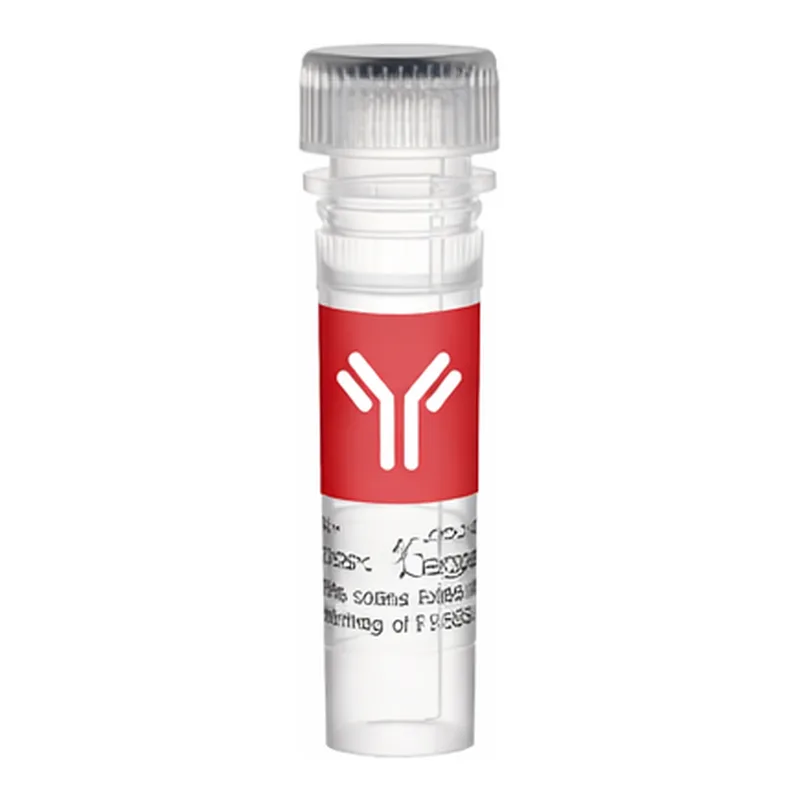
Thermo Fisher Scientific PDLIM1 Polyclonal Antibody
Rabbit polyclonal antibody against Human PDLIM1 protein. Validated for Western blot and immunoprecipitation. High purity via antigen affinity chromatography. Suitable for research use only, not for diagnostic applications.
- 판매단위
- pk
카탈로그
1개 옵션 · 카탈로그 번호를 클릭하면 복사됩니다Thermo Fisher Scientific · Thermo Fisher Scientific PDLIM1 Polyclonal Antibody
Applications
| Application | Tested Dilution |
|---|---|
| Western Blot (WB) | 1:500–1:2,000 |
| Immunoprecipitation (IP) | 0.5–2 µL/mg of lysate |
Product Specifications
| Specification | Description |
|---|---|
| Species Reactivity | Human |
| Host / Isotype | Rabbit / IgG |
| Class | Polyclonal |
| Type | Antibody |
| Immunogen | E. coli-derived Human PDLIM1 fragment |
| Conjugate | Unconjugated |
| Form | Liquid |
| Concentration | 1 mg/mL |
| Purification | Antigen affinity chromatography, Protein A |
| Storage Buffer | PBS, pH 7 |
| Contains | 0.03% ProClin 300 |
| Storage Conditions | Store at 4°C short term. For long term storage, store at -20°C, avoiding freeze/thaw cycles. |
| Shipping Conditions | Wet ice |
| RRID | AB_2867028 |
Target Information
Initiation of transcription by RNA polymerase II requires the activities of more than 70 polypeptides. The protein that coordinates these activities is transcription factor IID (TFIID), which binds to the core promoter to position the polymerase properly, serves as the scaffold for assembly of the remainder of the transcription complex, and acts as a channel for regulatory signals.
TFIID is composed of the TATA-binding protein (TBP) and a group of evolutionarily conserved proteins known as TBP-associated factors (TAFs). TAFs may participate in basal transcription, serve as coactivators, function in promoter recognition, or modify general transcription factors (GTFs) to facilitate complex assembly and transcription initiation.
A distinctive feature of TBP is a long string of glutamines in the N-terminal region. This region modulates the DNA-binding activity of the C terminus, affecting the rate of transcription complex formation and initiation. Mutations that expand the number of CAG repeats encoding this polyglutamine tract are associated with spinocerebellar ataxia 17, a neurodegenerative disorder classified as a polyglutamine disease.
For Research Use Only. Not for use in diagnostic procedures. Not for resale without express authorization.
Thermo Fisher Scientific 상품 둘러보기
전체보기
문의
0개 · 배송·재고 문의는 실시간 상담이 빠릅니다아직 등록된 문의가 없어요.