

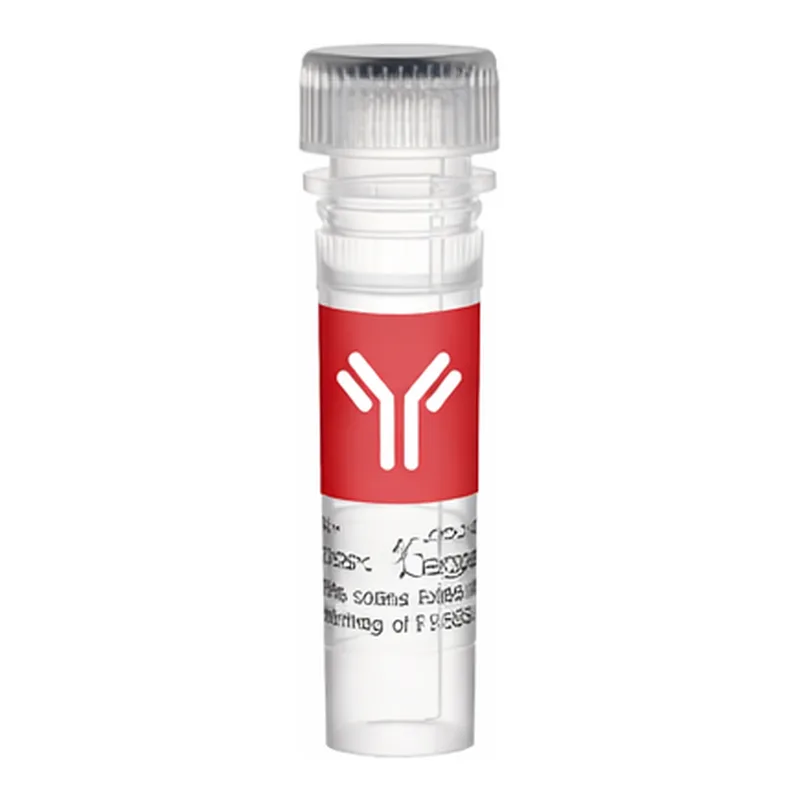
Thermo Fisher Scientific DDX4 Polyclonal Antibody
Human DDX4 단백질을 인식하는 Rabbit Polyclonal Antibody로, IHC(P)에서 1:500~1:1,000 희석 범위로 사용 가능. 항원 친화 크로마토그래피로 정제되었으며, PBS/40% glycerol buffer에 보관. 생식세포 발달 관련 연구에 적합.
- 판매단위
- pk
카탈로그
1개 옵션 · 카탈로그 번호를 클릭하면 복사됩니다Thermo Fisher Scientific · Thermo Fisher Scientific DDX4 Polyclonal Antibody
Applications
- Immunohistochemistry (Paraffin) (IHC (P)): 1:500–1:1,000
Product Specifications
| 항목 | 내용 |
|---|---|
| Species Reactivity | Human |
| Host / Isotype | Rabbit / IgG |
| Class | Polyclonal |
| Type | Antibody |
| Immunogen | Recombinant protein corresponding to Human DDX4. Recombinant protein control fragment (Product #RP-96902). |
| Conjugate | Unconjugated |
| Form | Liquid |
| Concentration | 0.1 mg/mL |
| Purification | Antigen affinity chromatography |
| Storage Buffer | PBS, pH 7.2, with 40% glycerol |
| Contains | 0.02% sodium azide |
| Storage Conditions | Store at 4°C short term. For long term storage, store at -20°C, avoiding freeze/thaw cycles. |
| Shipping Conditions | Wet ice |
| RRID | AB_2790543 |
Product Specific Information
Immunogen sequence:
GGESSDTQGP KVTYIPPPPP EDEDSIFAHY QTGINFDKYD TILVEVSGHD APPAILTFEE ANLCQTLNNN IAKAGYTK
Target Information
DEAD box proteins, characterized by the conserved motif Asp-Glu-Ala-Asp, are putative RNA helicases involved in various RNA secondary structure alterations such as translation initiation, nuclear and mitochondrial splicing, and ribosome and spliceosome assembly.
Certain family members are associated with embryogenesis, spermatogenesis, and cellular growth and division.
This gene encodes a DEAD box protein homologous to VASA proteins found in Drosophila and other species, specifically expressed in germ cell lineage and essential for germ cell development. Multiple transcript variants encoding different isoforms have been identified.
For Research Use Only. Not for use in diagnostic procedures. Not for resale without express authorization.
Thermo Fisher Scientific 상품 둘러보기
전체보기
문의
0개 · 배송·재고 문의는 실시간 상담이 빠릅니다아직 등록된 문의가 없어요.