

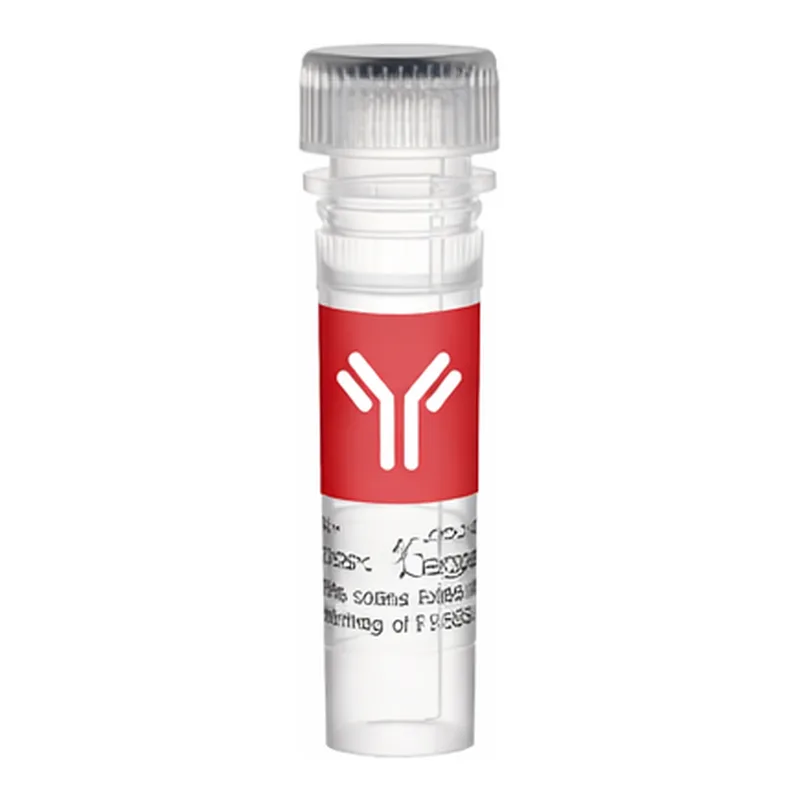
Thermo Fisher Scientific Olfr661 Polyclonal Antibody
Western blot 및 IHC에 적합한 다클론 항체. 마우스 Olfr661 합성 펩타이드로부터 제작. Rabbit IgG 호스트 기반 비결합형 항체. 냉장 또는 냉동 보관 가능하며 연구용으로만 사용.
- 판매단위
- pk
카탈로그
1개 옵션 · 카탈로그 번호를 클릭하면 복사됩니다Thermo Fisher Scientific · Thermo Fisher Scientific Olfr661 Polyclonal Antibody
Applications and Tested Dilution
| Application | Tested Dilution |
|---|---|
| Western Blot (WB) | 1:300–1:2,000 |
| Immunohistochemistry (IHC) | 1:300–1:2,000 |
Product Specifications
| 항목 | 내용 |
|---|---|
| Host / Isotype | Rabbit / IgG |
| Class | Polyclonal |
| Type | Antibody |
| Immunogen | Synthetic peptide from mouse olfactory receptor family 40, subfamily 4 |
| Conjugate | Unconjugated |
| Form | Lyophilized |
| Concentration | Not determined |
| Storage Conditions | Store at 4 °C short term. For long-term storage, store at −20 °C, avoiding freeze/thaw cycles. Glycerol (1:1) may be added for stability. |
| Shipping Conditions | Ambient (domestic); Wet ice (international) |
| RRID | AB_962204 |
Product Specific Information
- Reconstitute with 100 µL of distilled water.
- Centrifuge to remove any insoluble material.
- OSR00009W can be used with blocking peptide GSM00018P.
Target Information
Olfactory receptors interact with odorant molecules in the nose to initiate a neuronal response that triggers the perception of smell. These receptor proteins belong to a large family of G-protein-coupled receptors (GPCRs) arising from single coding-exon genes. Olfactory receptors share a seven-transmembrane domain structure with many neurotransmitter and hormone receptors and are responsible for the recognition and G protein-mediated transduction of odorant signals. The olfactory receptor gene family is the largest in the genome. The nomenclature assigned to olfactory receptor genes and proteins for this organism is independent of other organisms.
For Research Use Only. Not for use in diagnostic procedures. Not for resale without express authorization.
Thermo Fisher Scientific 상품 둘러보기
전체보기
문의
0개 · 배송·재고 문의는 실시간 상담이 빠릅니다아직 등록된 문의가 없어요.