

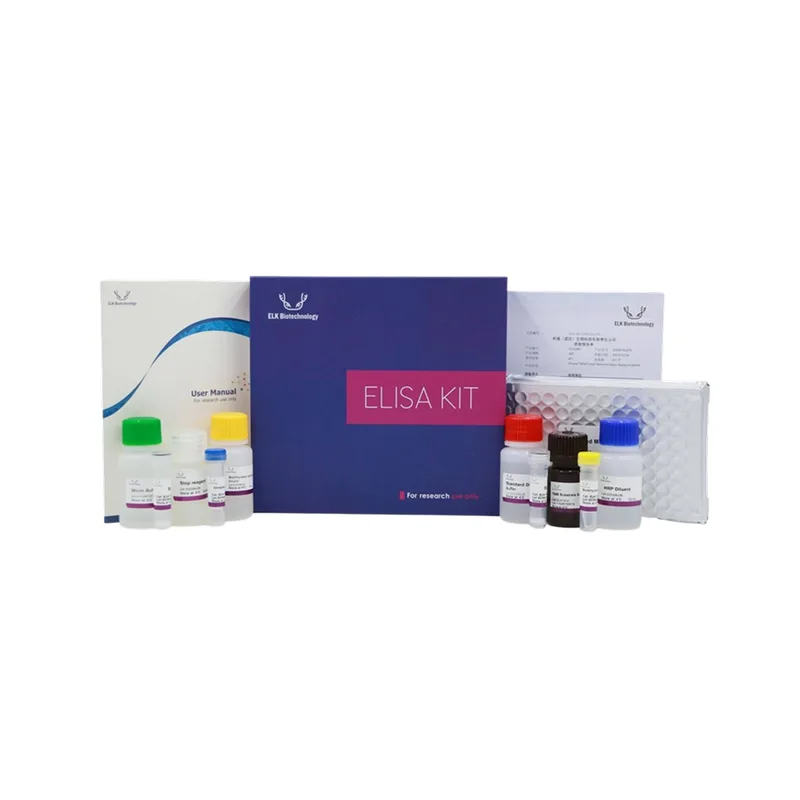
ELK Biotechnology Smad3 (Phospho-Ser213) Antibody
Smad3 (Phospho-Ser213)를 인식하는 rabbit polyclonal antibody로, WB, ELISA, IHC에 적합합니다. TGF-β 신호전달 연구 및 Smad3 인산화 상태 분석에 유용하며, 인간, 마우스, 랫트 시료에 반응합니다. -20°C에서 1년 보관 가능합니다.
- 판매단위
- pk
카탈로그
2개 옵션 · 카탈로그 번호를 클릭하면 복사됩니다ELK Biotechnology · ELK Biotechnology Smad3 (Phospho-Ser213) Antibody
제품명
Smad3 (Phospho-Ser213) Antibody
제품 개요
이 항체는 인간 Smad3 단백질의 인산화된 Ser213 잔기를 인식하는 rabbit polyclonal antibody입니다. TGF-β 신호전달 경로 연구 및 인산화 단백질 분석에 활용할 수 있습니다.
제품 정보
| 항목 | 내용 |
|---|---|
| Alternative Names | Mothers against decapentaplegic homolog 3 (MAD homolog 3), Mad3, Mothers against DPP homolog 3, hMAD-3, JV15-2, SMAD family member 3, SMAD 3, Smad3, hSMAD3 |
| Applications | WB, ELISA, IHC |
| Recommended Dilutions | WB: 1:500–2000; IHC-p: 1:50–300; ELISA: 1:2000–20000 |
| Immunogen | Synthesized phospho peptide derived from human Smad3 (Phospho-Ser213) |
| Storage | -20°C, 1 year |
| Host | Rabbit |
| Clonality | Polyclonal |
| Isotype | IgG |
| Concentration | 1 mg/ml |
| Observed Band | 50 kDa |
| Gene ID (Human) | 4088 |
| Human Swiss-Prot No. | P84022 |
| Species Reactivity | Human, Mouse, Rat |
세포 내 위치 (Cellular Localization)
Cytoplasm and nucleus.
Cytoplasmic and nuclear in the absence of TGF-β. Upon TGF-β stimulation, migrates to the nucleus when complexed with SMAD4 (PubMed:15799969, 21145499).
Released from the SMAD2/SMAD4 complex and exported from the nucleus via RANBP1 interaction (PubMed:16751101, 19289081).
Co-localizes with LEMD3 at the nuclear inner membrane (PubMed:15601644).
MAPK-mediated phosphorylation has no effect on nuclear import (PubMed:19218245).
PDPK1 prevents nuclear translocation in response to TGF-β (PubMed:17327236).
Localized mainly to the nucleus in early embryonic stages, later expressed in the cytoplasm of the inner cell mass at the blastocyst stage (By similarity).
Background
The protein encoded by this gene belongs to the SMAD family, which is similar to the Drosophila gene mothers against decapentaplegic (Mad) and the C. elegans gene Sma.
SMAD proteins are signal transducers and transcriptional modulators mediating multiple signaling pathways.
This protein functions as a transcriptional modulator activated by transforming growth factor-beta (TGF-β) and is thought to play a role in the regulation of carcinogenesis.
[Provided by RefSeq, Apr 2009]
ELK Biotechnology 상품 둘러보기
전체보기
문의
0개 · 배송·재고 문의는 실시간 상담이 빠릅니다아직 등록된 문의가 없어요.