

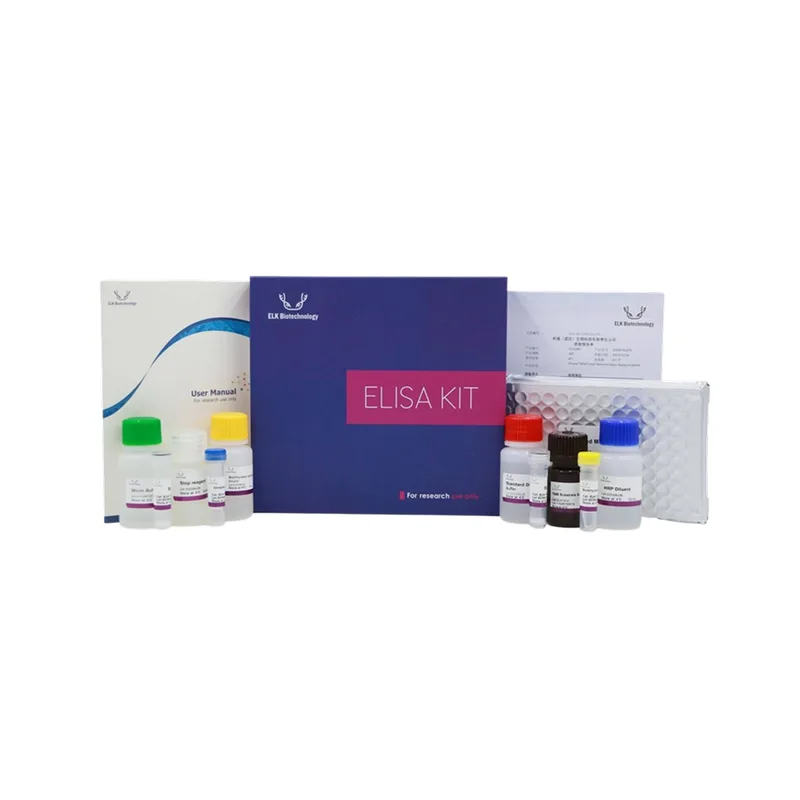
ELK Biotechnology p53 (Acetyl-K120) rabbit pAb
p53 단백질의 K120 아세틸화를 인식하는 토끼 다클론 항체로, Western Blot 및 ELISA에 적합합니다. 인간, 마우스, 랫트 시료에 반응하며, 세포 내 p53의 위치 및 기능 연구에 유용합니다. -20°C에서 1년 보관 가능합니다.
- 판매단위
- pk
카탈로그
2개 옵션 · 카탈로그 번호를 클릭하면 복사됩니다ELK Biotechnology · ELK Biotechnology p53 (Acetyl-K120) rabbit pAb
제품명
p53 (Acetyl-K120) rabbit pAb
제품 정보
| 항목 | 내용 |
|---|---|
| Alternative Names | Cellular tumor antigen p53 (Antigen NY-CO-13), Phosphoprotein p53, Tumor suppressor p53 |
| Applications | WB; ELISA |
| Recommended Dilutions | Western Blot: 1/500 - 1/2000 ELISA: 1/20000 Not yet tested in other applications |
| Immunogen | Synthesized acetyl peptide derived from human p53 at AA range K120 |
| Host | Rabbit |
| Storage | -20°C / 1 year |
| Clonality | Polyclonal |
| Isotype | IgG |
| Concentration | 1 mg/ml |
| Gene ID (Human) | 7157 |
| Human Swiss-Prot No. | P04637 |
| Species Reactivity | Human: K120; Mouse: K114; Rat: K118 |
세포 내 위치 (Cellular Localization)
Cytoplasm, Nucleus, PML body, Endoplasmic reticulum, Mitochondrion matrix, Cytoskeleton (microtubule organizing center, centrosome).
Recruited into PML bodies with CHEK2 (PubMed:12810724).
Translocates to mitochondria upon oxidative stress (PubMed:22726440) and in response to mitomycin C treatment (PubMed:27323408).
- Isoform 1: Predominantly nuclear; localizes to cytoplasm when expressed with isoform 4
- Isoform 2: Mainly nuclear with minor cytoplasmic staining
- Isoform 3: Nuclear in most cells, cytoplasmic in some
- Isoform 4: Predominantly nuclear but translocates to cytoplasm
Background
Tumor protein p53 (TP53) is a tumor suppressor protein containing transcriptional activation, DNA binding, and oligomerization domains. It responds to diverse cellular stresses to regulate target gene expression, inducing cell cycle arrest, apoptosis, senescence, DNA repair, or metabolic changes.
Mutations in TP53 are linked to various human cancers, including hereditary cancers such as Li-Fraumeni syndrome.
Alternative splicing and promoter usage result in multiple transcript variants and isoforms. Additional isoforms may arise from alternate translation initiation codons (PMIDs: 12032546, 20937277).
[Provided by RefSeq, Feb 2013]
ELK Biotechnology 상품 둘러보기
전체보기
문의
0개 · 배송·재고 문의는 실시간 상담이 빠릅니다아직 등록된 문의가 없어요.