

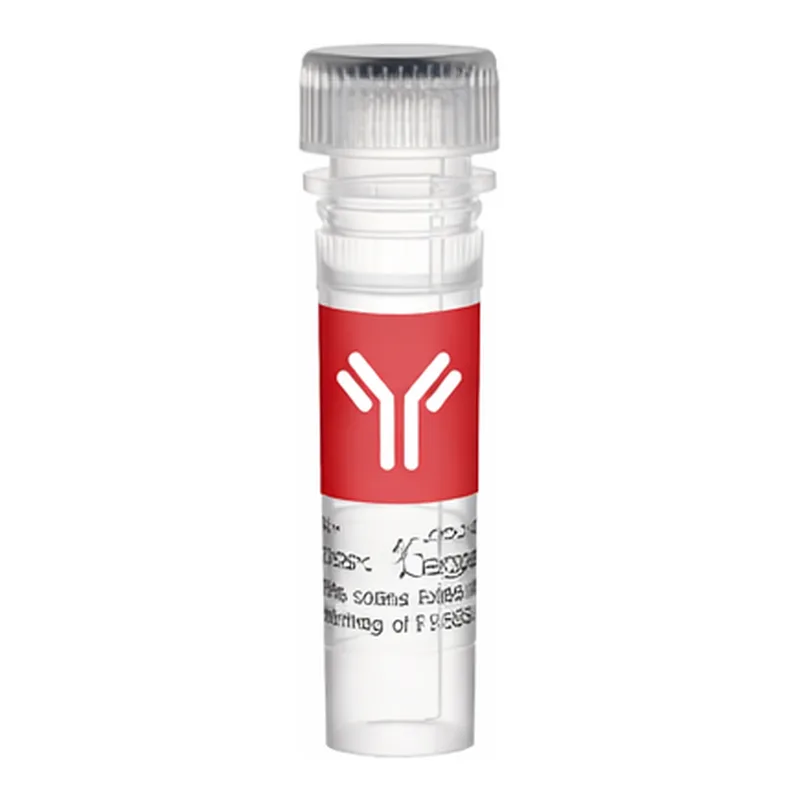
Thermo Fisher Scientific PACSIN1 Polyclonal Antibody
Thermo Fisher Scientific PACSIN1 Polyclonal Antibody는 인간 PACSIN1 단백질을 인식하는 토끼 유래 IgG 항체로, WB, IHC, ICC/IF에 적합합니다. 항원 친화 크로마토그래피로 정제되었으며, 액상 형태로 제공됩니다. 연구용으로만 사용 가능합니다.
- 판매단위
- pk
카탈로그
1개 옵션 · 카탈로그 번호를 클릭하면 복사됩니다Thermo Fisher Scientific · Thermo Fisher Scientific PACSIN1 Polyclonal Antibody
Applications
| Application | Tested Dilution |
|---|---|
| Western Blot (WB) | 0.04–0.4 µg/mL |
| Immunohistochemistry (Paraffin) (IHC (P)) | 1:200–1:500 |
| Immunocytochemistry (ICC/IF) | 0.25–2 µg/mL |
Product Specifications
| 항목 | 내용 |
|---|---|
| Species Reactivity | Human |
| Host / Isotype | Rabbit / IgG |
| Class | Polyclonal |
| Type | Antibody |
| Immunogen | Recombinant protein corresponding to Human PACSIN1. Recombinant protein control fragment (Product #RP-101745). |
| Conjugate | Unconjugated |
| Form | Liquid |
| Concentration | 0.05 mg/mL |
| Purification | Antigen affinity chromatography |
| Storage Buffer | PBS, pH 7.2, with 40% glycerol |
| Contains | 0.02% sodium azide |
| Storage Conditions | Store at 4°C short term. For long term storage, store at -20°C, avoiding freeze/thaw cycles. |
| Shipping Conditions | Wet ice |
| RRID | AB_2791409 |
Product Specific Information
Immunogen sequence:
EKQPKKAEGV ALTNATGAVE STSQAGDRGS VSSYDRGQPY ATEWSDDESG N
Target Information
Protein kinases are enzymes that transfer a phosphate group from a phosphate donor, generally the γ phosphate of ATP, onto an acceptor amino acid in a substrate protein. By this mechanism, protein kinases mediate most of the signal transduction in eukaryotic cells, regulating cellular metabolism, transcription, cell cycle progression, cytoskeletal rearrangement and cell movement, apoptosis, and differentiation.
With more than 500 gene products, the protein kinase family is one of the largest families of proteins in eukaryotes. The family has been classified in 8 major groups based on sequence comparison of their tyrosine (PTK) or serine/threonine (STK) kinase catalytic domains. The STE group (homologs of yeast Sterile 7, 11, 20 kinases) consists of 50 kinases related to the mitogen-activated protein kinase (MAPK) cascade families (Ste7/MAP2K, Ste11/MAP3K, and Ste20/MAP4K). MAP kinase cascades, consisting of a MAPK and one or more upstream regulatory kinases (MAPKKs), have been best characterized in the yeast pheromone response pathway. Pheromones bind to Ste cell surface receptors and activate yeast MAPK pathway.
For Research Use Only. Not for use in diagnostic procedures. Not for resale without express authorization.
제품 이미지
Thermo Fisher Scientific 상품 둘러보기
전체보기
문의
0개 · 배송·재고 문의는 실시간 상담이 빠릅니다아직 등록된 문의가 없어요.