

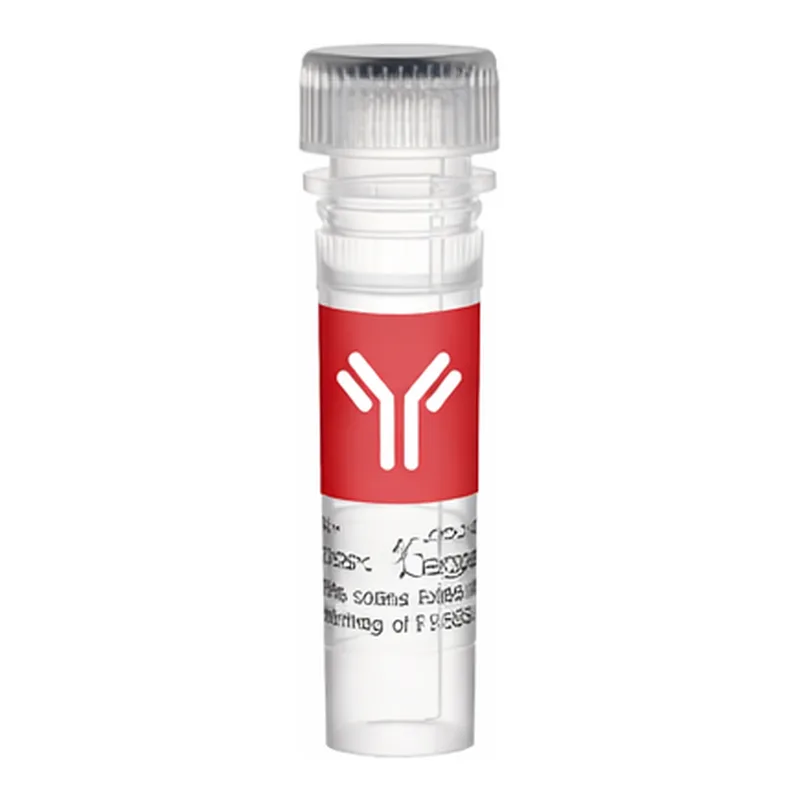
Thermo Fisher Scientific H5N1 VN04-9 Monoclonal Antibody (7A11)
H5N1 인플루엔자 A 바이러스의 HA 단백질을 인식하는 단클론 항체. 다양한 H5N1 클레이드에 반응하며 교차반응 없음. WB, IHC, ELISA, IP 등 다양한 실험에 사용 가능. 액상 형태로 제공되며 -20°C 보관 권장.
- 판매단위
- pk
카탈로그
1개 옵션 · 카탈로그 번호를 클릭하면 복사됩니다Thermo Fisher Scientific · Thermo Fisher Scientific H5N1 VN04-9 Monoclonal Antibody (7A11)
Applications and Tested Dilution
| Application | Tested Dilution |
|---|---|
| Western Blot (WB) | Assay-dependent |
| Immunohistochemistry (IHC) | Assay-dependent |
| ELISA | 1:5,000 |
| Immunoprecipitation (IP) | Assay-dependent |
Product Specifications
| 항목 | 내용 |
|---|---|
| Species Reactivity | Virus |
| Host / Isotype | Mouse / IgG2a, kappa |
| Class | Monoclonal |
| Type | Antibody |
| Clone | 7A11 |
| Immunogen | Concentrated purified virus preparation containing hemagglutinin (HA) protein of influenza A virus [strain A/Vietnam/1203/04 (H5N1)] |
| Conjugate | Unconjugated |
| Form | Liquid |
| Concentration | Not Determined |
| Storage Buffer | Ascites |
| Contains | 0.01% sodium azide |
| Storage Conditions | -20°C, Avoid Freeze/Thaw Cycles |
| Shipping Conditions | Ambient (domestic); Wet ice (international) |
Product Specific Information
Store vial at -20°C prior to opening. Aliquot contents and freeze at -20°C or below for extended storage. Avoid cycles of freezing and thawing. Centrifuge product if not completely clear after standing at room temperature. This product is stable for several weeks at 4°C as an undiluted liquid. Dilute only prior to immediate use.
This monoclonal antibody was clarified from mouse ascitic fluid and is specific for H5 hemagglutinin (HA) protein of influenza A virus [strain A/Vietnam/1203/04 (H5N1)]. VN04-9 monoclonal antibody did not cross-react with influenza viruses of other HA subtypes. It reacted with H5N1 influenza virus representatives of different clades and subclades of the H5 HA subtype.
Target Information
Influenza A virus is a major public health threat, killing more than 30,000 people per year in the USA. In early 2009, a novel swine-origin influenza A (H1N1) virus was identified in specimens obtained from patients in Mexico and the United States. The virus spread globally, leading the World Health Organization to declare a pandemic on June 11, 2009.
Influenza A virus has one of sixteen possible Hemagglutinin (HA) surface proteins and one of nine possible Neuraminidase (NA) surface proteins. The HA protein facilitates viral attachment, while NA is involved in viral release. These proteins elicit immune responses that prevent infection or reduce viral replication.
The genetic make-up of the swine flu virus is unique: it is an H1N1 strain combining human, swine, and avian influenza genes with new pig H3N2 genes from Eurasia. The distinct antigenic properties of this virus suggest limited human immunity, though older age groups may have partial protection.
For Research Use Only. Not for use in diagnostic procedures. Not for resale without express authorization.
Thermo Fisher Scientific 상품 둘러보기
전체보기
문의
0개 · 배송·재고 문의는 실시간 상담이 빠릅니다아직 등록된 문의가 없어요.